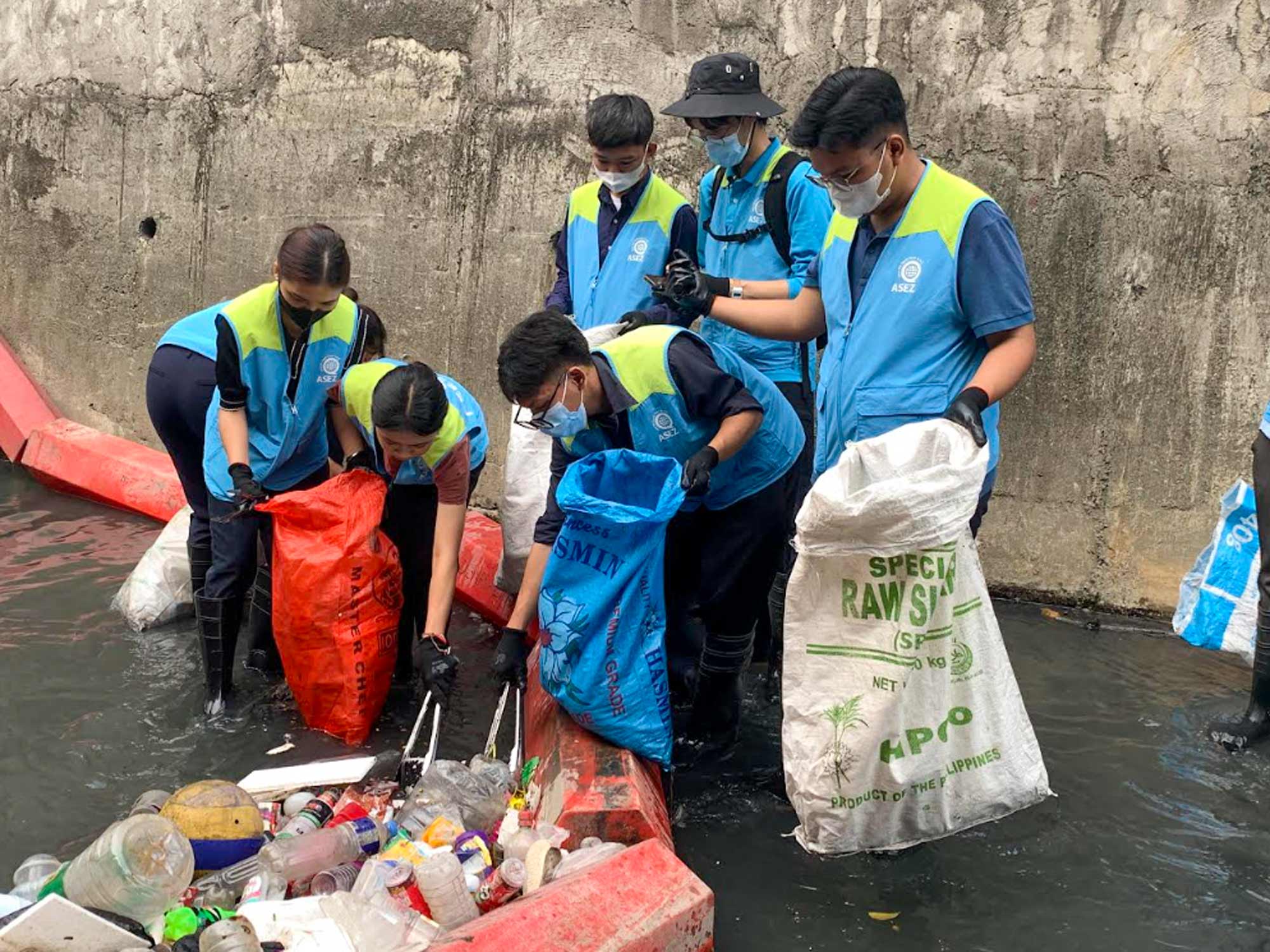
On May 4, ASEZ young adult members and barangay officials carried out a community-based environmental activity to protect blue carbon ecosystems at a drainage area near World Citi Colleges (WCC) in Quezon City, Philippines. World Citi Colleges is an urban educational institution where students from various fields of study pursue their academic goals, and it is closely connected with the surrounding campus and community. This activity was organized to show that managing drainage channels in urban areas can contribute to protecting rivers and marine ecosystems and, furthermore, to responding to climate change.
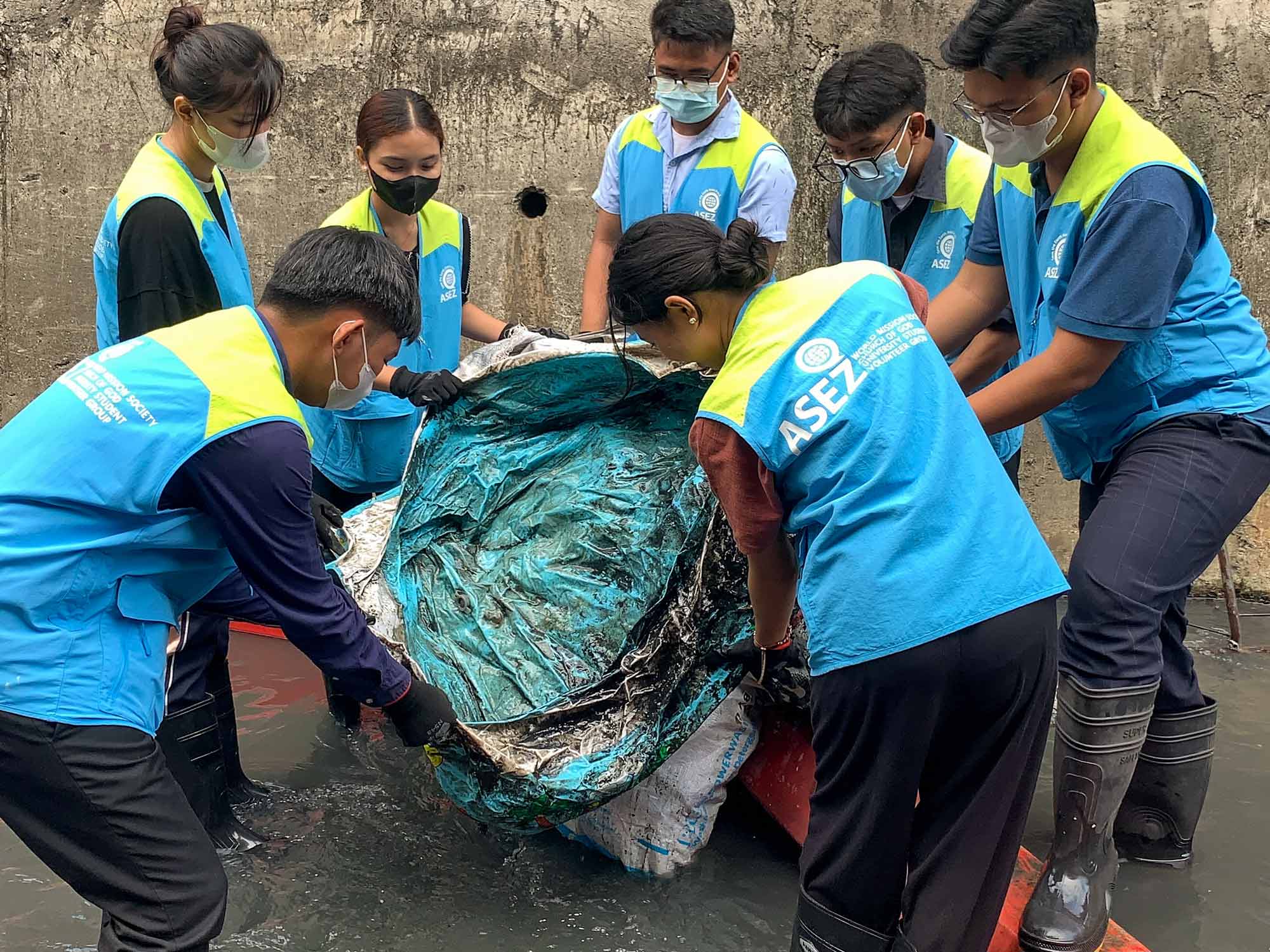
This activity was part of ASEZ’s global Blue Carbon Initiative and served as an example of youth-led environmental action carried out through cooperation between an educational institution and the local community. Plastic waste generated in cities and on campuses can flow through drainage channels and rivers into the ocean, potentially affecting blue carbon ecosystems such as coastal wetlands, mangrove forests, and seagrass beds. In response, the young adults identified environmental issues in everyday local spaces and personally planned and carried out cleanup activities, education, and campaigns, spreading practical action for a sustainable community.
A total of 40 people, including ASEZ young adult members, barangay officials, and the barangay captain, participated in the activity. The participants cleaned up waste accumulated around the drainage channels and waterways near World Citi Colleges. As a result, a total of 105 kg of waste was collected, including 60 kg of plastic waste. After the cleanup, water flow around the drainage area improved, and the living environment used by local residents became cleaner and more pleasant.
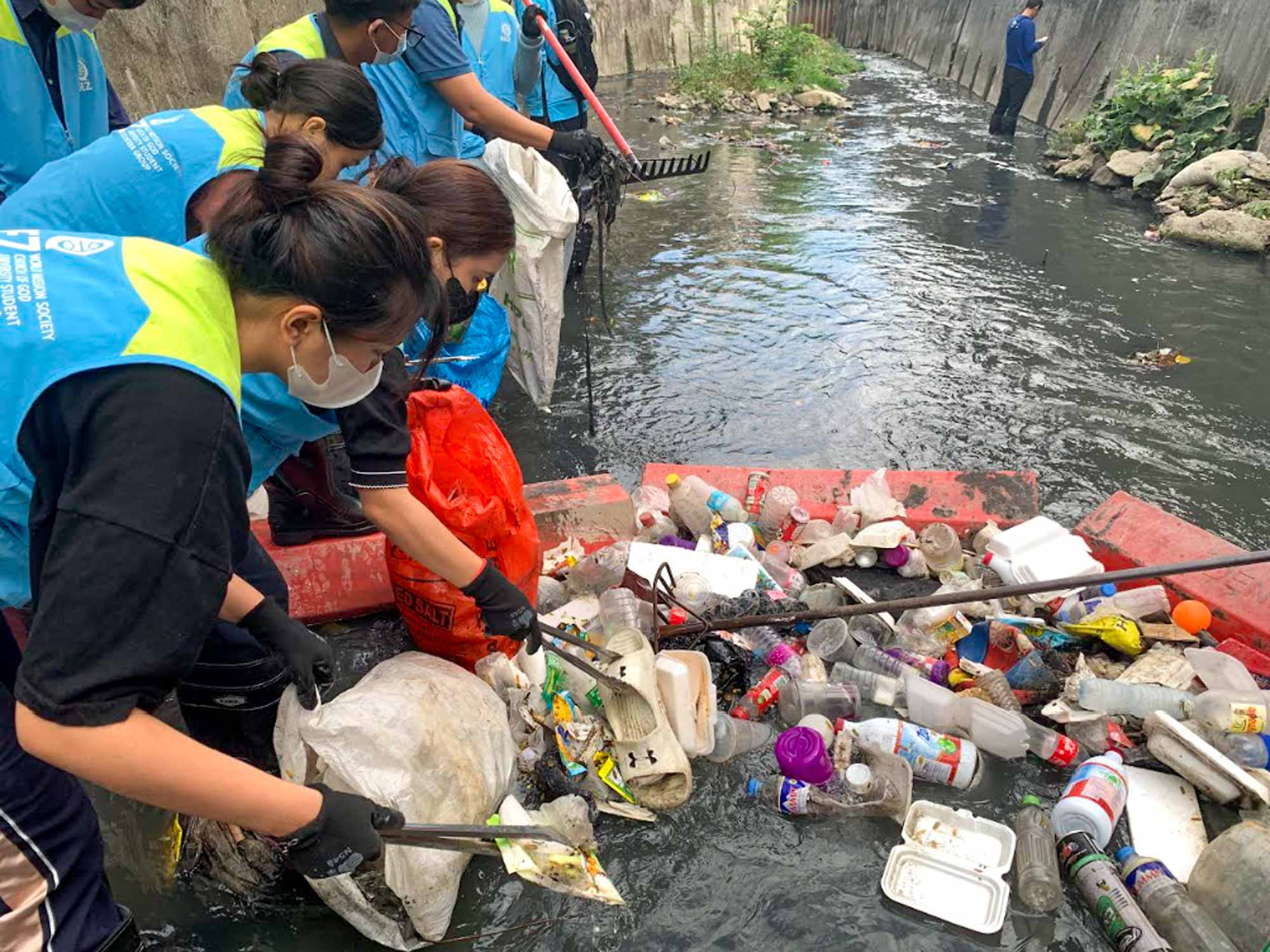
The activity achieved meaningful results, including 40 participants, 105 kg of collected waste, 60 kg of collected plastic waste, cooperation between one educational institution and local administrative bodies, the operation of a signature campaign, and an environmental awareness session for university students. In particular, by combining local environmental improvement, environmental education, and stakeholder cooperation, the activity showed that young adults can contribute to promoting sustainability at the community level.
The cleanup activity also drew the interest and participation of local residents. Nearby residents expressed their gratitude for the improvement of the drainage area and surrounding environment and they agreed on the need to reduce plastic pollution and protect blue carbon ecosystems. A signature campaign was also held at the site. ASEZ young adults explained to residents the impact of plastic waste on the marine environment and shared how everyday actions can contribute to building a sustainable community.
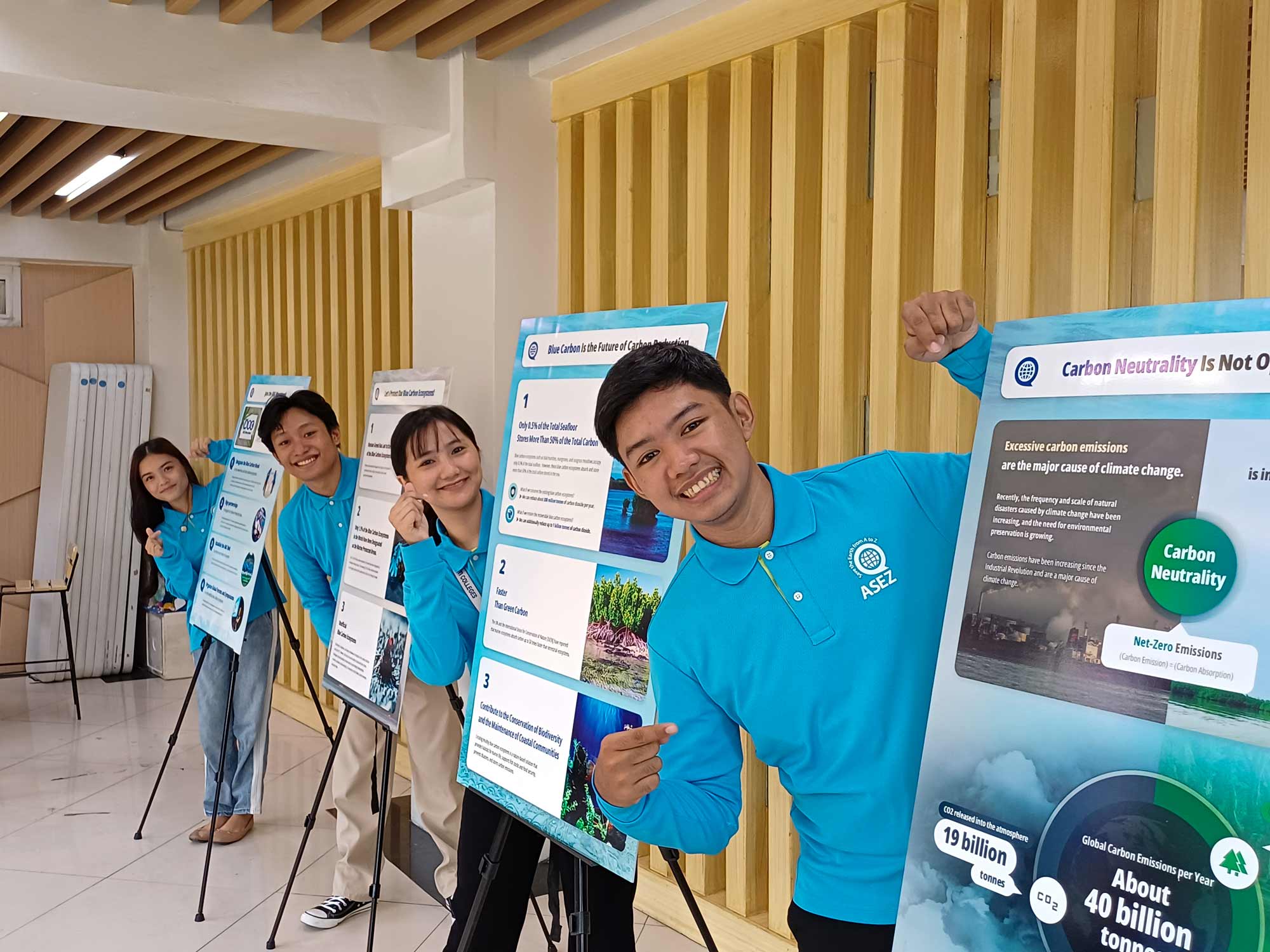
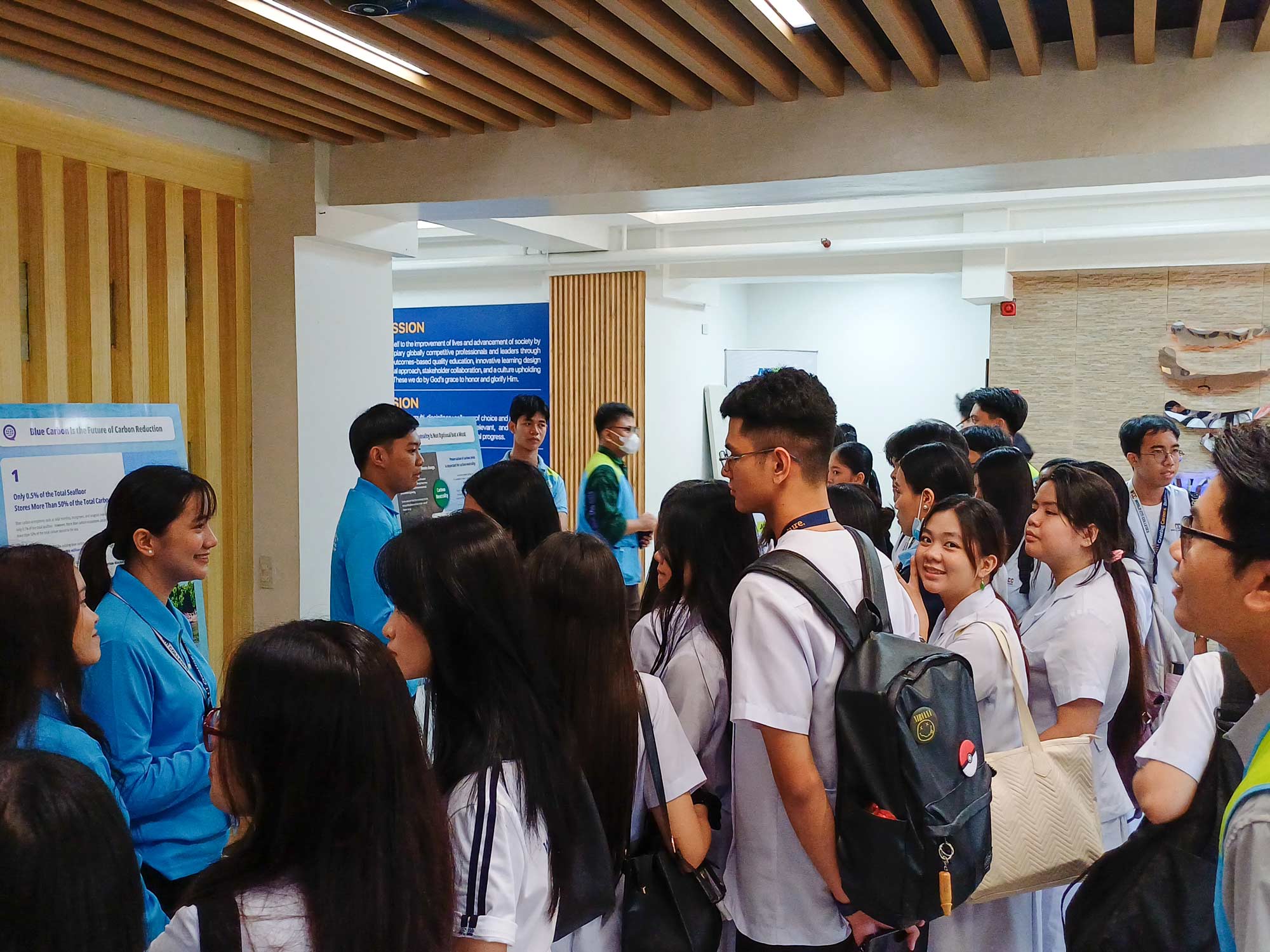
After the cleanup, a panel presentation was held for students of World Citi Colleges. ASEZ young adults introduced the purpose of the ABC (ASEZ Blue Carbon) Movement and explained that blue carbon ecosystems, such as mangrove forests, seagrass beds, and coastal wetlands, absorb and store carbon and play an important role in responding to climate change. They also emphasized that even small actions, such as keeping drainage channels around campus clean, can help reduce the inflow of plastic waste into the ocean.
The presentation was attended not only by students but also by the college dean, professors, and staff members. Participants shared the purpose and results of the environmental activity planned and carried out by young adults, and they agreed on the need for campuses and local communities to work together to solve environmental issues. This activity was recognized as more than a simple cleanup; it was a meaningful example of raising community awareness and promoting environmental education based on youth participation.
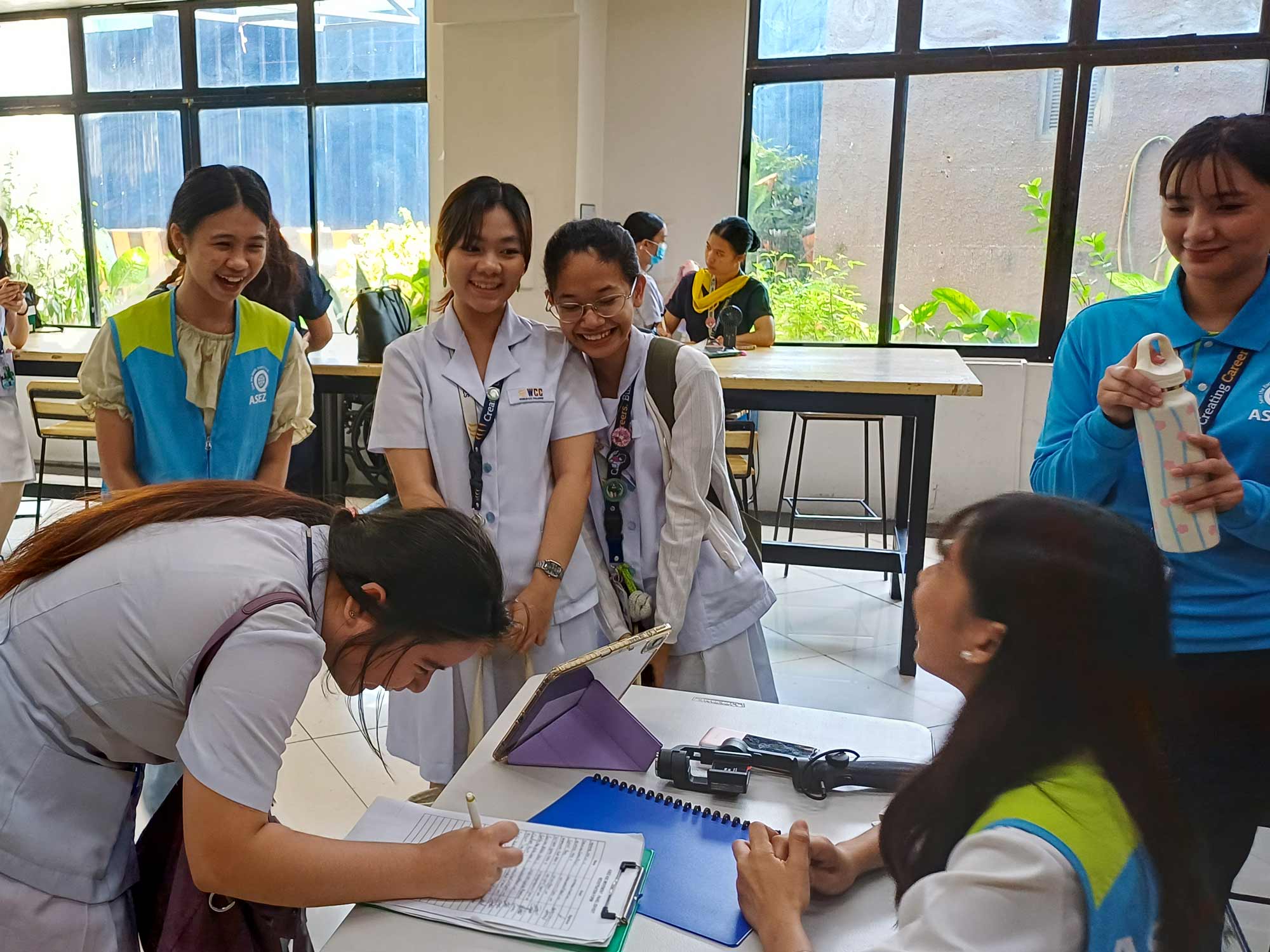
Cooperation with the local community was also strengthened. The barangay captain expressed gratitude to the young adults and officials who participated in improving the local environment and stated the desire to continue environmental cooperation with ASEZ, including future cleanup activities. This showed that youth-led action can expand into cooperation with local administration, educational institutions, and residents.
The activity held near World Citi Colleges was a field example of the Blue Carbon Initiative, combining drainage cleanup, resident participation, a signature campaign, and environmental education for university students. The action that began at a small drainage channel near the campus became an opportunity for the local community to recognize environmental issues together and respond to them. ASEZ plans to continue expanding cooperation with educational institutions, local communities, and the public sector based on the participation of university students, spreading sustainable practices that begin in everyday life throughout the world.