The 31st Conference of the Parties to the United Nations Framework Convention on Climate Change (COP31) will take place in Antalya, Türkiye, from November 9 to 20, 2026.[1] COP, short for “Conference of the Parties,” was first held in Berlin, Germany, in 1995 and marks its 31st session this year. This year’s conference will be jointly led by Türkiye, the host country, and Australia, which will serve as President of Negotiations. This unusual arrangement has attracted international attention even before the conference begins. The Turkish COP31 Presidency has designated this year’s conference the “Implementation COP,” reflecting its determination to turn years of climate commitments into concrete action.[2]

What is COP?
The origins of COP can be traced back to the United Nations Conference on Environment and Development (UNCED), held in Rio de Janeiro, Brazil, in 1992. At this conference, the United Nations Framework Convention on Climate Change (UNFCCC), an international treaty aimed at combating global warming, was adopted.
The first COP was held in Berlin in 1995 to discuss concrete measures for implementing the Convention. Since then, COP has developed into a major international diplomatic forum where the Convention’s 198 Parties, as of 2026, gather to review progress in reducing greenhouse gas emissions.
Why COP31 Matters
1.5°C: Humanity Approaches a Critical Threshold
In 2015, the Paris Agreement was adopted at COP21 in Paris, France, bringing both developed and developing countries into global efforts to reduce greenhouse gas emissions. The Agreement established the goal of holding the increase in global average temperature to well below 2°C (3.6 °F) above pre-industrial levels while pursuing efforts to limit the increase to 1.5°C (2.7 °F).[3] However, global average temperatures have risen sharply over the past 11 years. According to the World Meteorological Organization (WMO), the global average temperature in 2024 was approximately 1.55°C (2.79 °F) above pre-industrial levels.[4] It shows that the threshold the international community pledged to avoid is no longer a distant concern but an increasingly urgent reality.
The Persistent Gap Between Goals and Reality
The United Nations Environment Programme (UNEP)’s Emissions Gap Report 2025 projected that, if current policies remain unchanged, global temperatures could rise by approximately 2.8°C (5.04°F) this century. Even if countries fully implement their submitted emissions reduction targets, warming is still projected to reach 2.3–2.5°C. (4.14–4.5°F)[5] These projections reveal the persistent gap between climate commitments and meaningful action.
Unfinished Business from COP29 and COP30
At COP29, held in Baku, Azerbaijan, in 2024, countries agreed on a New Collective Quantified Goal on Climate Finance (NCQG). Under this agreement, developed countries would take the lead in mobilizing at least USD 300 billion annually in climate finance for developing countries by 2035, alongside a broader goal of scaling up total climate finance to USD 1.3 trillion per year.[6] At COP30, held in Belém, Brazil, in 2025, Parties agreed to pursue efforts to at least triple climate adaptation finance by 2035.[7] Despite these achievements, neither conference succeeded in incorporating a formal roadmap for transitioning away from fossil fuels into its final agreement, as many countries had demanded. Another major criticism was that the financial commitments made by developed countries fell short of the funding levels sought by developing nations.
Exploring the COP31 Agenda
The Turkish COP31 Presidency has positioned this year’s conference as both the “Implementation COP” and the “COP of the Future,” emphasizing the need to transform climate commitments into visible, measurable, and trackable results.[8] Accordingly, COP31 is expected to focus on the following areas:
- Strengthening Implementation of the Paris Agreement: Accelerating implementation through more ambitious Nationally Determined Contributions (NDCs), National Adaptation Plans (NAPs), and enhanced transparency frameworks
- Taking Action in Key Areas: Promoting concrete measures in mitigation, adaptation, and loss and damage
- Advancing a Just Transition and Means of Implementation: Improving access to climate finance, strengthening capacity-building, and facilitating technology transfer
- Climate Implementation Bridge: Launching a new initiative to help developing countries turn their NDC and NAP priorities into investable projects and connect them effectively with technical assistance, financing, and implementation partners
ASEZ and COP31: University Students Take Action
Ahead of COP31, the United Nations Development Programme (UNDP) called for strong collective action that empowers indigenous peoples, women, young people, and local communities as agents of change.[9] While COP agreements represent commitments between nations, it is up to citizens to turn those commitments into action in everyday life. With this year’s conference placing particular emphasis on implementation, young people are increasingly being recognized not merely as observers outside the negotiating room, but as active participants who can turn promises into reality. In line with this global movement, ASEZ, the International University Student Volunteer Group, is working with university students worldwide to translate the values underlying international climate agreements into concrete action.
Blue Carbon Ecosystem Protection Initiative: Campus and Ocean
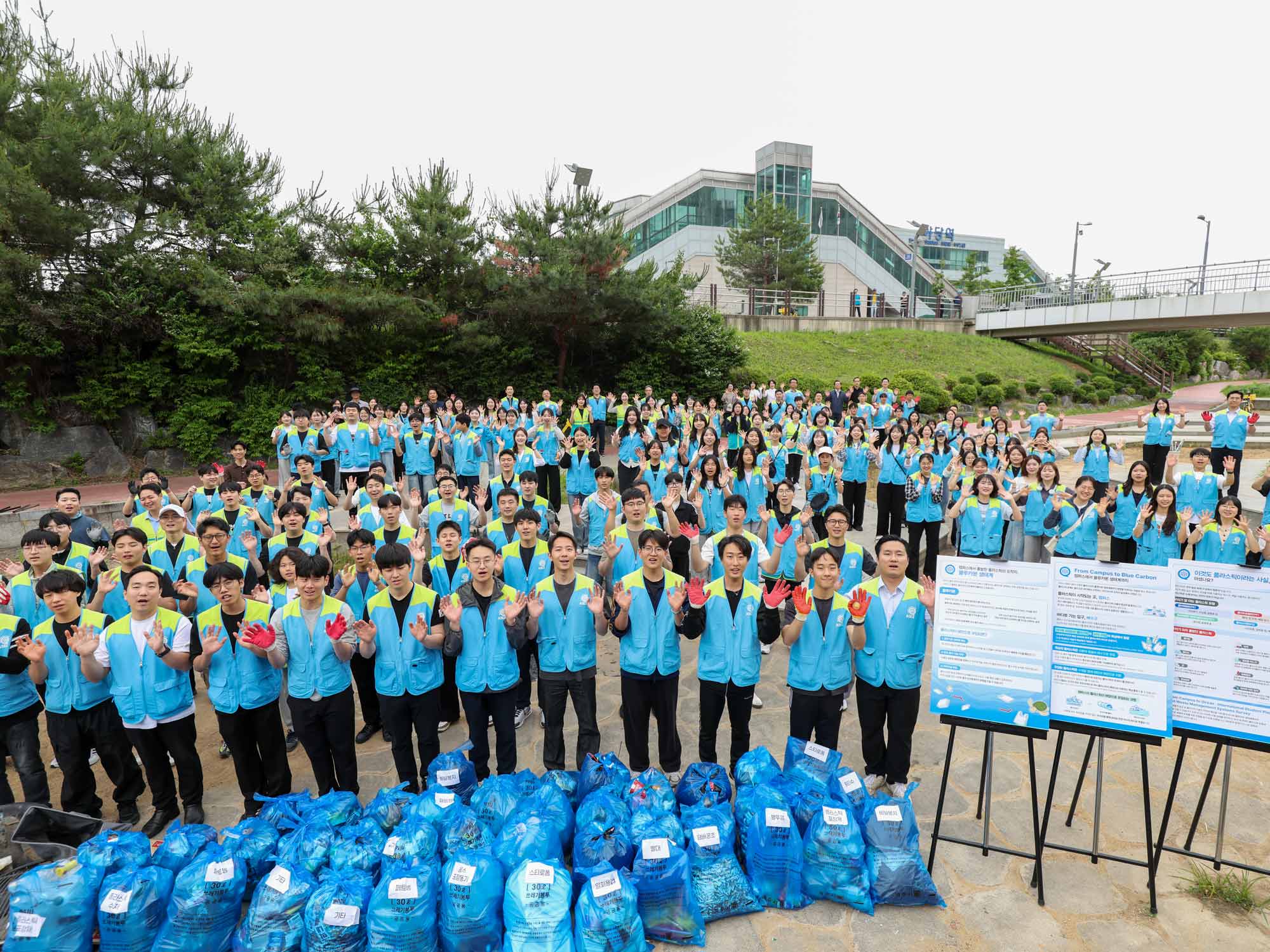
Blue carbon refers to carbon absorbed and stored by coastal and marine ecosystems, including tidal flats, mangrove forests, and seagrass meadows. These ecosystems play a vital role in addressing climate change and conserving biodiversity. However, they remain under constant threat from plastic waste, marine debris, and habitat degradation. From April 12 to June 8, 2026, ASEZ carried out the “ASEZ 2026 Global Blue Carbon Ecosystem Protection Initiative.”[10][11] The initiative was inspired by the recognition that plastic waste discarded on campuses and in urban areas can travel through drains and rivers into the ocean, potentially harming blue carbon ecosystems. ASEZ carried out its activities under the slogan: “If pollution starts on campus, it can be stopped on campus.”
- Cleanup Activities: ASEZ volunteers collected plastic and other waste from rivers, reservoirs, and coastlines around the world. The collected waste, including PET bottles, disposable cups, plastic bags, cigarette butts, and discarded fishing gear, was sorted and recorded by category.
In Incheon, South Korea, 107 university students collected approximately 130 kg (267 lbs) of waste along a 1 km (0.6 mi) stretch of Seonnyeobawi Beach. In Nairobi, Kenya, volunteers cleaned areas around the Nairobi River, helping prevent waste from making its way to the ocean. In Quezon City, the Philippines, 40 university students and local stakeholders collected a total of 105 kg (231 lbs) of waste from drains and waterways, including 60 kg (132 lbs) of plastic. - Awareness Campaigns and Surveys: Through informational panel campaigns, ASEZ raised awareness of how plastic waste travels through rivers into the ocean and how blue carbon ecosystems store carbon. ASEZ also conducted a QR code-based survey titled “University Students’ Plastic Use and Waste Management Systems.”
- Data-Driven Expansion: ASEZ is compiling country-level data on the number of participants, partner organizations, the weight of waste collected, signatures of support, and memorandums of understanding (MOUs). Based on these findings, ASEZ plans to develop the “ABC (ASEZ Blue Carbon) Map,” visualizing activity locations, ecosystem types, and categories of waste collected.
Flip the Default: Changing the Default on Campus
While the Blue Carbon Ecosystem Protection Initiative focused on collecting existing plastic waste and preventing pollution from spreading, ASEZ is taking its efforts a step further. Through the “Flip the Default” campaign, ASEZ is working to improve the way single-use items are provided on campuses, with the aim of reducing plastic waste at its source. If international climate negotiations seek to transform systems at the national level, the “Flip the Default” campaign seeks to transform the systems that shape our everyday choices. Running from September 1 to November 13, 2026, under the slogan “Change the Default, Change the Future,” the campaign aims to examine how single-use items are provided by default on campuses, gather students’ opinions, and propose one default practice that universities and campus businesses can change together.[12]
- Campus Surveys: ASEZ surveys how single-use items are provided and how reusable alternatives are made available at campus cafés, restaurants, convenience stores, and other facilities.
- Panel Campaigns and Student Awareness Surveys: ASEZ conducts informational panel campaigns, voting activities, and awareness surveys on and around campuses to gather university students’ opinions.
- Flip the Default Challenge: Participants flip a card reading “SINGLE USE BY DEFAULT” to reveal “BETTER CHOICES BY DEFAULT” while shouting, “Flip the Default!” They then share videos of the challenge on social media using the hashtag #FlipTheDefault, helping raise awareness.
- Publication of a Campus Assessment Report: Based on campus assessments and awareness surveys conducted worldwide, ASEZ will publish the Multi-Country Report on Single-Use Defaults on University Campuses.

Change Begins Beyond the Negotiating Room
ASEZ’s initiatives align closely with COP31’s vision of transforming climate commitments into trackable results, as they document progress through field surveys and data collection. More than three decades of COP meetings demonstrate the international community’s continued efforts to address the climate crisis. At the same time, they reveal that promises alone are not enough. Global temperatures are already approaching critical limits, and a substantial gap remains between countries’ commitments and their actions. The changes needed to close this gap and transform our world begin beyond the negotiating room. As a generation of young people who consume, make choices, and speak out, we have the power to help overcome the climate crisis. When small actions come together to change the world, the promises made at COP can finally become reality.