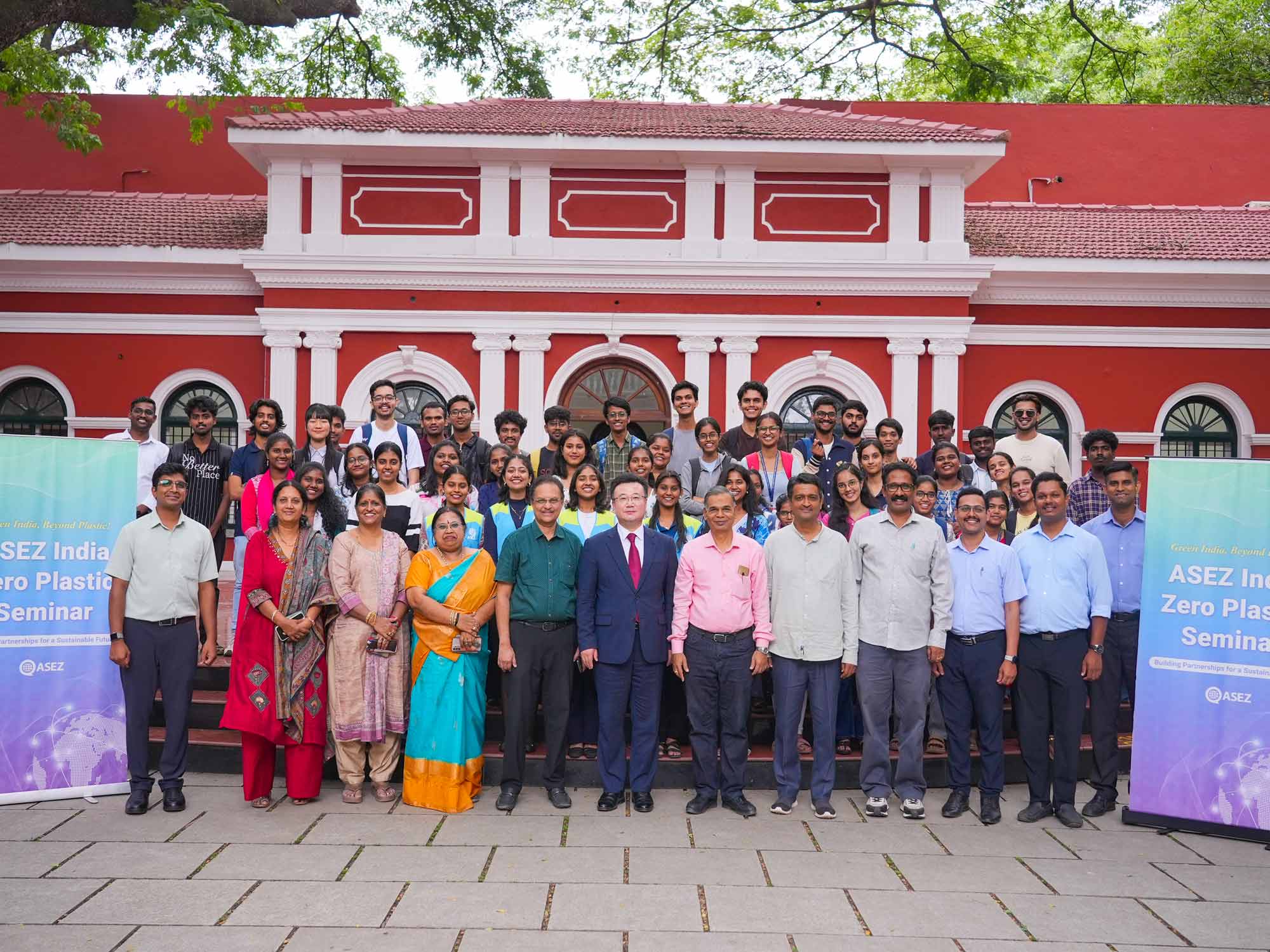
11 Seminars, Forums, and Meetings Held in August, Securing 30 Signatures of Support and 4 MOUs
In August, ASEZ carried out its “Zero Plastic 2040” initiative in India to reduce plastic pollution, holding a total of 11 seminars, forums, and meetings. Approximately 1,600 people participated, including 64 key figures from government agencies, universities, and specialized institutions. These activities resulted in 30 signatures of support and four memorandums of understanding (MOUs) with universities and specialized institutions.
The message shared at the “ASEZ Green Concert for a Plastic-Free India,” held in Hyderabad in February, carried forward into cleanup activities, meetings with government officials, a global forum, and partnerships with universities and specialized institutions in August. University students collected waste at cleanup sites and discussed practical ways to reduce plastic use with representatives from various sectors.
Cleanup Near a Waste Treatment Facility and Meetings with Government Officials
On August 13, approximately 200 ASEZ university student volunteers participated in a “Zero Plastic 2040” cleanup in Jawaharnagar, Hyderabad, Telangana. In this area, home to one of Hyderabad’s major waste treatment facilities, volunteers collected approximately 500 kg (1,102 lbs) of waste. Naveen Yadav, a member of the Telangana Legislative Assembly; Nagendra, a municipal councilor; and representatives of Hyderabad Integrated MSW Limited (HIMSW) also joined the activity. Yadav expressed his willingness to support future activities and signed a statement of support for “Zero Plastic 2040.”
On August 18, ASEZ held meetings with senior government officials, including Ponnam Prabhakar, Telangana’s Minister for Transport and Backward Classes Welfare, as well as the state’s IT minister and Karnataka’s food minister. During the meetings, ASEZ introduced the purpose of “Zero Plastic 2040” and the environmental activities carried out by university students. Minister Ponnam Prabhakar, who had already signed a statement of support at an ASEZ event in February, continued to express his interest in the initiative. The IT minister also added his signature in support of “Zero Plastic 2040.”
Global Forum on Plastic Pollution: Connecting Policy with Youth Action
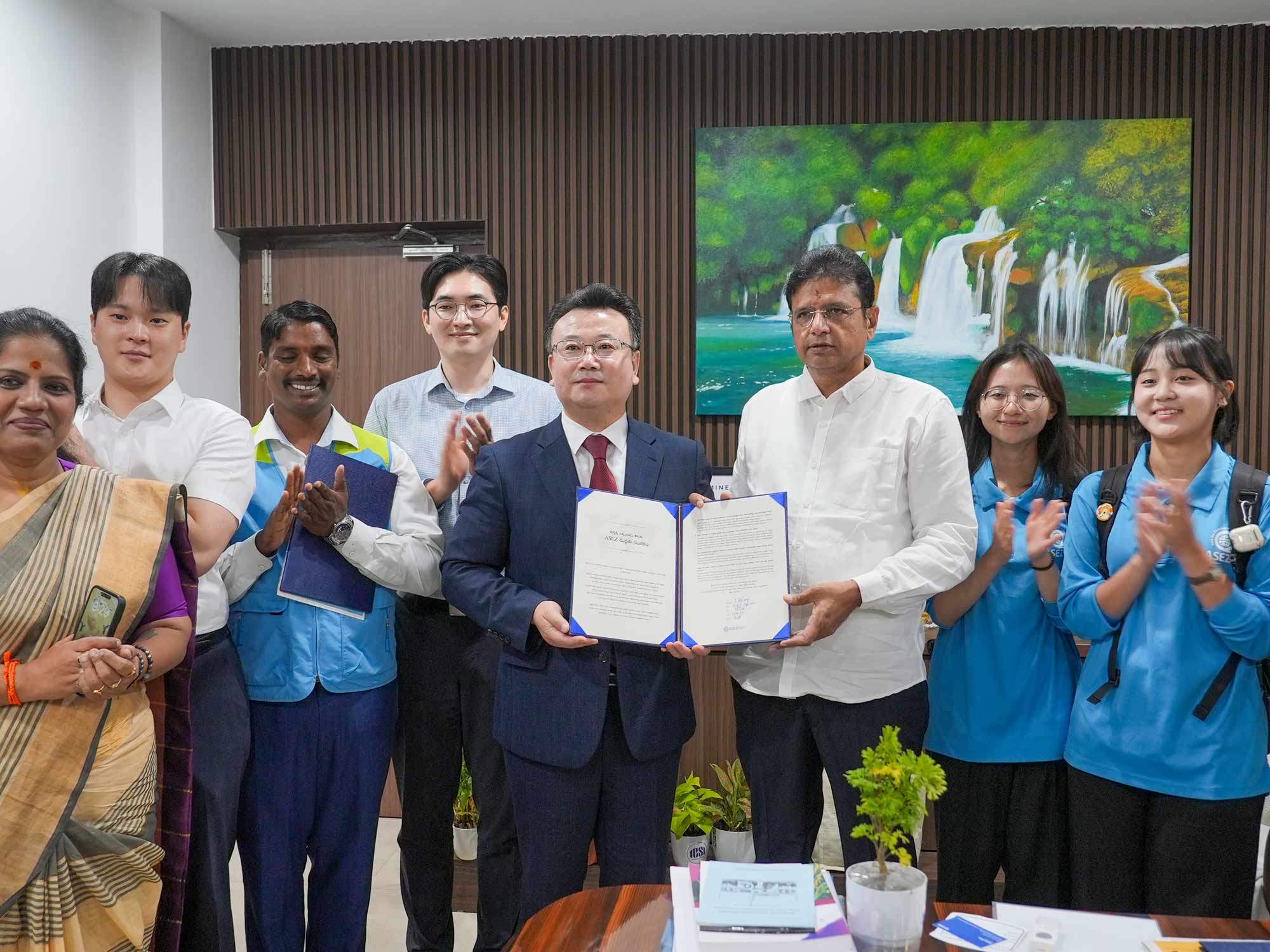
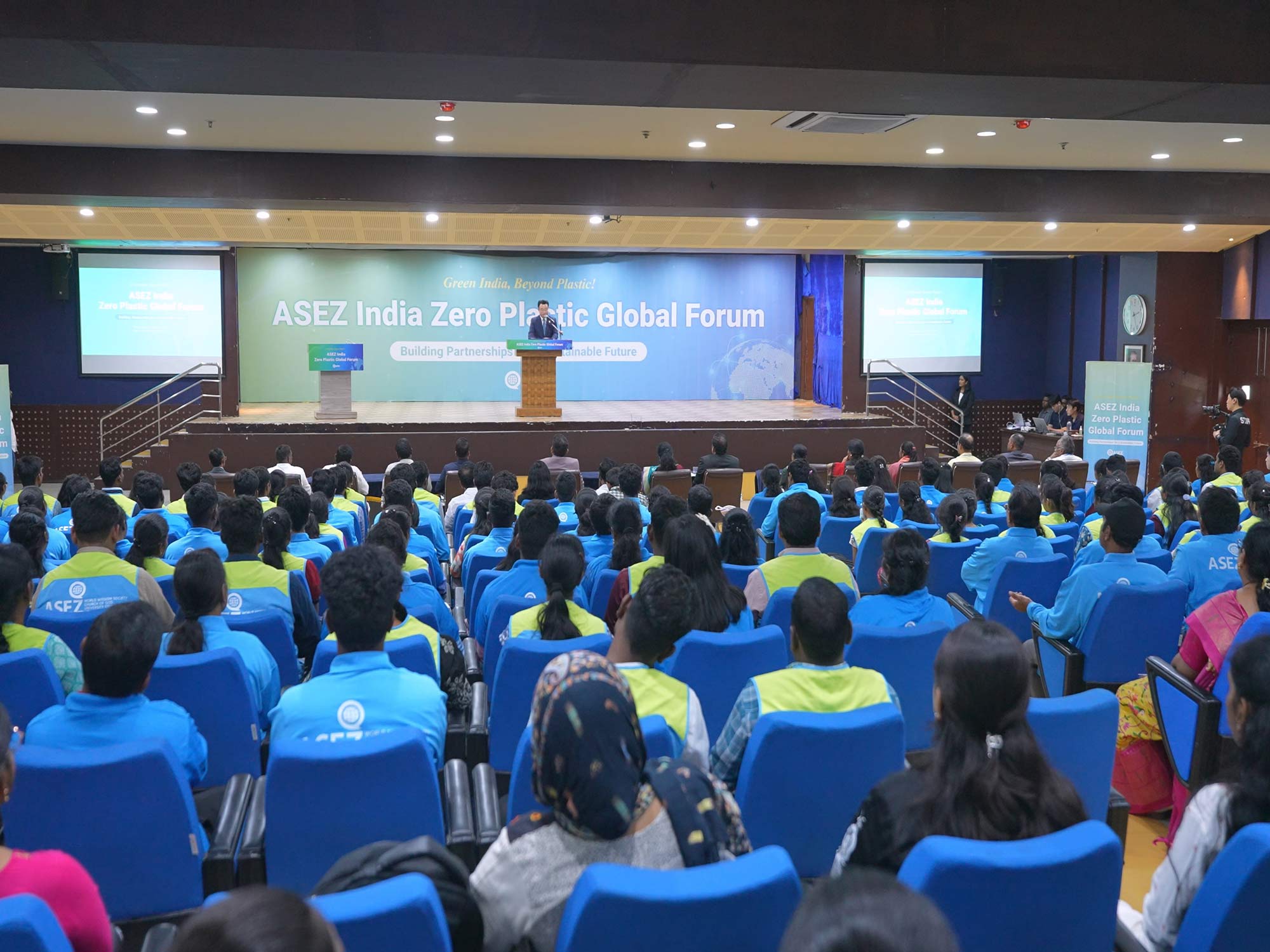
On August 20, the “ASEZ Zero Plastic Global Forum in India” was held in Hyderabad. Approximately 500 people attended the forum, including 25 key figures, university students, and representatives from universities, government and public institutions, and the environmental, medical, and industrial sectors. Participants explored ways to translate plastic pollution reduction policies into everyday action by citizens and discussed the role young people could play in this process.
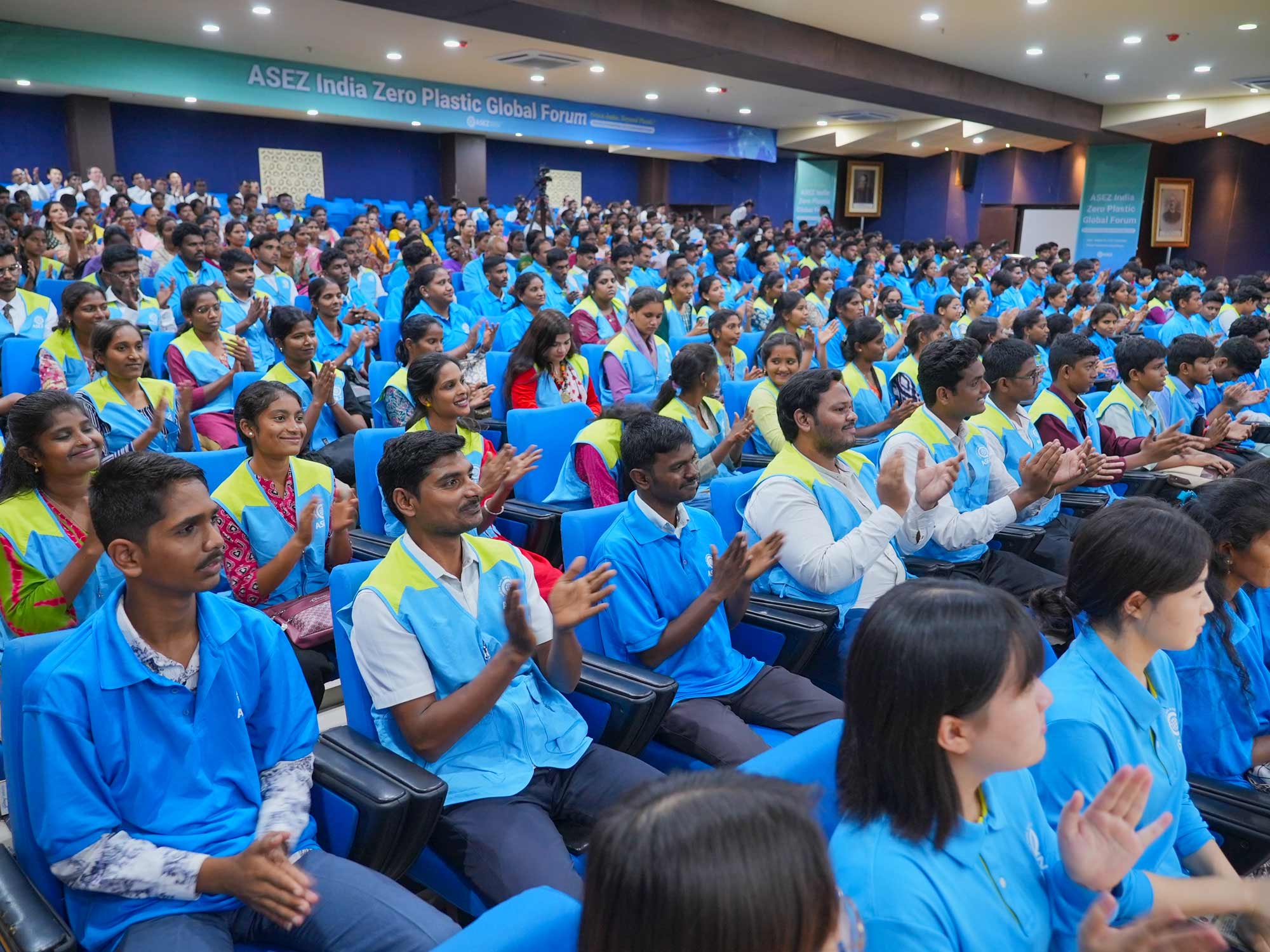
The ASEZ President opened the forum by presenting the “Zero Plastic 2040” Initiative Joint Declaration, reaffirming a commitment to sustained action and cooperation at the community, national, and international levels to restore nature and ecosystems.
Since 2024, ASEZ has conducted cleanup activities and awareness campaigns through “Zero Plastic 2040.” It has also participated in INC-5.1 in Busan and INC-5.2 in Geneva, bringing young people’s voices to international discussions and calling for a global treaty to end plastic pollution. “Policies become real change only when citizens change their choices and communities continue to take action,” emphasized the ASEZ President.
Referring to India’s “Mission LiFE (Lifestyle for Environment)” and Telangana’s environmental protection efforts, the ASEZ President highlighted the need for university students to serve as a bridge between government policies and citizen action, helping turn individual efforts into broader social and institutional change.
To achieve this, the ASEZ President outlined three key directions: Action, through practical activities on the ground; Data, through the systematic collection of activity results; and System Change, through social and institutional improvements informed by field experience. Under the message “From Policy to People, From Youth to the Future,” the ASEZ President emphasized the importance of cooperation among governments, universities, businesses, civil society, and young people.
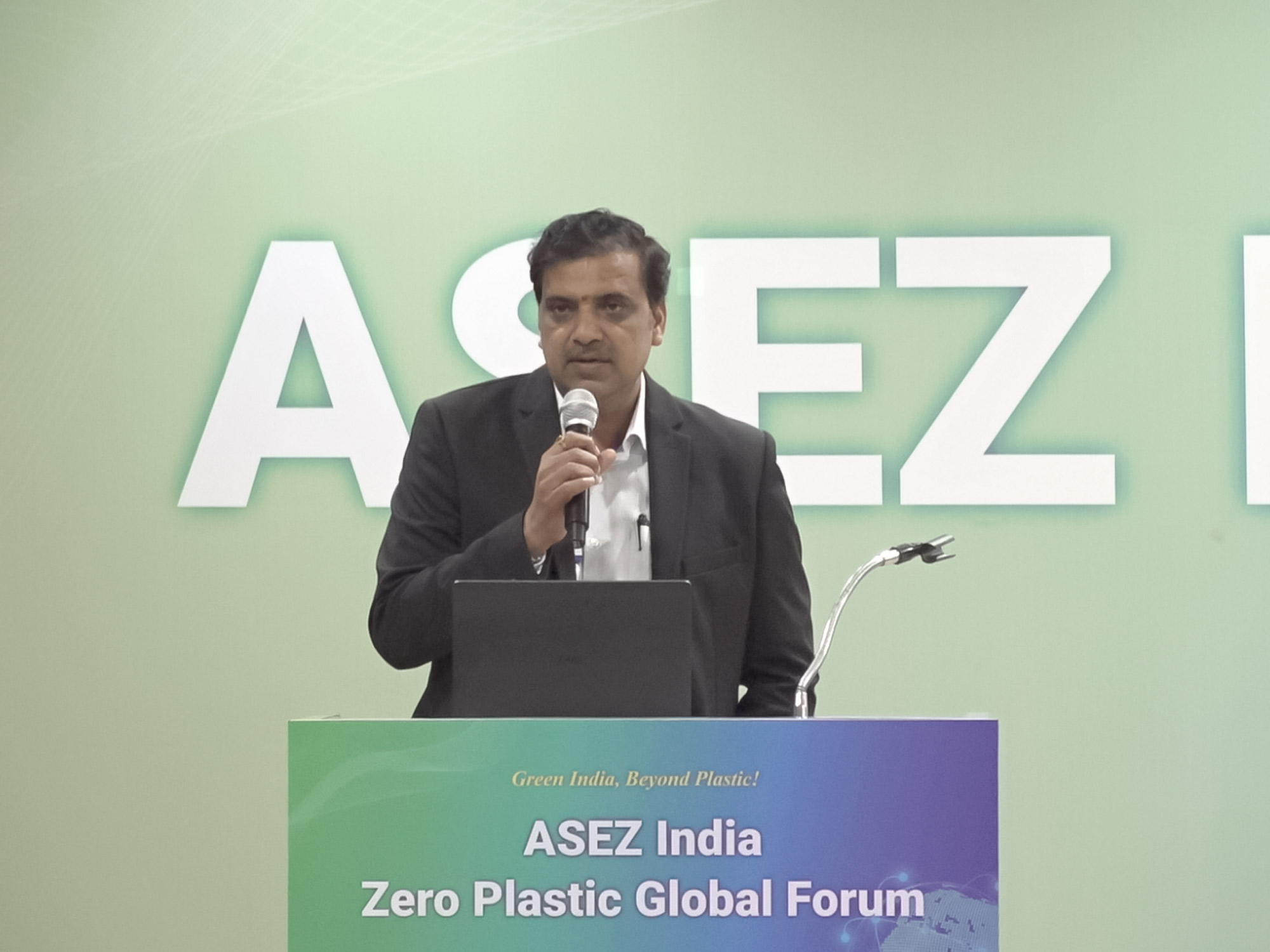
In the following presentations, Dr. M. Praveen Kumar, Senior Environmental Engineer at the Telangana State Pollution Control Board (TSPCB), introduced India’s plastic waste management policies, Extended Producer Responsibility (EPR) system, and Telangana’s regulations on single-use plastics. He emphasized that regulations must be accompanied by changes in awareness at the household and individual levels. Amarnadh, a former chairperson of a Telangana state government body, also called for cooperation in environmental awareness education and research into alternatives to plastic.
Jakkani Aneetha, Vice Chairperson of Telangana Handloom Development Corporation Limited, stressed that the significance of “Zero Plastic 2040” lies not simply in setting 2040 as a target year, but in deciding what actions to take starting today. She encouraged young people to take direct action in their homes and communities.
Minister Ponnam Prabhakar urged students to participate in reducing plastic use and protecting the environment, expressing the government’s willingness to cooperate and provide support. B. Sandhya, Joint Director of Telangana’s Commissioner and Director of Municipal Administration (CDMA), recognized young people as important agents of social change. Manoj Agarwal, Regional Managing Director of HIMSW, emphasized the importance of environmental awareness education in helping university students better understand environmental issues and actively participate in addressing them.
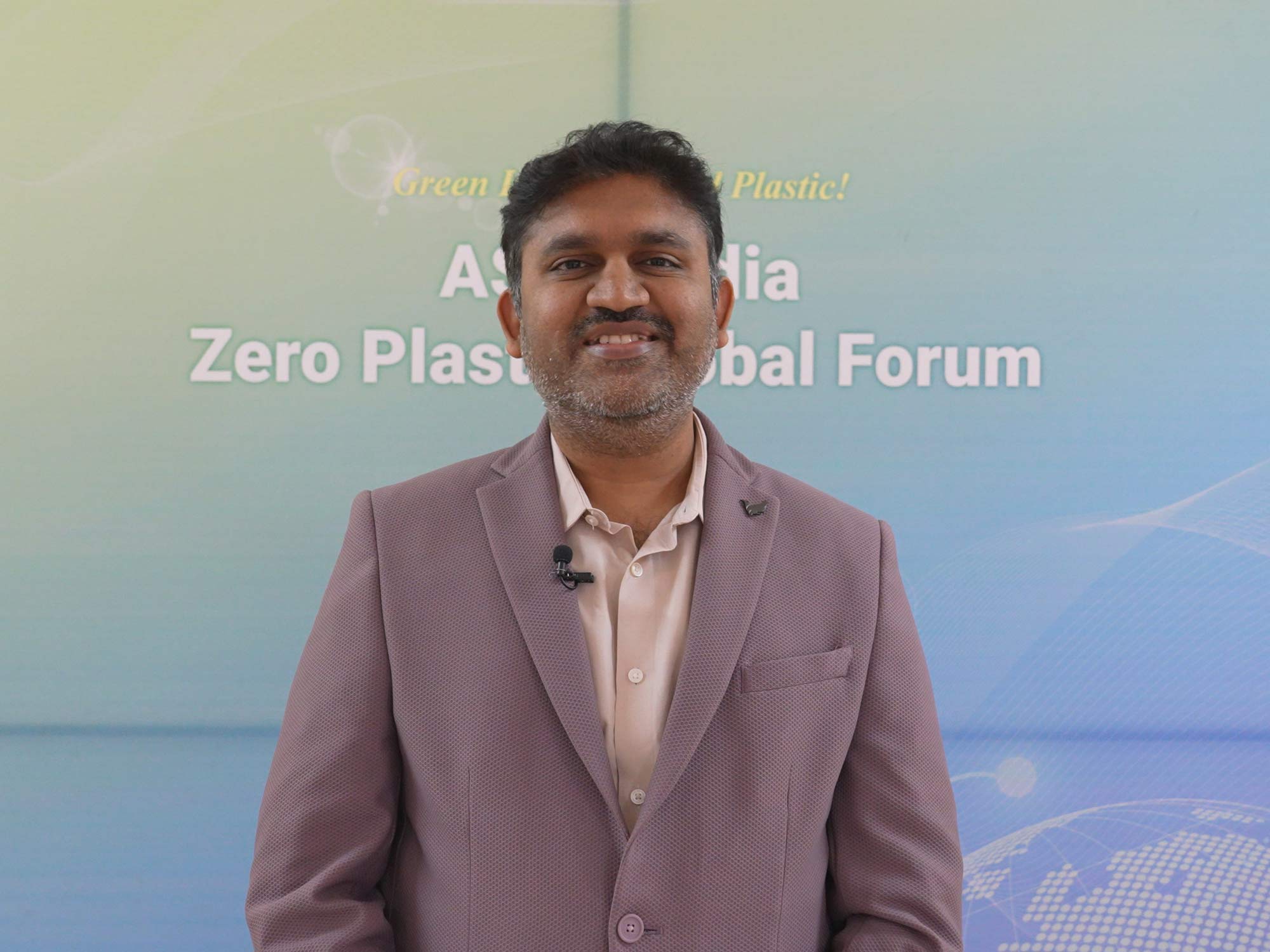
Linit, an ASEZ member who attended the forum, shared, “What impressed me most was the participants’ enthusiasm and the messages calling for action.” Linit added that promoting sustainable habits through digital media and working with local leaders could encourage continued action in everyday life and across communities.
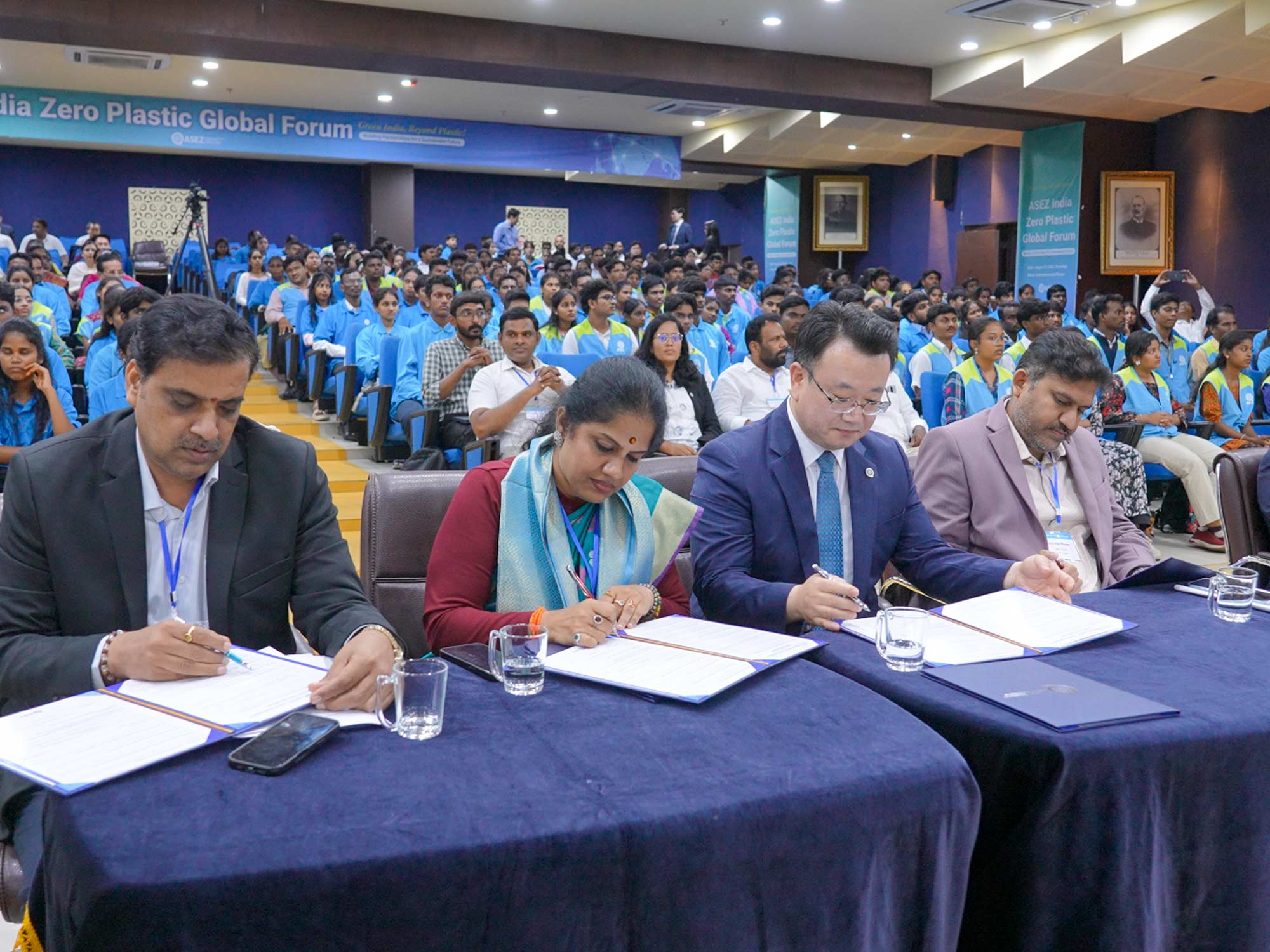
Approximately 17 key figures signed statements of support for “Zero Plastic 2040” that day. The forum also received media attention, with a total of 10 reports published or broadcast by various media outlets, including four major outlets such as Namasthe Telangana, Eenadu, and Andhra Jyothy. Local media highlighted the reduction of single-use plastics, the promotion of reusable alternatives, and university students’ efforts to raise environmental awareness.
MOUs with Universities and Specialized Institutions to Expand Environmental Education and Youth Participation
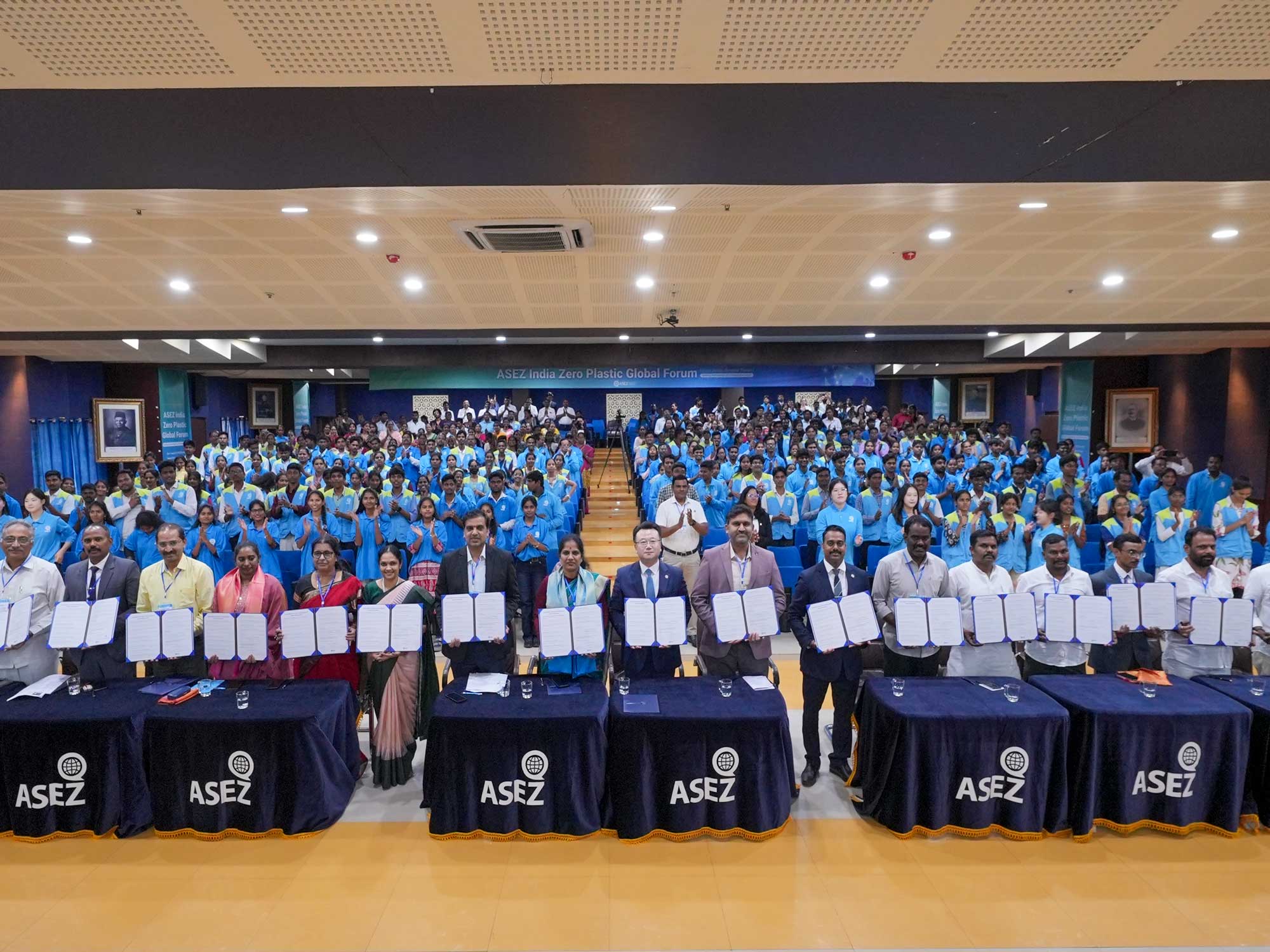
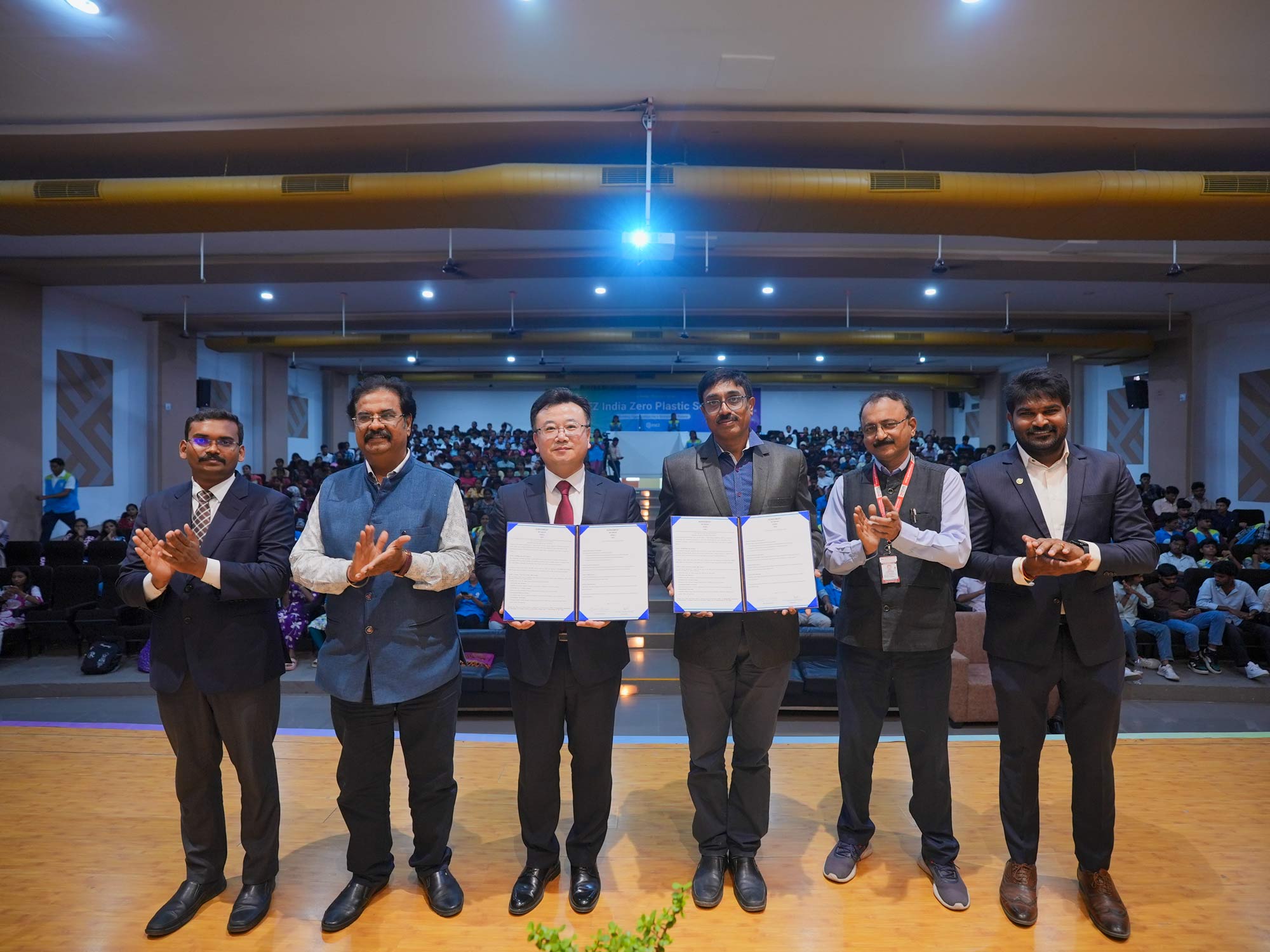
Following the forum, ASEZ continued its activities through seminars and meetings at universities and specialized institutions. On August 21, an “Earth Recovery” seminar was held at TKR College of Engineering & Technology (TKRCET), with approximately 300 university students in attendance. ASEZ and the college signed an MOU to promote environmental awareness and youth participation. The college also expressed its intention to work with ASEZ on future exchange programs.
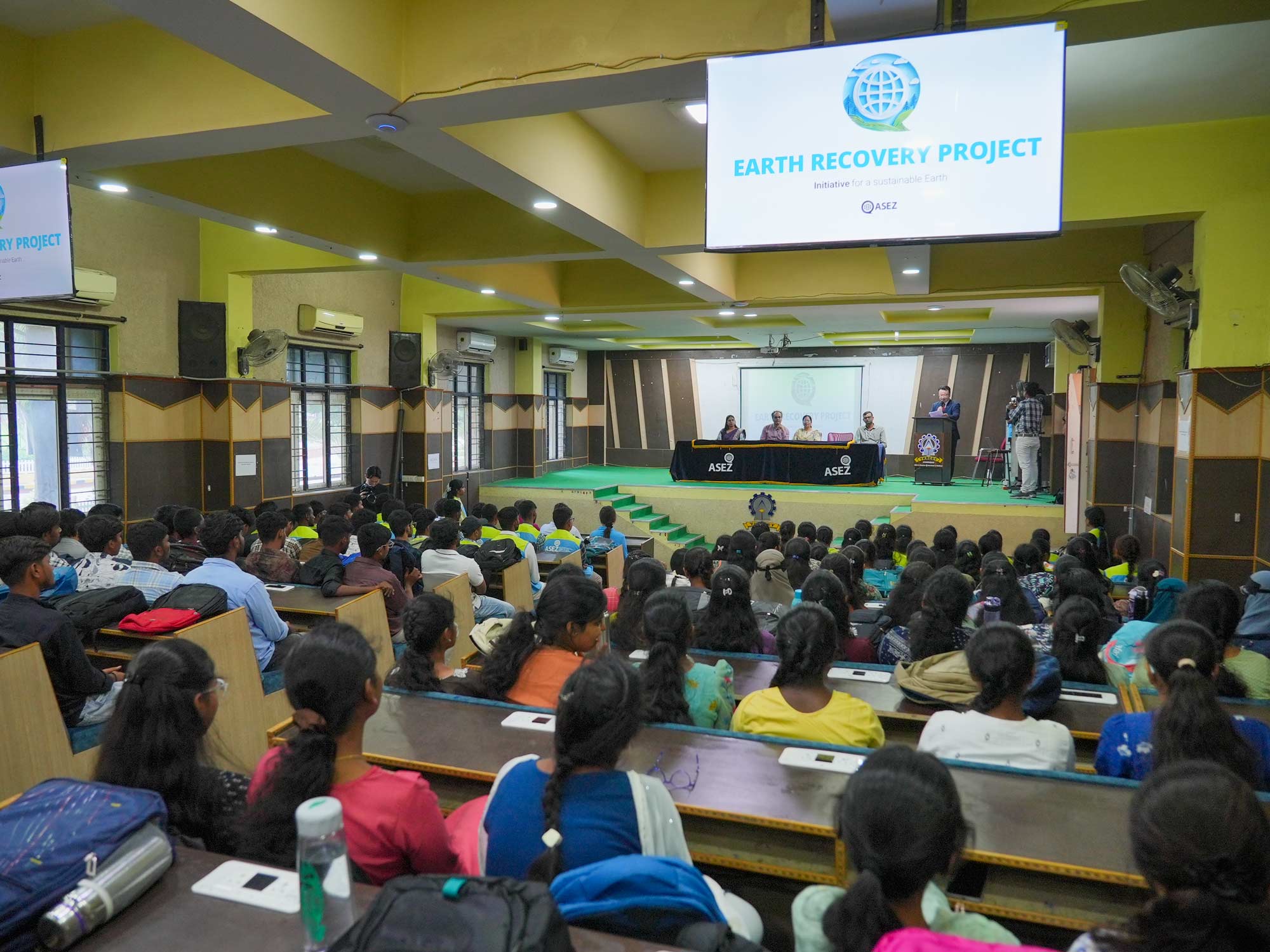
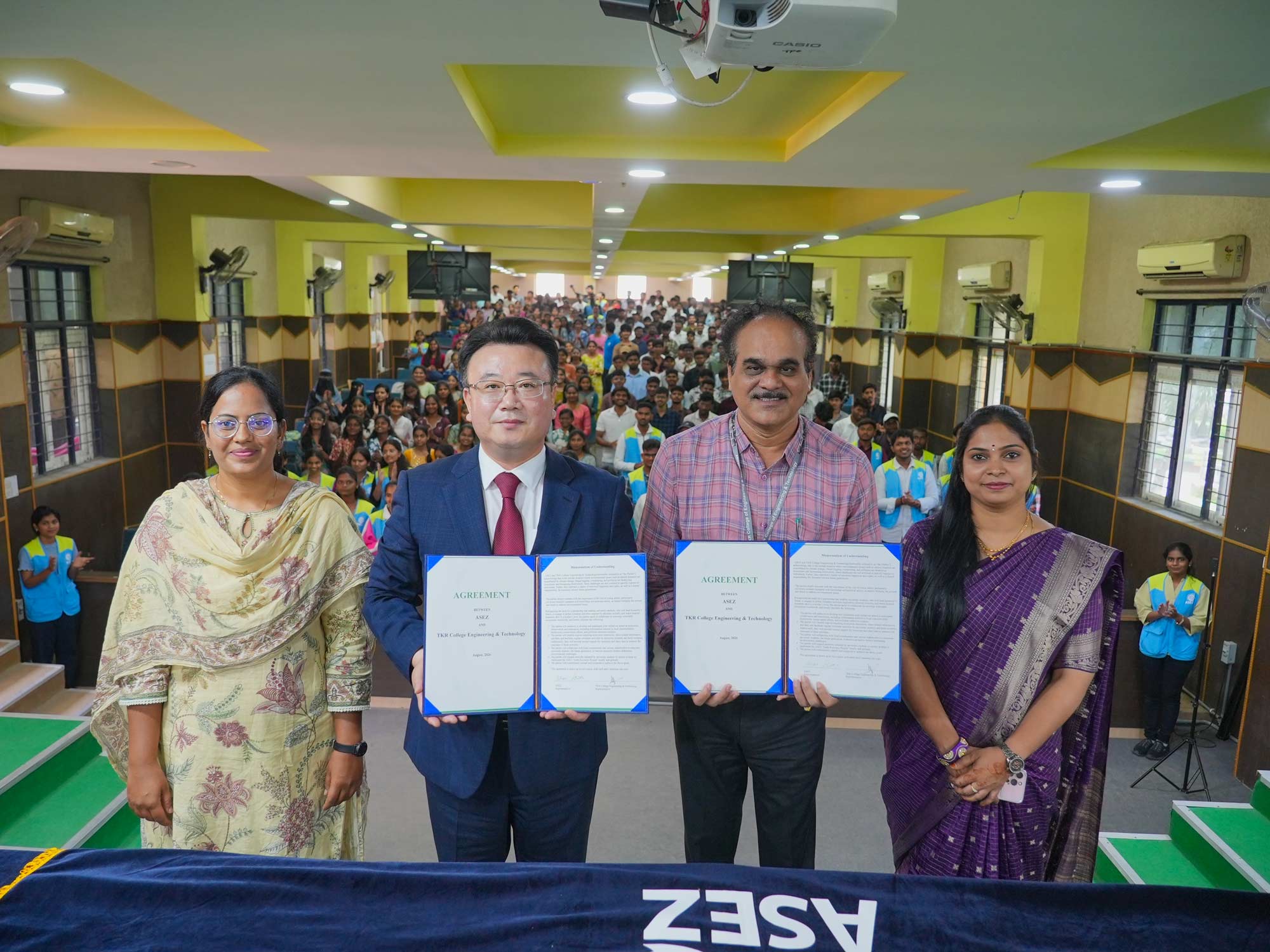
Dr. A. Ramaswami Reddy, Principal of TKR College of Engineering & Technology, noted that ASEZ and the college were working to raise environmental awareness among students and citizens. He expressed his belief that ASEZ’s awareness programs would have a positive impact on society.
On August 23, ASEZ held a meeting with the Vice President of the Telangana Association of Otolaryngologists, who is also the founder of Meraki ENT International Hospital, and signed an MOU.
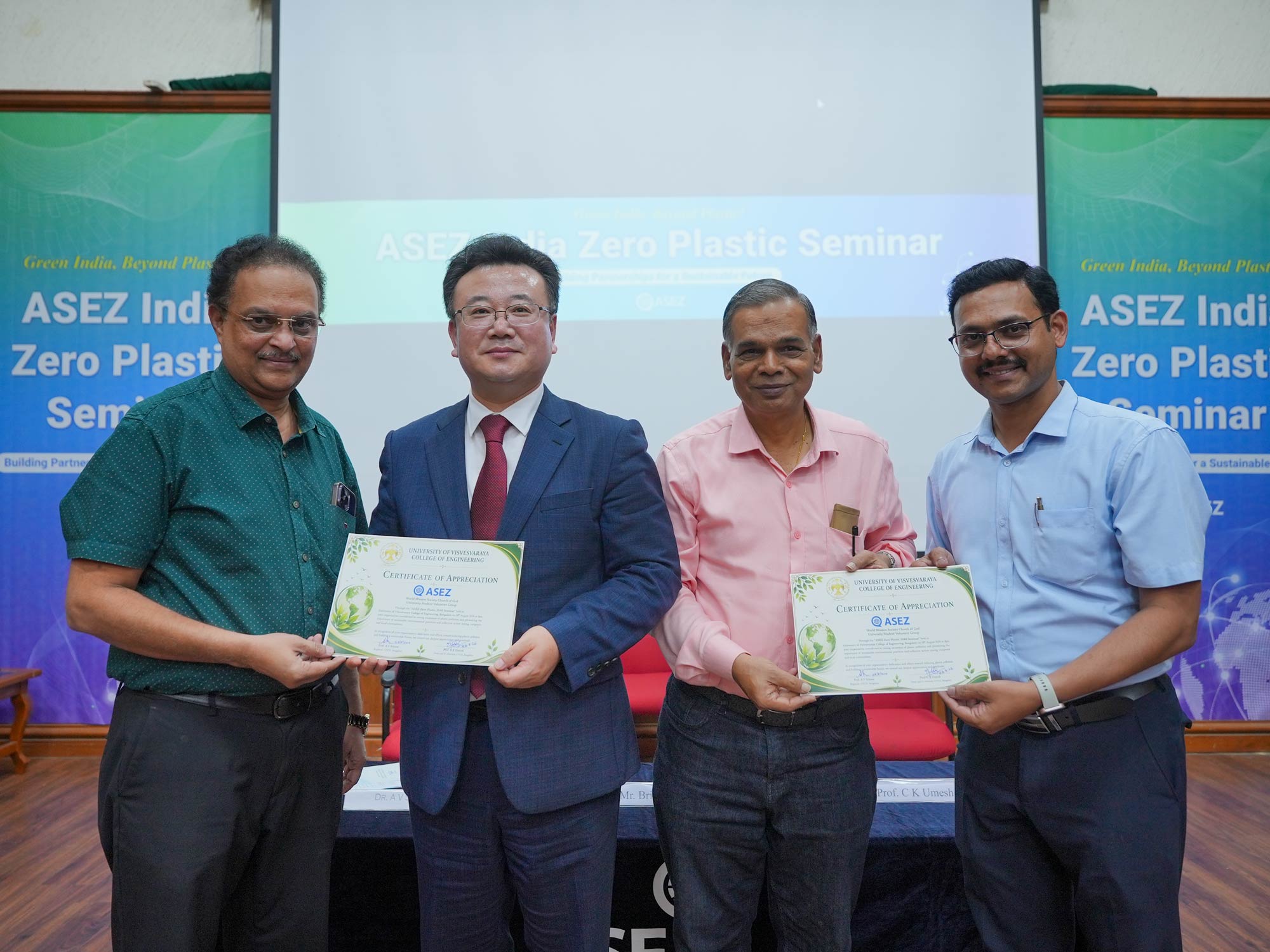
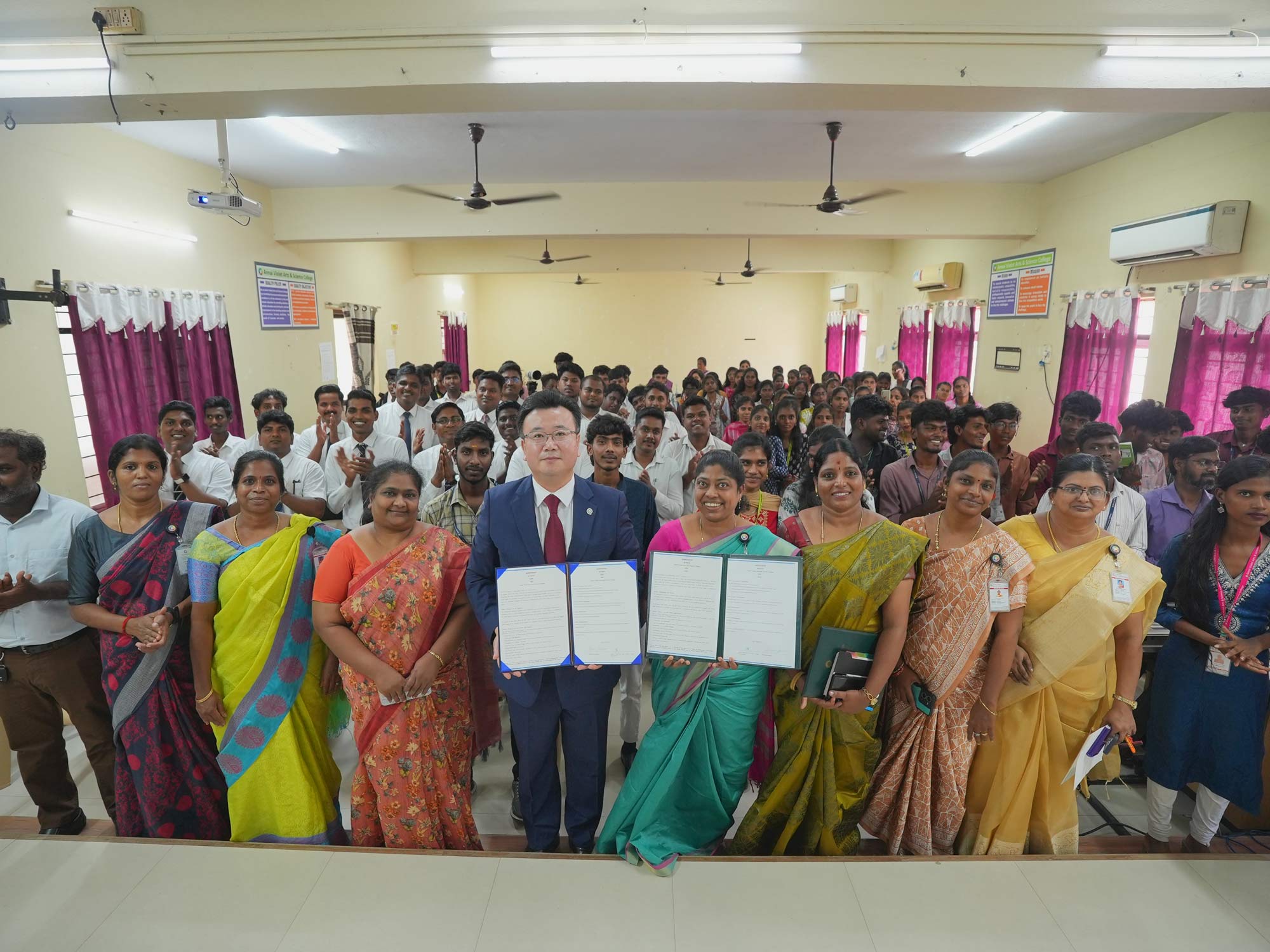
On August 25 and 27, ASEZ held “Zero Plastic 2040” seminars at Guru Nanak University and Annai Violet Arts & Science College in Chennai, respectively, signing MOUs with both institutions. On August 28, ASEZ held a seminar at University Visvesvaraya College of Engineering (UVCE) in Bengaluru. Five faculty members, including the Dean of the College of Engineering, signed statements of support for “Zero Plastic 2040.”
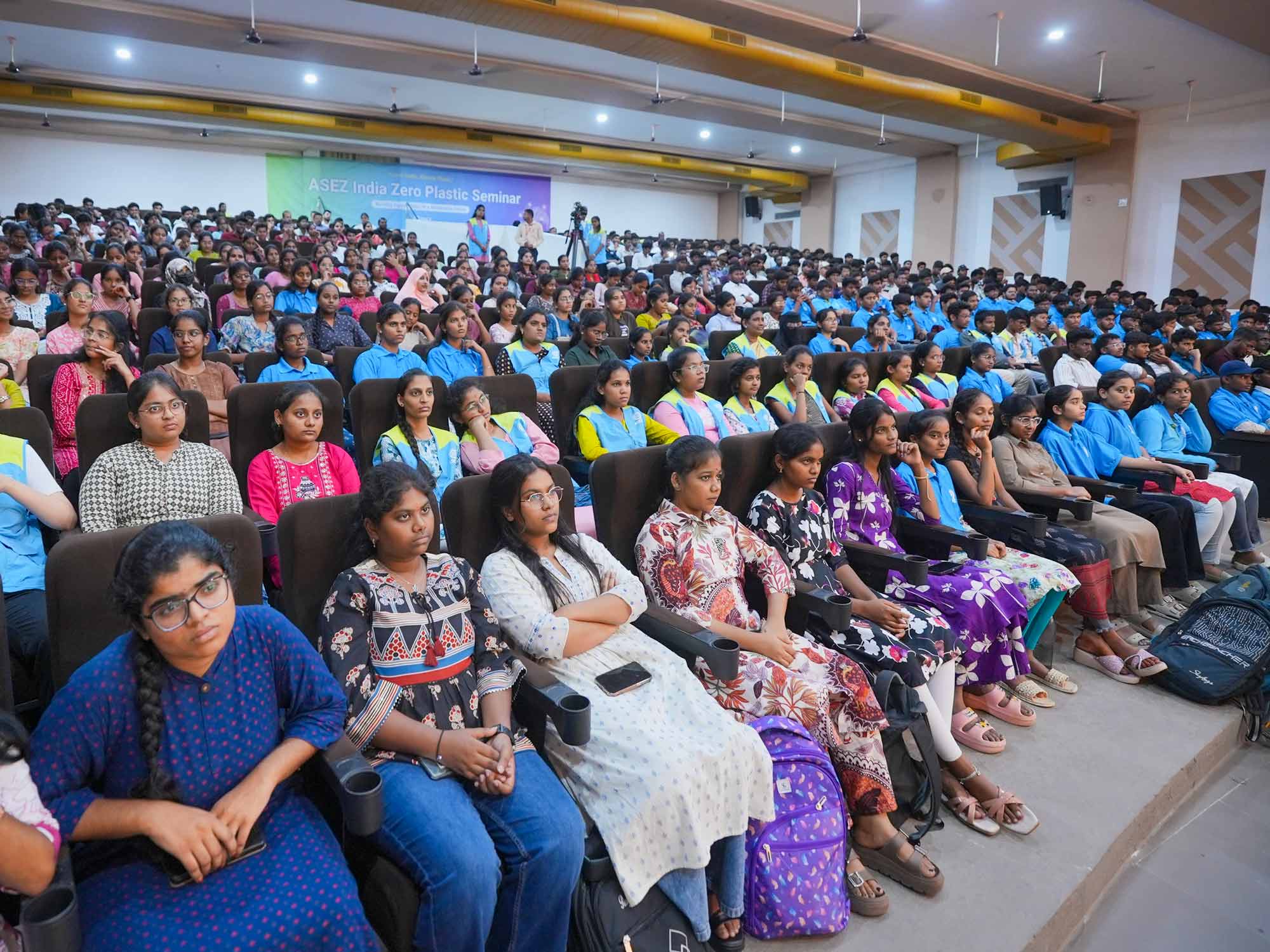
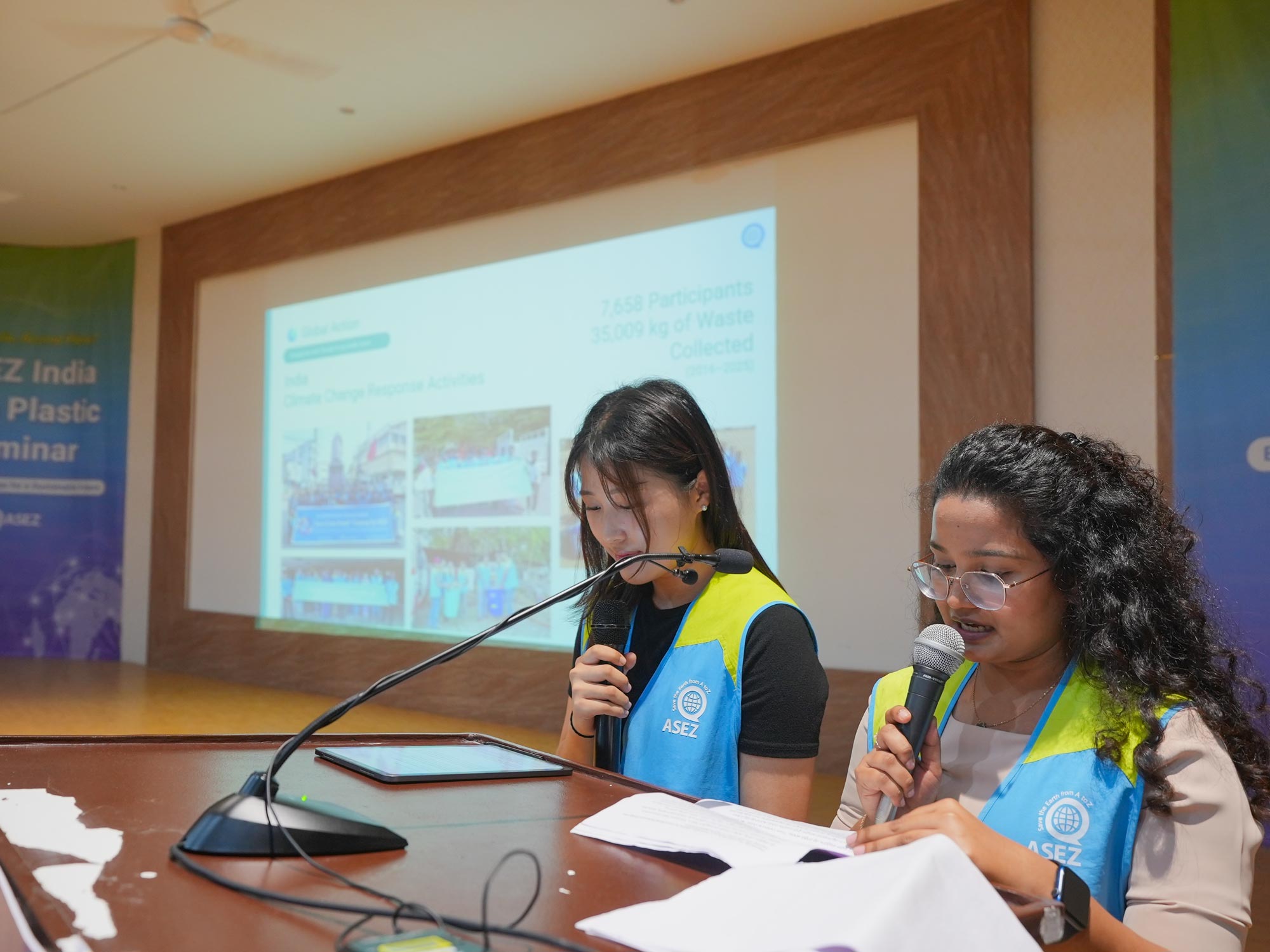
During this period, ASEZ received certificates and plaques of appreciation from five institutions: TKR College of Engineering & Technology, Guru Nanak University, Annai Violet Arts & Science College, Meraki ENT International Hospital, and University Visvesvaraya College of Engineering.
ASEZ’s activities in India brought together university students’ hands-on environmental efforts, environmental education, and cooperation with government agencies, universities, and specialized institutions. The importance of reducing plastic pollution, emphasized through cleanup activities and seminars, gained further support from key figures and led to MOUs that laid the groundwork for continued collaboration.
Efforts to reduce plastic use and promote reusable alternatives align with Sustainable Development Goal (SDG) 12, “Responsible Consumption and Production,” while cooperation among institutions to advance these efforts contributes to SDG 17, “Partnerships for the Goals.”
ASEZ will continue working to create opportunities for young people to participate directly in tackling plastic pollution and to sustain practical action in cooperation with governments, universities, and local communities.