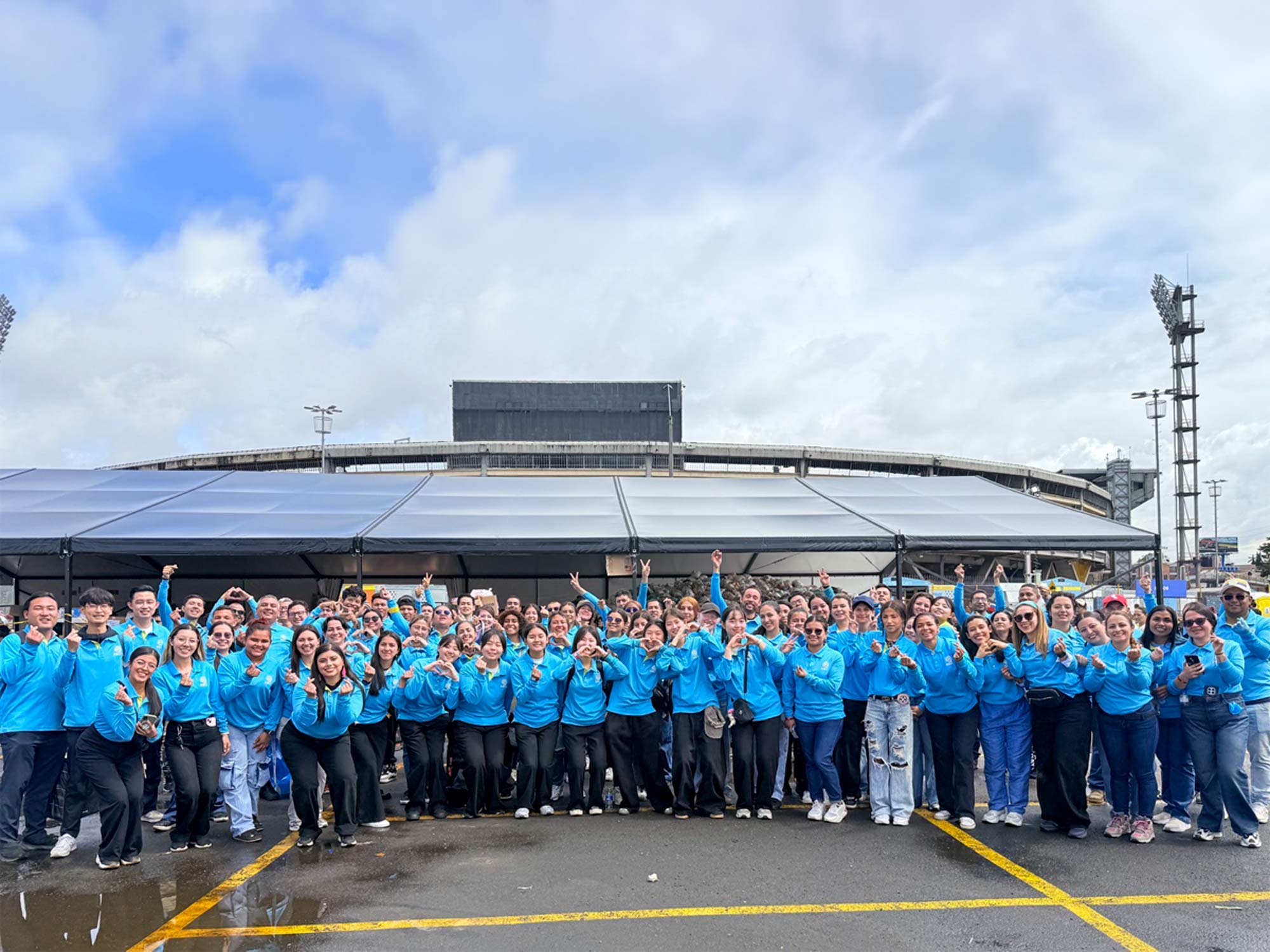
On August 10, a powerful 7.4-magnitude earthquake struck near San José del Palmar in Chocó Department, Colombia. The earthquake caused extensive damage across several regions of west-central Colombia, leaving many residents without their homes and livelihoods. In response to the sudden disaster, ASEZ members also joined emergency relief efforts to help affected communities.
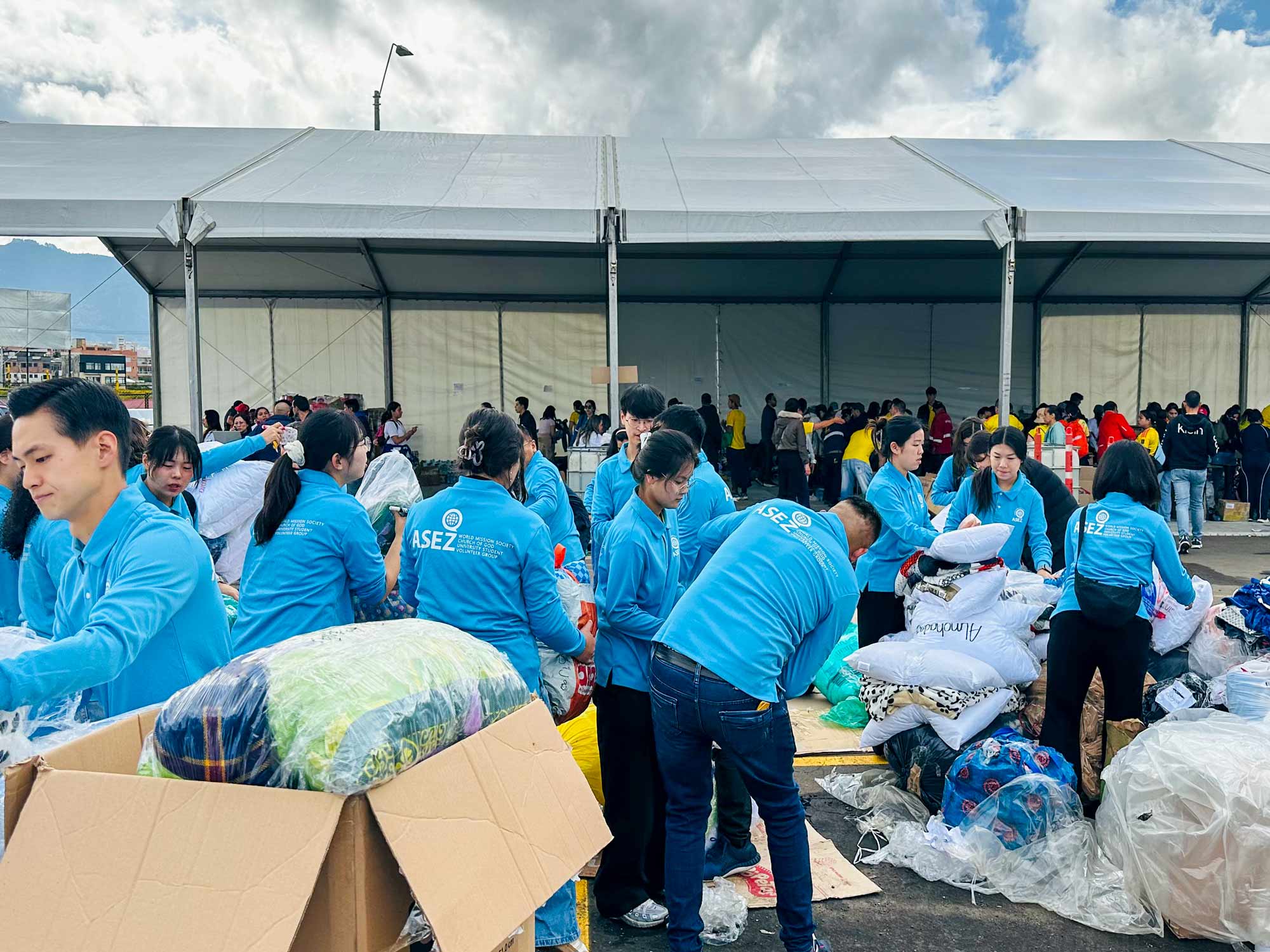
On August 13 and 16, a total of 148 ASEZ members gathered at El Campín Stadium in Bogotá to sort and pack relief supplies for residents affected by the earthquake. The activities were carried out in cooperation with the City of Bogotá and the Colombian Red Cross.
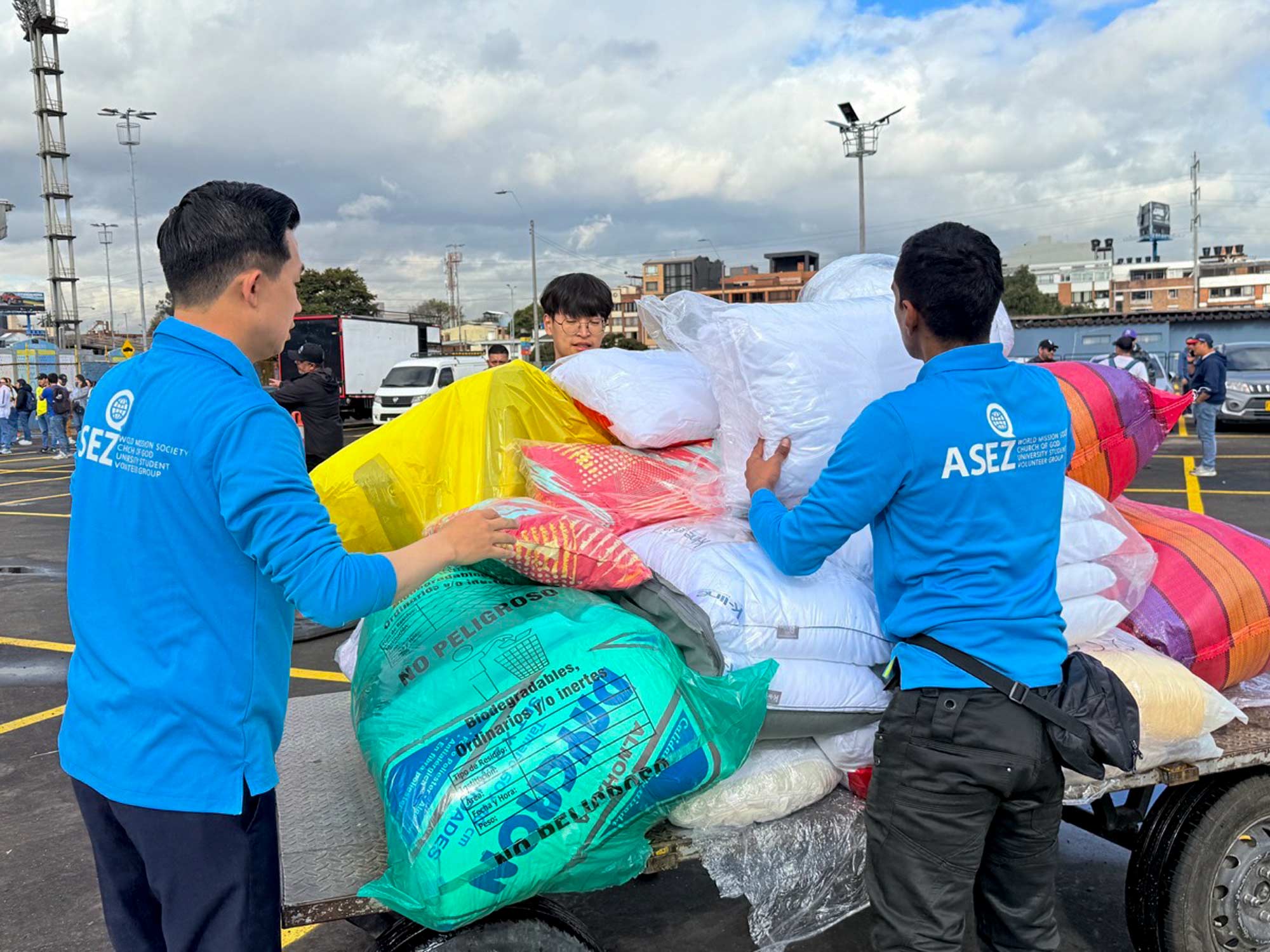
The members sorted donated supplies from various locations into categories such as food, bedding, household items, and cleaning supplies, and assembled relief kits so that they could be quickly delivered to affected areas. On August 13, they prepared 1,000 bedding kits consisting of pillows and blankets. On August 16, they packed 800 food kits, each containing approximately 8 kg of rice, salt, sugar, cooking oil, pasta, beans, flour, coffee, snacks, and other items.
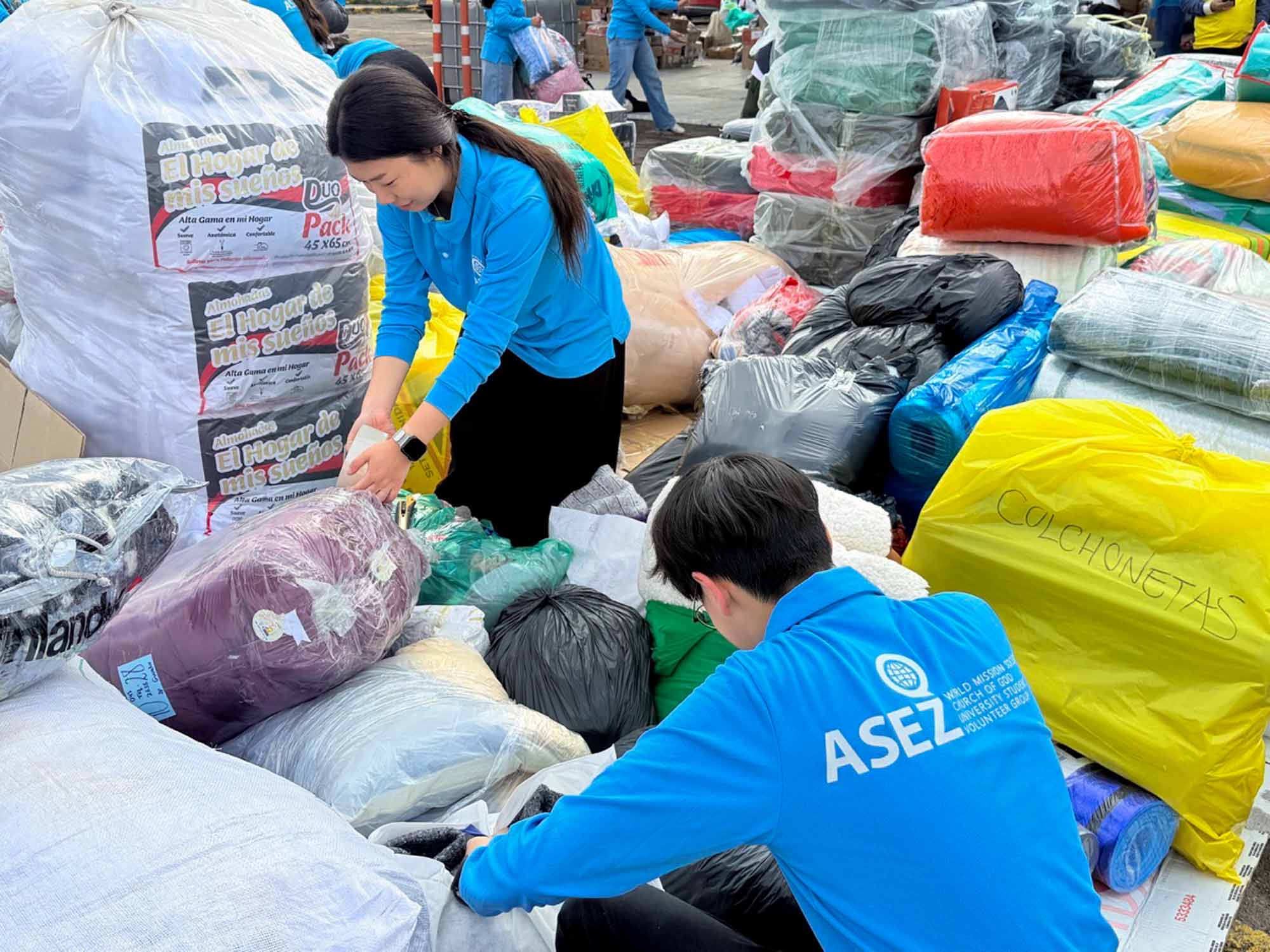
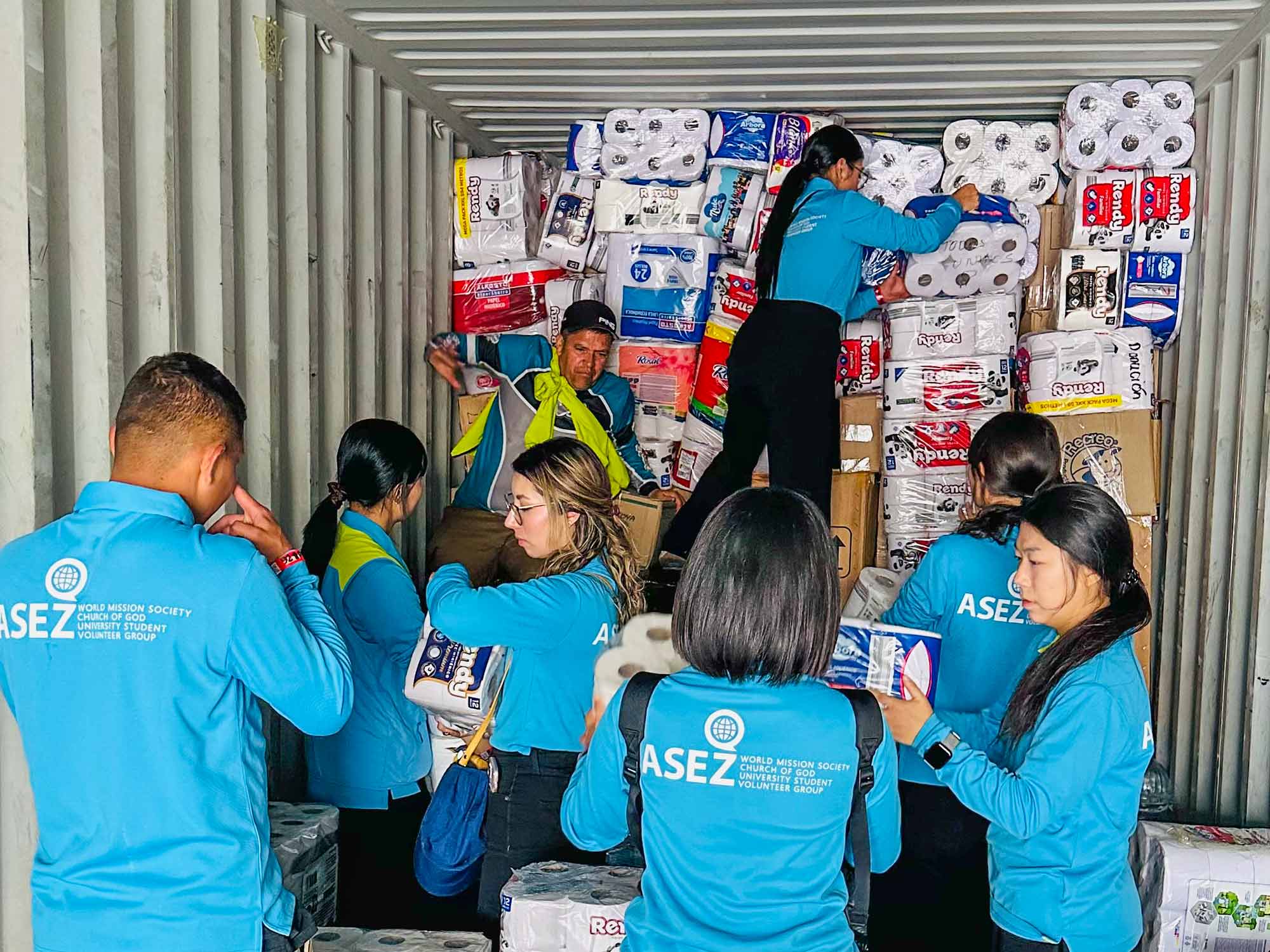
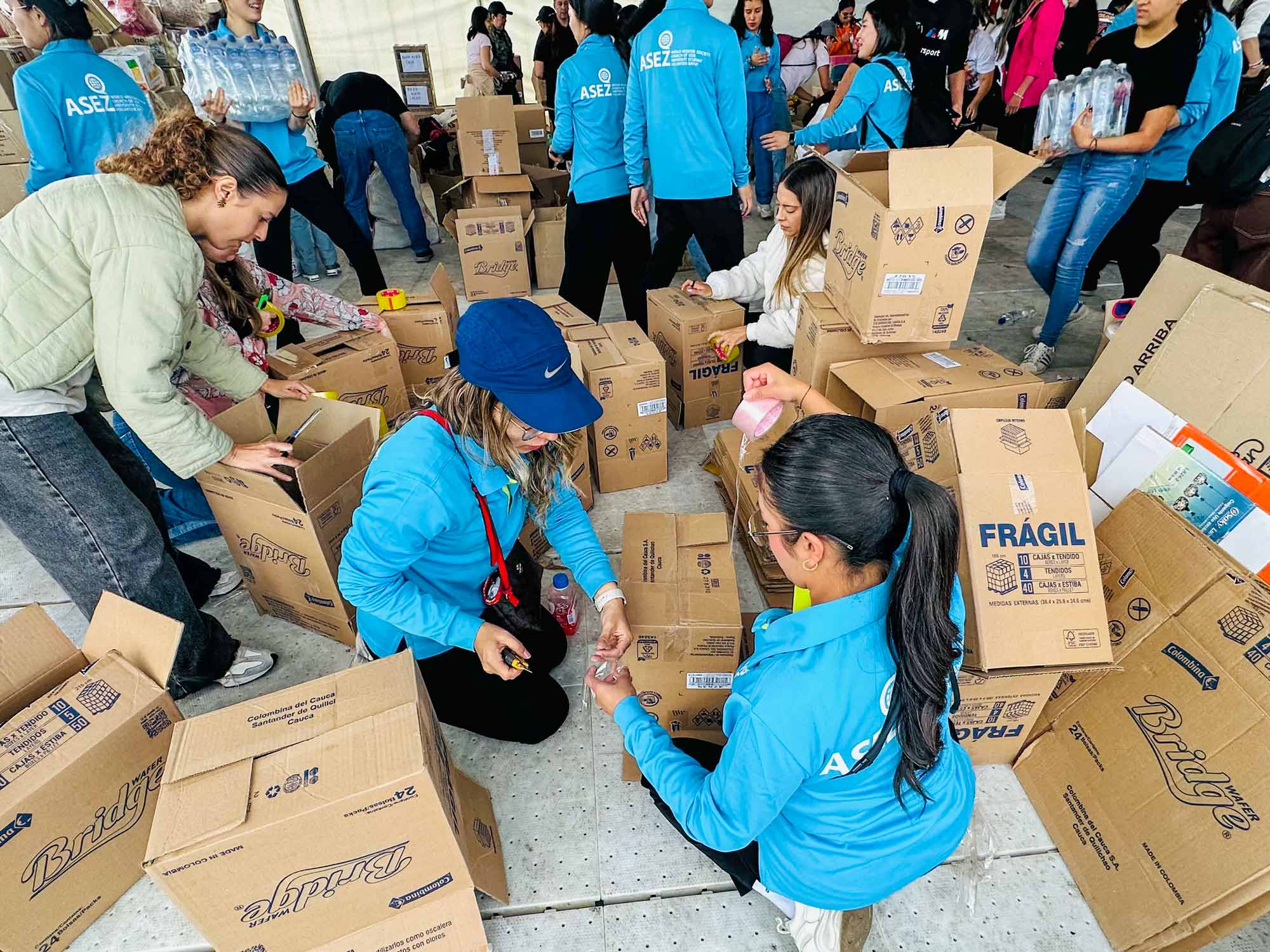
Bedding and food are essential supplies that help disaster-affected residents meet their basic needs in the immediate aftermath of a disaster. By providing these necessities, the emergency relief efforts helped stabilize their daily lives and lay the groundwork for their return to normalcy. Citizens and representatives from public institutions, businesses, and media organizations also joined the relief efforts, helping prepare supplies for those affected by the disaster.
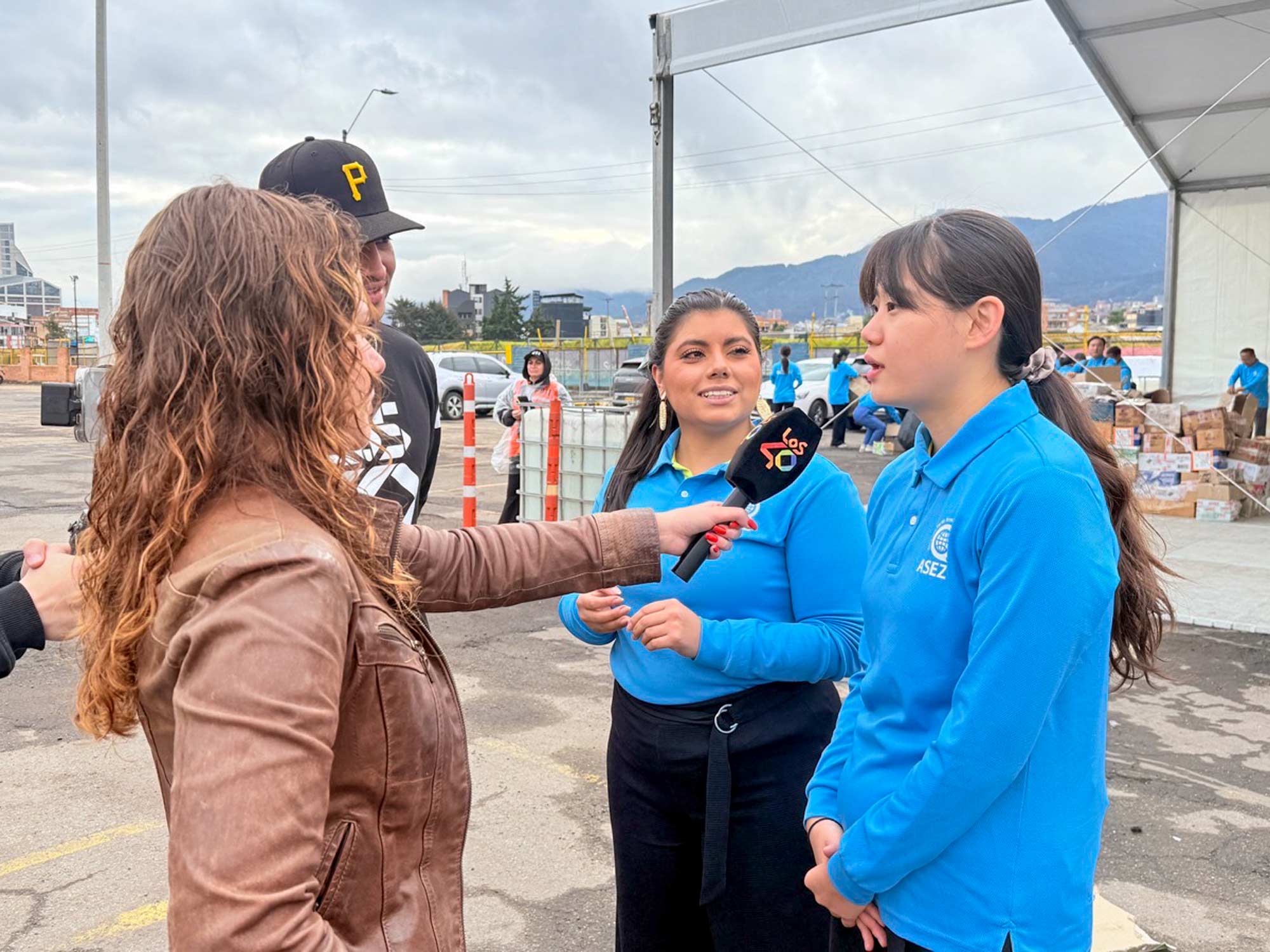
ASEZ’s activities were also covered by major Colombian media outlets. Caracol Televisión, one of Colombia’s leading private broadcasters, featured ASEZ’s relief efforts on its news programming and morning show Día a Día, and related coverage was also shared through its official social media channels. Other local television, news, and radio outlets also reported on the activities. Colombian actress, model, and television personality Amparo Grisales also joined the relief efforts and shared the message, “Let us save the world with a mother’s heart,” showing her solidarity with those affected by the disaster.
The activities went beyond the immediate delivery of relief supplies, continuing ASEZ’s longstanding disaster relief efforts. Beginning with recovery efforts following the 2015 Nepal earthquake, ASEZ has carried out relief and recovery activities in disaster-affected areas, including wildfires in South Africa, heavy snowfall in the United States, and flooding in Peru. ASEZ also provides ongoing disaster response training through the ASEZ Disaster Relief Team (ADRT), pursuing a “resilient society” that is prepared for disasters and able to recover from them, rather than focusing only on assistance after a disaster occurs.
An ASEZ member from Chonnam National University who participated in the activities in Colombia during the summer break said, “I believe that many small acts of support can come together to create hope strong enough to overcome even a major earthquake. I was deeply moved by the way people in Colombia cared for and helped one another.” The member added, “I hope the people of Colombia can return to their normal lives as soon as possible, and I will continue doing my part as an ASEZ member to help create a better world.”
Disaster response does not end with immediate relief in the aftermath of a disaster. It must continue through the process of strengthening resilience so that communities can return to daily life and better prepare for future disasters. In particular, young people can play a role beyond participating in relief efforts: they can raise awareness of disaster risks, identify local needs, and help strengthen their communities’ capacity to respond. The United Nations Office for Disaster Risk Reduction (UNDRR) also emphasizes young people as agents of change in reducing disaster risk and building community resilience.
This emergency relief effort brought together university students, local government, the Red Cross, and civil society to support the recovery of disaster-affected residents. In this respect, it is also connected to SDG 11, “Sustainable Cities and Communities,” which seeks to reduce disaster impacts and build resilient communities, and SDG 17, “Partnerships for the Goals,” which emphasizes cooperation among diverse stakeholders. ASEZ will continue to participate in emergency relief efforts when disasters occur while continuing disaster preparedness education and cooperation with local institutions even outside times of disaster. Through these efforts, ASEZ aims to enable young people to take an active role in disaster response and community recovery and contribute to building safer and more resilient communities.