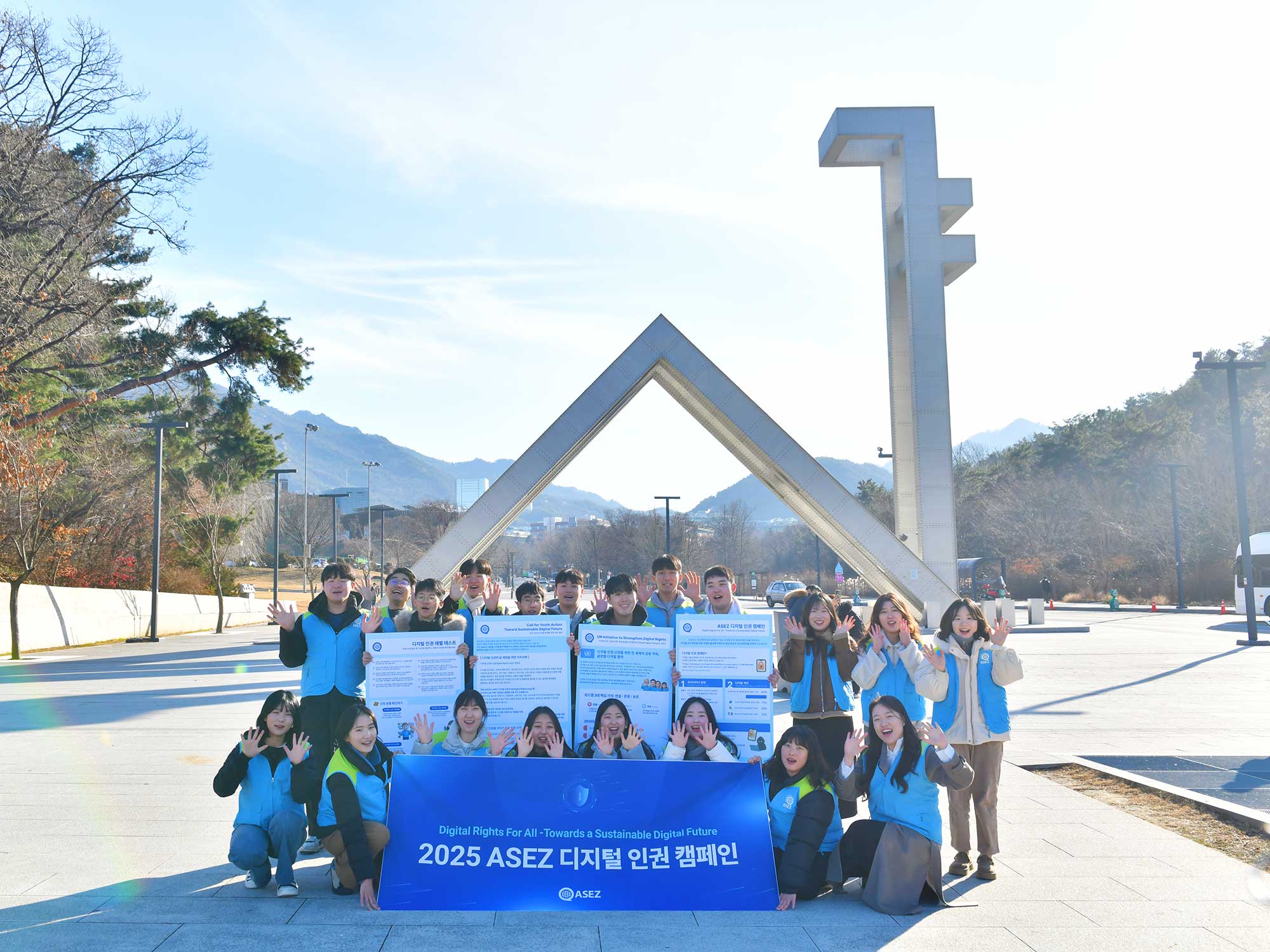
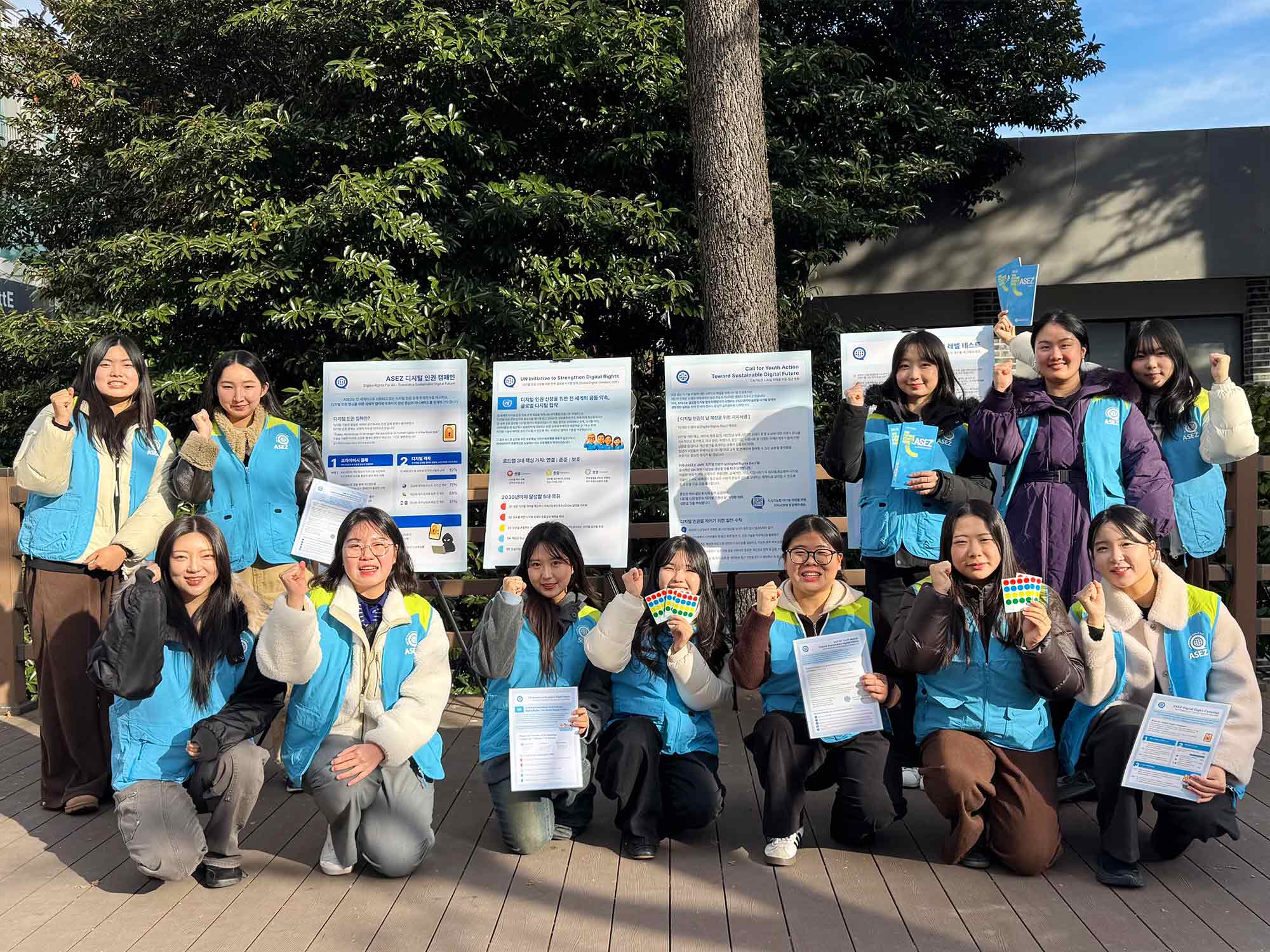
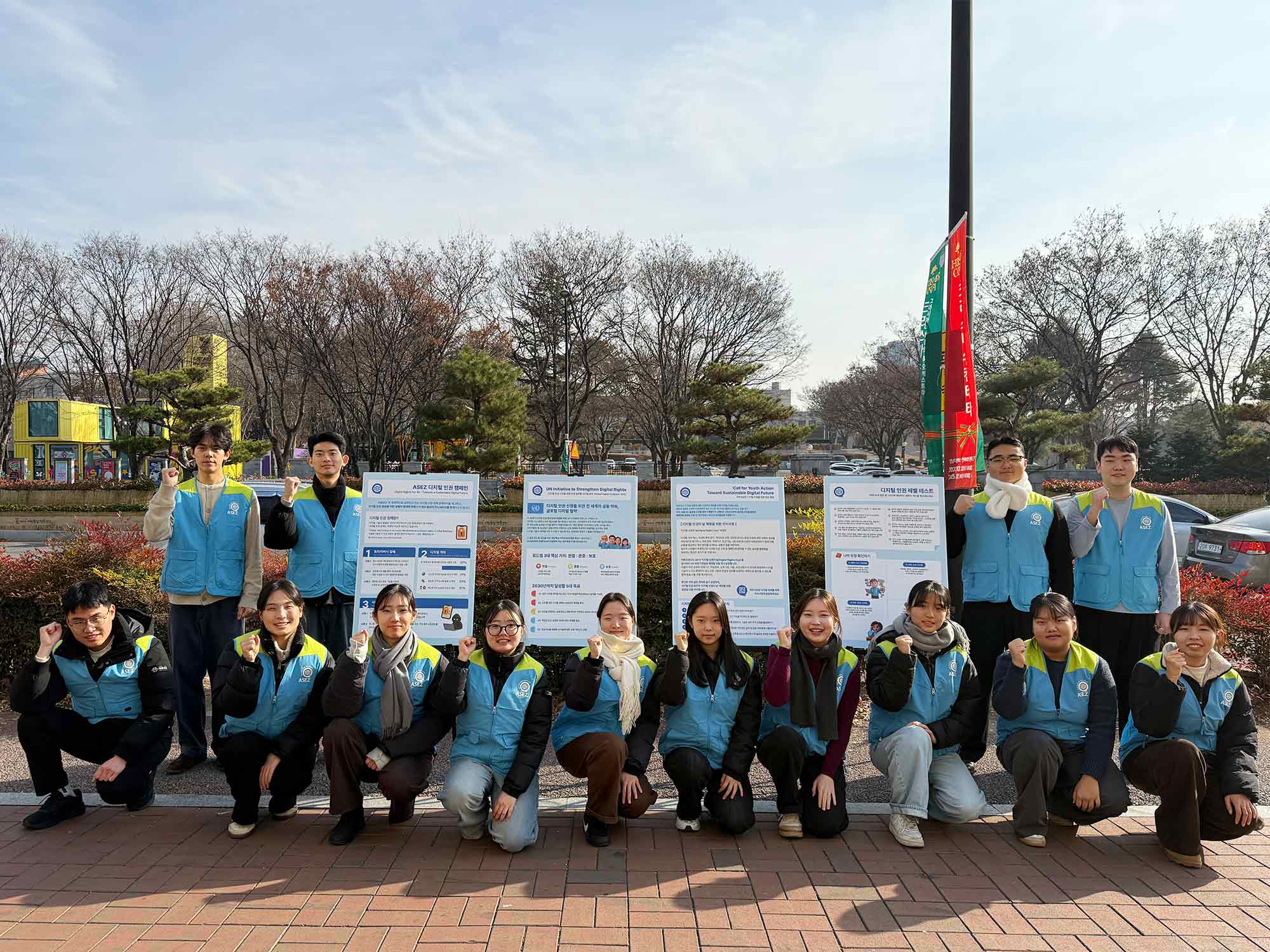
For about one month starting on December 7, 2025, ASEZ carried out a Digital Rights Campaign at 85 universities across three countries: South Korea, Germany, and Nepal.
This campaign was organized to raise awareness of the concept of digital rights and to share various cases of human rights violations occurring in online spaces, thereby enhancing digital rights awareness among young people and the public. As a result, the campaign successfully gathered 2,693 signatures in support of establishing an international commemorative day, “Digital Rights Day.”
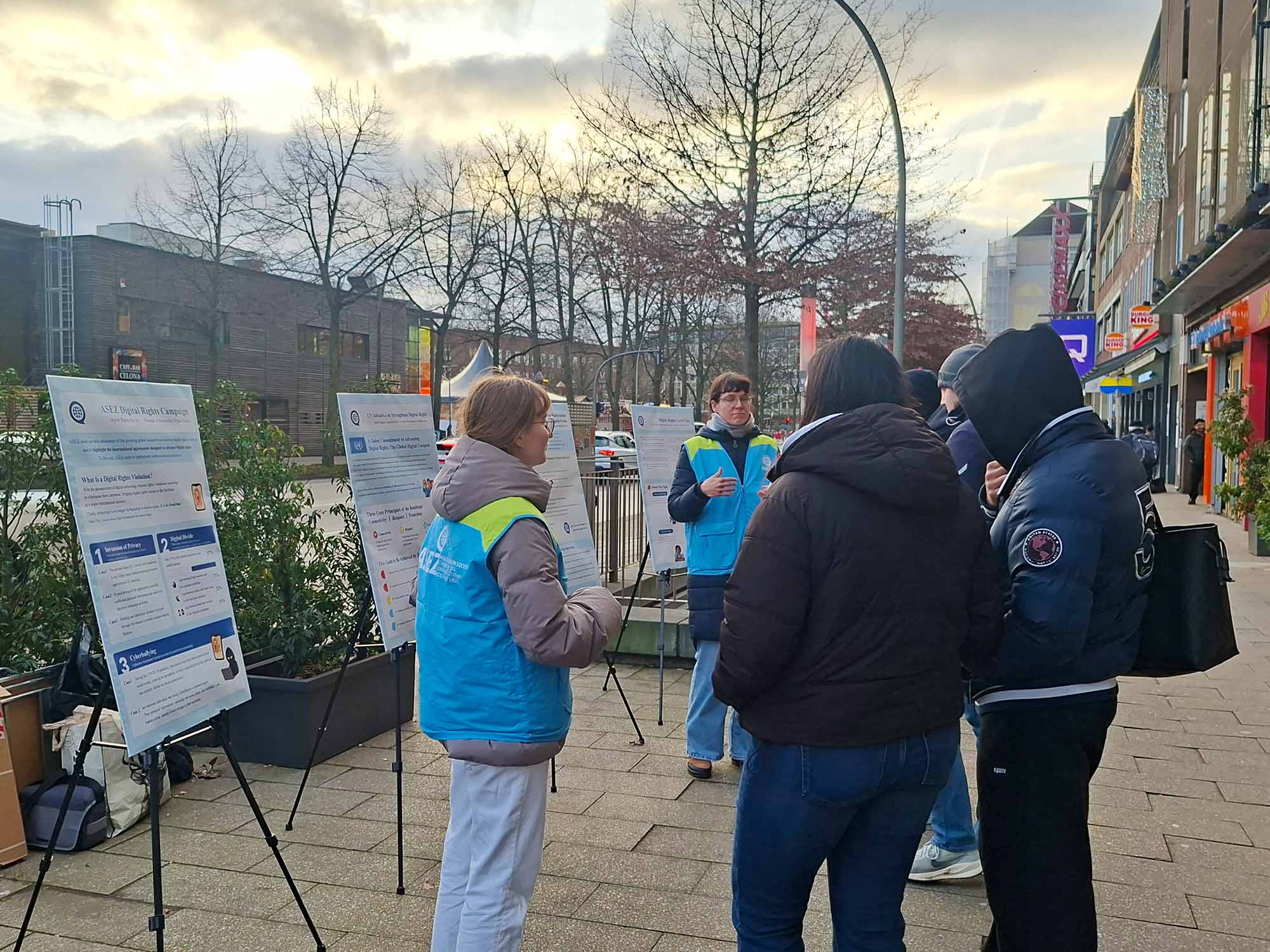
Panels installed throughout the campuses first explained what constitutes digital rights violations. Through real-life examples, students learned that actions such as the distribution of photos, videos, and personal information without consent on smartphones, social media, and online platforms they use every day are forms of privacy infringement. They also learned that the digital divide—gaps in access to information, education, and opportunities caused by differences in devices, networks, and digital literacy—and cyberbullying carried out through group chats, comments, and social media messages all fall under digital rights violations.
As students came to realize that behaviors they had previously thought were “just jokes” or “simply the way things are” could in fact infringe on someone else’s rights, many paused in front of the panels to read the information carefully.

The campaign also introduced the background behind why it was launched.
It highlighted that the international community is discussing people-centered and rights-based digital principles through initiatives such as the UN GDC (Global Digital Compact), and that digital technology is no longer merely a tool but has become the front line of both the protection and violation of human rights. Through this, the campaign aimed to help students view digital rights within a global context.
After learning what the Digital Compact entails and understanding that not only governments, corporations, and platforms but also citizens and young people are key stakeholders, many students shared their impressions, saying, “This is the first time I realized that digital rights are an international issue.”

After exploring the concept of digital rights and the international context through the panels, the campaign moved on to a signature drive calling for the establishment of Digital Rights Day and encouraging participation in practical efforts to protect digital rights. At this stage, ASEZ delivered the message that “protecting digital rights begins not with grand actions, but with small changes in daily habits,” and presented five practical guidelines.

These included: refraining from uploading posts, photos, or videos containing others’ personal information without consent; actively using reporting functions when encountering cyberbullying or hate speech online; setting strong, unique passwords for all accounts and enabling additional authentication whenever possible; avoiding the entry of sensitive personal information or financial transactions on unsecured free or public internet networks; and carefully reviewing privacy access permissions, such as location sharing, when installing new apps, allowing them only when truly necessary.
Students commented that these were things they already knew but had not put into practice, and many made personal commitments by signing in support of the campaign.

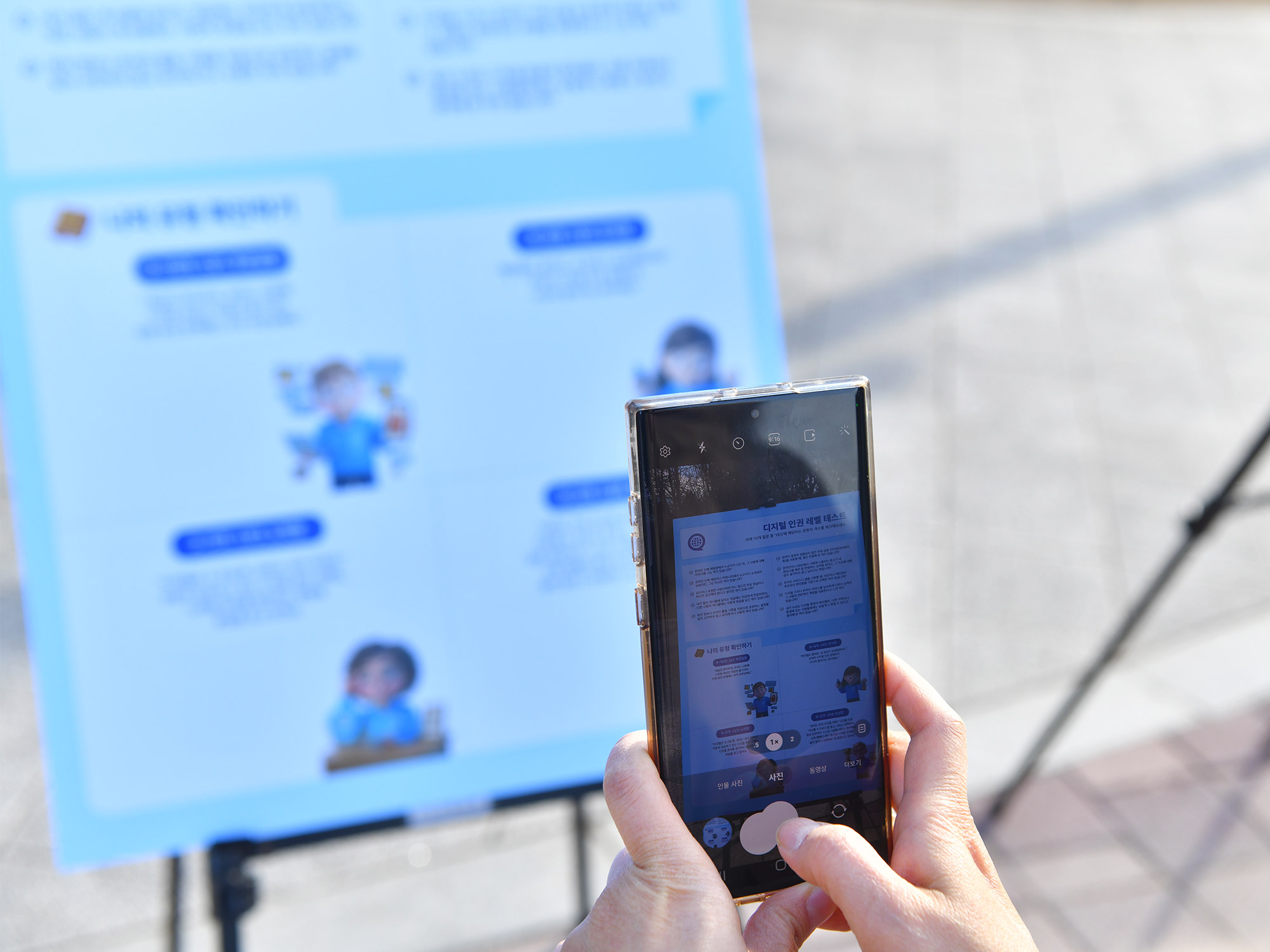
At the campaign sites, a Digital Rights Level Test was also conducted both online and offline.
Students could access the ASEZ Digital Rights Campaign website and check their own digital rights level on their mobile devices, while the same test content was displayed on the campaign panels for on-site participation. The questions were designed to prompt reflection on everyday behaviors that are often overlooked, such as whether one has ever engaged in gossip about someone in a group chat, used public Wi-Fi without much thought, or carefully read permission requests when installing apps.
After completing the test, students took part in an interactive activity by selecting the zone corresponding to their results in the designated “Level Zone” area on the panel and placing a sticker there. As they compared results with one another, students shared reflections such as, “I didn’t realize how indifferent I had been, and with just a little more attention, I could use digital services much more safely.”

By reviewing the results of the level test alongside the real-life cases presented on the panels, participants came to realize that each small action they had previously overlooked or taken for granted was closely connected to digital rights. Many shared their reflections, saying, “When I heard the term ‘digital rights,’ I only thought of large-scale laws or institutions, but I realized that everyday actions like logging in, uploading photos, and posting comments are all related to digital human rights. Now, I feel that I shouldn’t simply pass by problems I see online without taking action.”
Shin Min-jae, an ASEZ member studying at Soongsil University, shared his thoughts during the campaign, saying, “When using AI and the internet, I realized that rather than pursuing convenience indiscriminately, we need to have an attitude of reflecting on whether our actions might infringe on the rights of others.” He went on to emphasize, “Beyond the individual level, when we witness situations within the university community where others’ rights are violated, such as through reckless hate speech, we need to create an environment in which people can speak up courageously instead of remaining silent.”

This ASEZ Digital Rights Campaign was an effort to translate the broad and complex discourse surrounding digital technology into the language of everyday campus life. It was particularly meaningful in that it helped students recognize that issues such as privacy violations, the digital divide, and cyberbullying are no longer someone else’s problems, while also connecting the digital compacts being discussed by the international community with the voices of young people in South Korea, Germany, and Nepal.
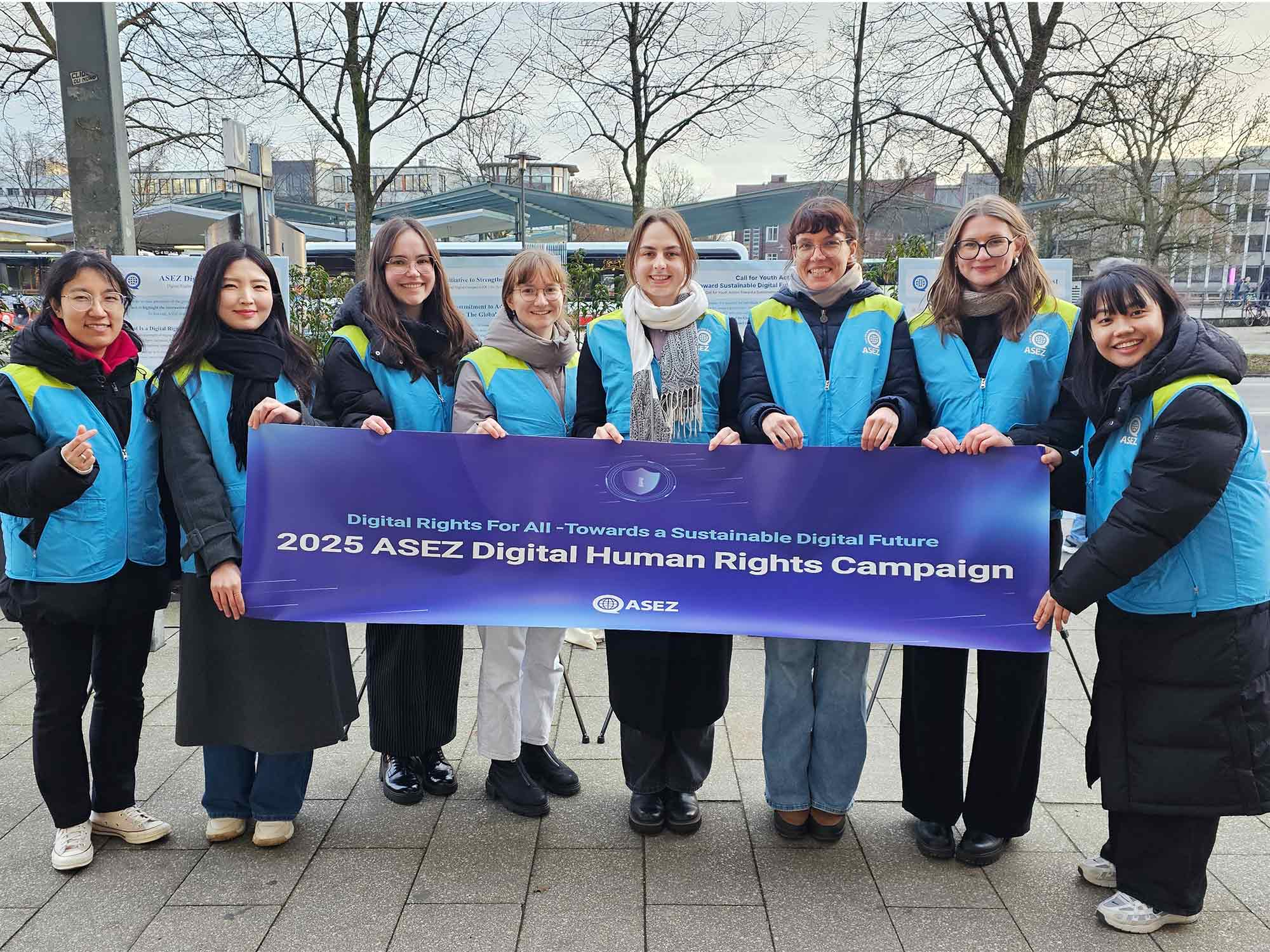
Building on this initiative, ASEZ plans to gradually expand cooperation with universities in each country to develop digital rights education and campaigns, cyberbullying prevention programs, and support activities to reduce the digital divide. ASEZ hopes that the simple principle—that everyone has the right to be safe and respected in digital spaces—will become a lived reality through the actions of young people that began on campuses.