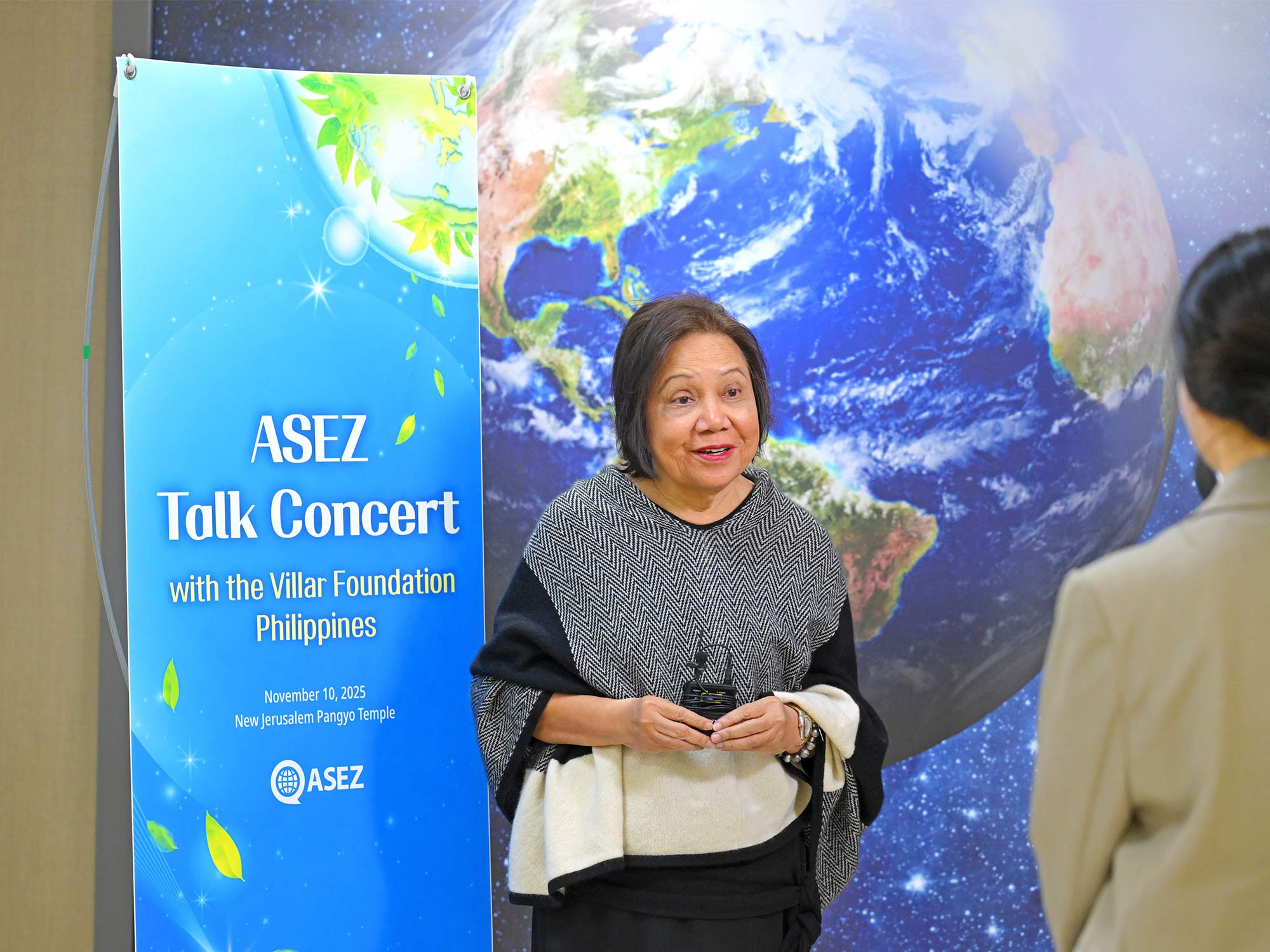
On November 10, 2025, ASEZ hosted the “ASEZ Talk Concert with the Villar Foundation of the Philippines,” creating a forum to share real-world experiences from the fields of climate action, environmental protection, and social welfare with university students. The Villar Foundation is a nonprofit organization in the Philippines that has long carried out diverse initiatives to protect the environment and improve healthcare and welfare for vulnerable communities. The event featured a keynote lecture by Cynthia A. Villar, Executive Director of the Villar Foundation and a former Philippine Senator, who was visiting Korea at the time.
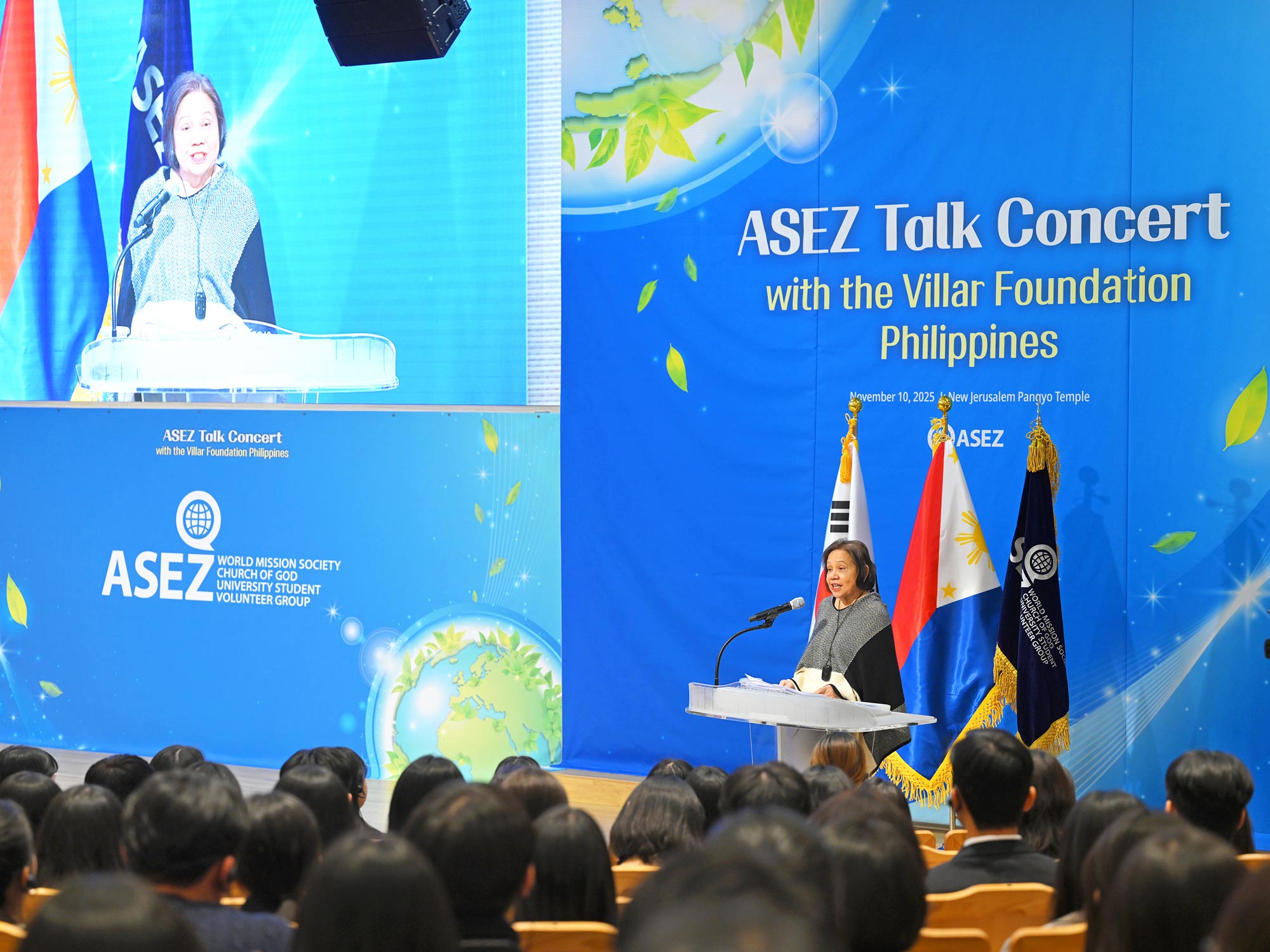
Drawing on her legislative work during her time as a senator and the Villar Foundation’s wide-ranging welfare projects, Ms. Villar shared practical knowledge and on-the-ground experiences with approximately 560 university students, exploring together the direction the younger generation can take. Having consistently supported ASEZ activities—such as attending ASEZ environmental and crime-prevention forums in the Philippines—she joined the event to engage directly with Korean young adults.
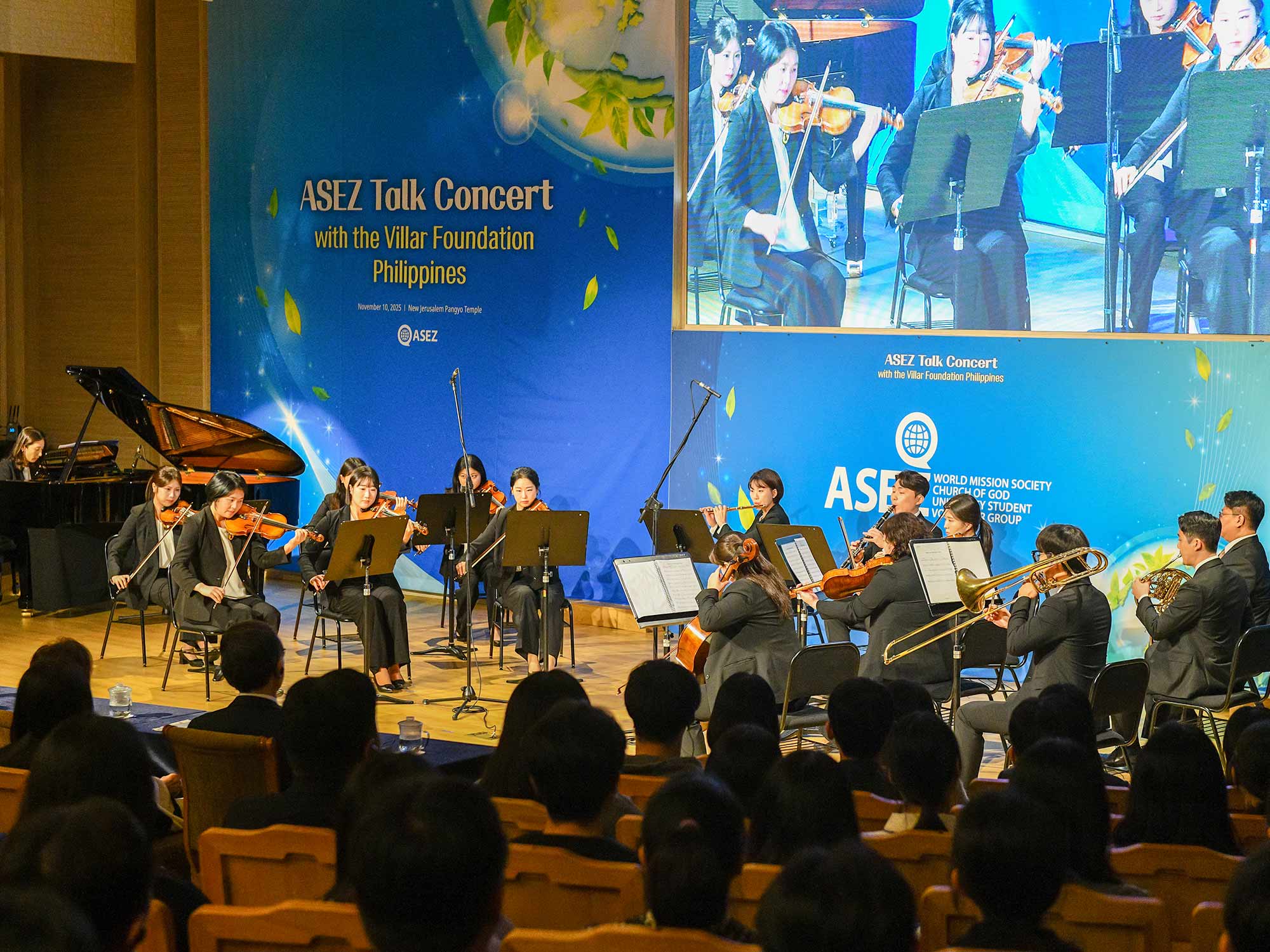
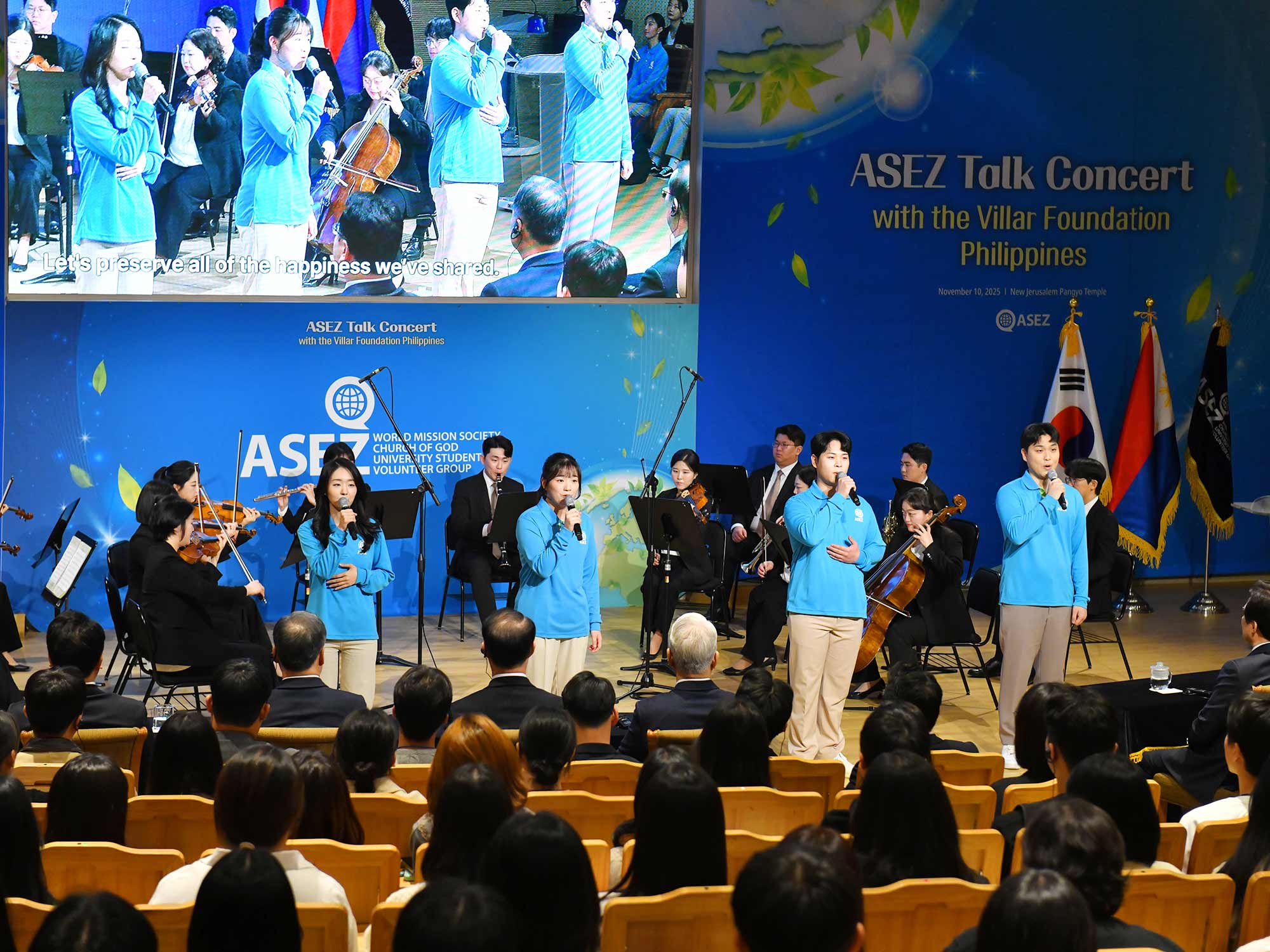
The program began at 3:00 p.m. with a welcoming performance for Ms. Villar and her delegation. An orchestra and mixed choir performed pieces including “When You Wish Upon a Star” from the animated film Pinocchio, the environmental song “Into the Forest,” and “Right Now, Right Here,” conveying messages of courage and hope.
In the opening address, General Pastor Kim Joo-cheol of the World Mission Society Church of God emphasized, “The Villar Foundation’s actions, which have proven the value of sustainability through practice, closely align with ASEZ’s goal of university students taking the lead in changing the world.” He expressed gratitude to Ms. Villar for making time to encourage students despite her busy schedule, adding, “When individual thoughts and perspectives change, actions and choices change. When those changes come together, the future changes.” He encouraged ASEZ members, saying, “I hope the interest and passion of ASEZ members gathered here today will become the first step toward restoring the Earth and realizing a sustainable society.” ASEZ members then took the stage to present ASEZ’s climate action initiatives carried out around the world, sharing youth-led change in action.

In her keynote lecture, Ms. Villar offered vision and practical direction to ASEZ members, based on her experience improving residents’ quality of life and awareness while conserving and restoring ecosystems in the Philippines. She particularly emphasized the message that “protecting the environment is about caring for the Earth, and at the same time caring for the people who live on it,” stressing the need to consider local livelihoods and daily life throughout the environmental improvement process.

Ms. Villar also introduced several flagship projects led by the Villar Foundation in Las Piñas and nearby areas.
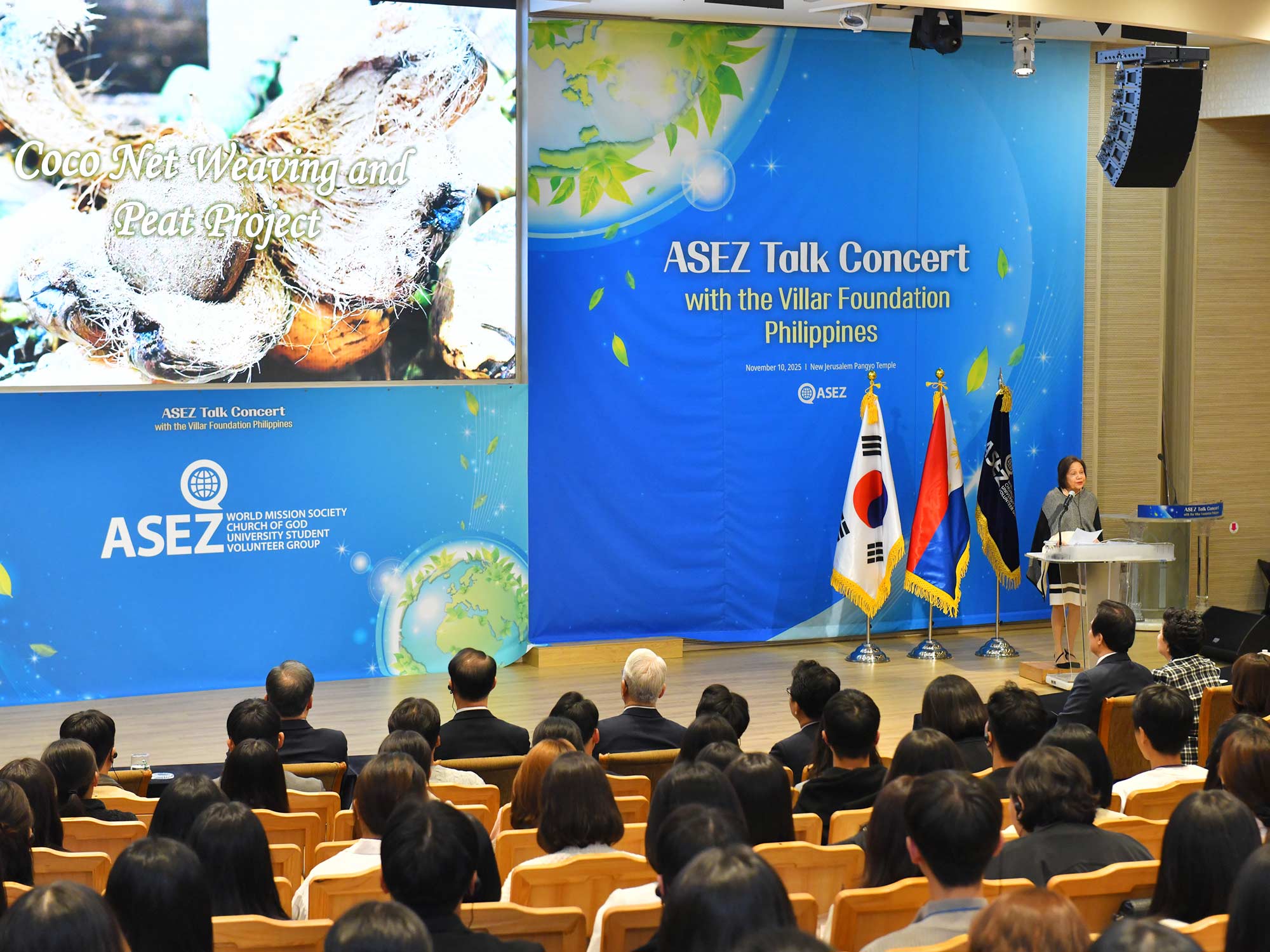
First, through the Sagip Ilog (Save the River) program, waste was removed from the Las Piñas and Zapote Rivers, informal settlers living along the riverbanks were relocated to public housing, and new livelihoods were created through weaving and textile production using water hyacinth and coconut husks.
Second, she shared the experience of developing the Las Piñas–Zapote River Drive, which helped disperse traffic, mitigate flooding, and reduce illegal dumping along the riverbanks.
Third, she described the Farm School Program, which expanded from four pilot sites to thousands nationwide, offering free hands-on training in seed production, agricultural machinery, aquaculture, dairy farming, cacao, and coconut cultivation—thereby improving agricultural productivity, farmers’ incomes, and soil conservation capacity.
Fourth, she presented a waste-recycling-based livelihood support project that converts kitchen and garden waste into compost and transforms soft plastic waste into school chairs. This circular economy model reduced urban waste and landfill pressure, lowered local government costs, and supplied free chairs to public schools—truly “creating livelihoods from waste.”

Responding to ASEZ members’ questions about community collaboration and partnership building, Ms. Villar provided concrete examples and practical advice. She also mentioned the potential for future collaboration with ASEZ, proposing continued partnership.
After the event, a plaque of appreciation was presented to Cynthia A. Villar in recognition of her continued cooperation and support for ASEZ and the Church of God’s environmental and social contribution activities.
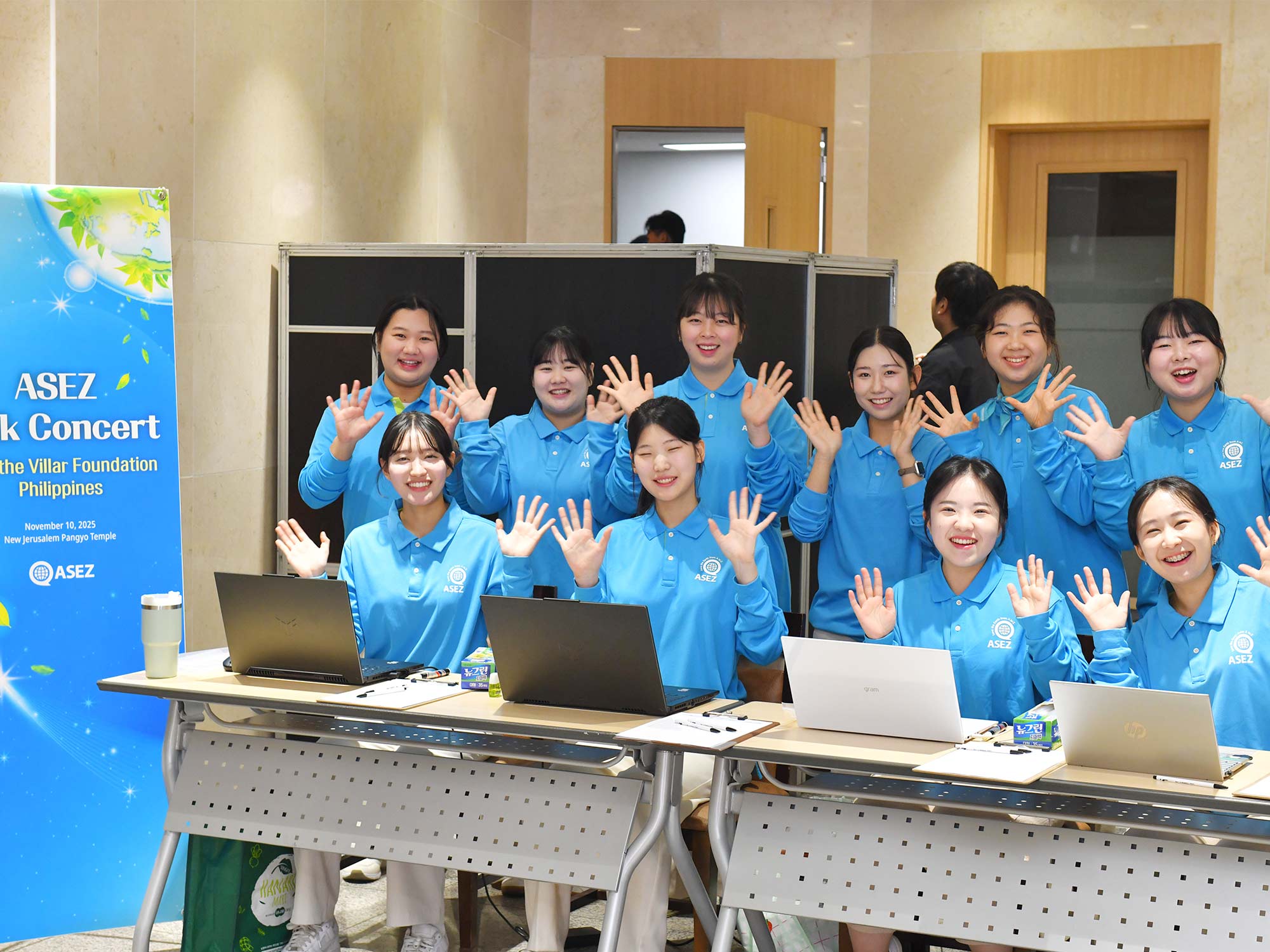
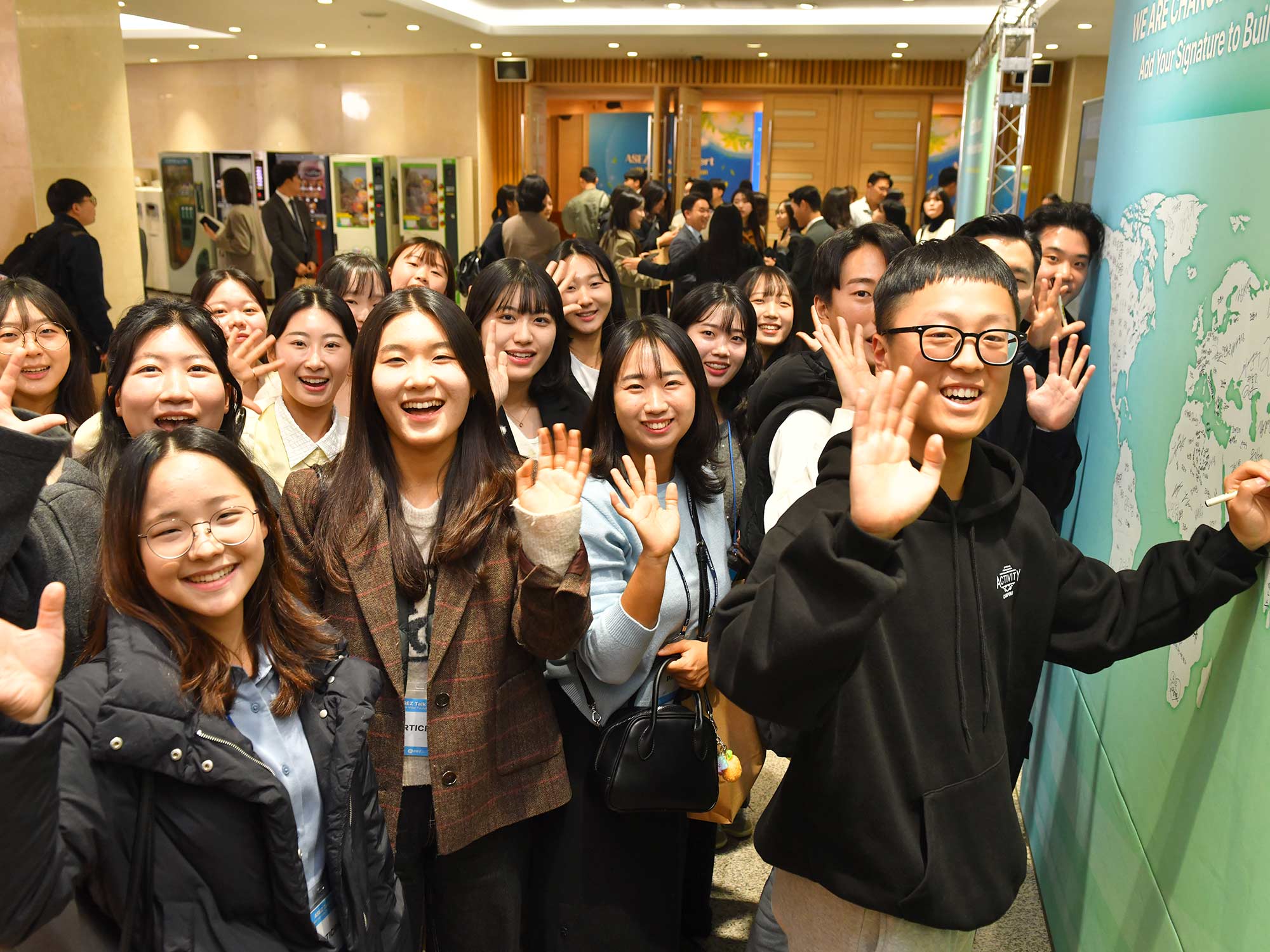
Students who attended also shared their reflections. Jo Sang-baek, an ASEZ member from Hanyang University, said, “As an engineering student, I used to think that general environmental activities lacked business viability and were difficult to sustain. Today’s lecture showed me that such activities can be creatively designed and continued.” Yoo Seung-jun, who had participated with ASEZ members in collecting large amounts of cigarette butts and trash around university districts, realized the importance of raising citizens’ awareness remarked, “I realized that to address environmental issues that once felt overwhelming, we need to develop both expertise and practical execution.” He added, “I want to further systematize ASEZ activities to provide real help to society.”
Even prior to this talk concert, ASEZ and the Villar Foundation had continued their cooperation in the Philippines. They jointly participated in ASEZ crime-prevention forums held in areas such as Las Piñas, discussing youth-led efforts to build safer cities. At Freedom Island in the Las Piñas–Parañaque Wetland Park managed by the Villar Foundation, they also carried out coastal clean-up activities under the banner of “Zero Plastic 2040,” working together to reduce plastic pollution and conserve ecosystems.
Building on this foundation, ASEZ and the Villar Foundation plan to further strengthen their partnership. In particular, they aim to develop more practical environmental restoration activities and citizen participation programs centered on Freedom Island—a symbolic site where plastic pollution and urban ecosystem conservation intersect, and a place of high cultural and environmental value. As the on-site engagement of university students combines with the knowledge and experience accumulated by the Villar Foundation, expectations are growing for the positive impact this collaboration will have on climate action and environmental and welfare projects in both Korea and the Philippines.