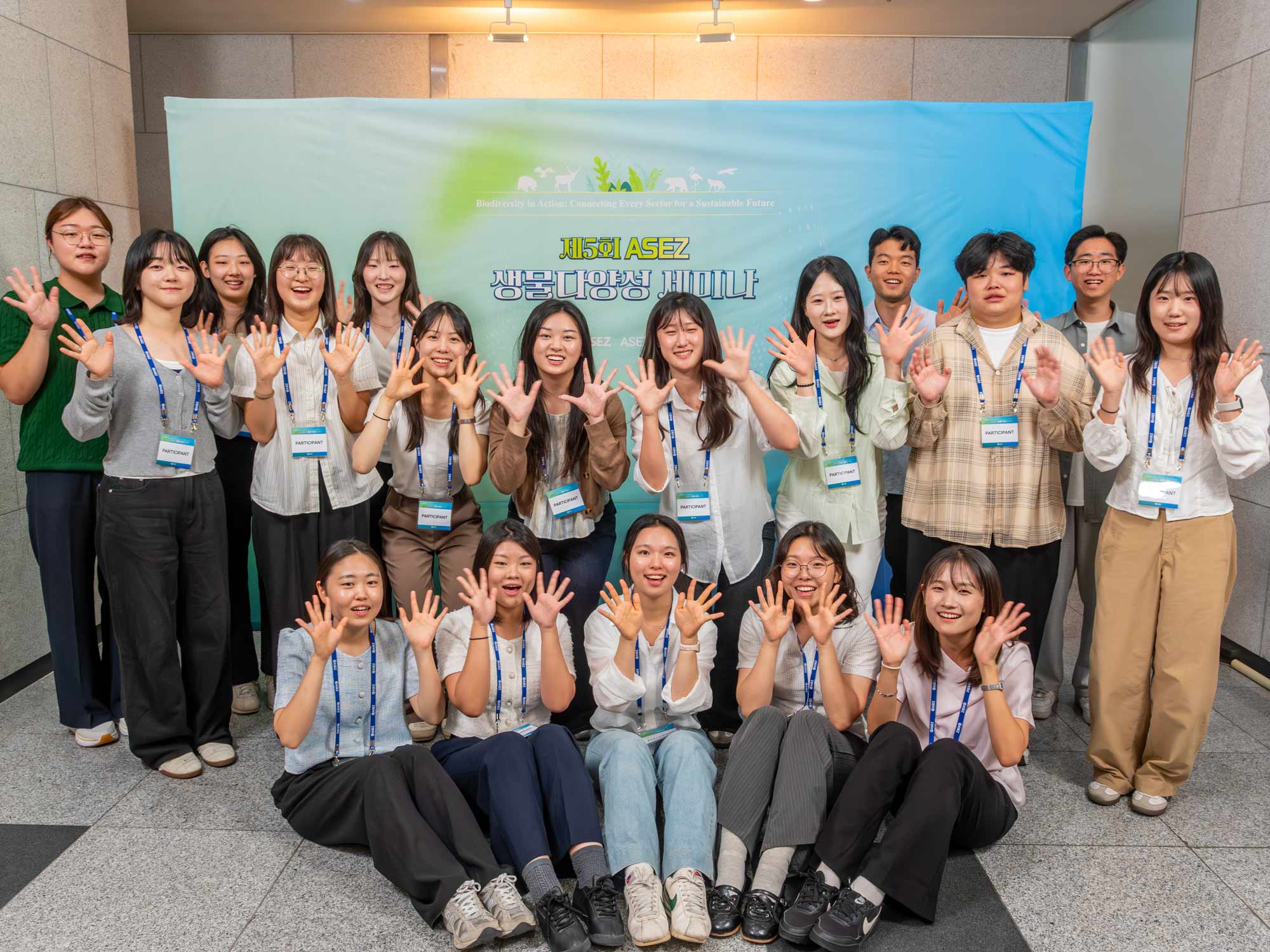
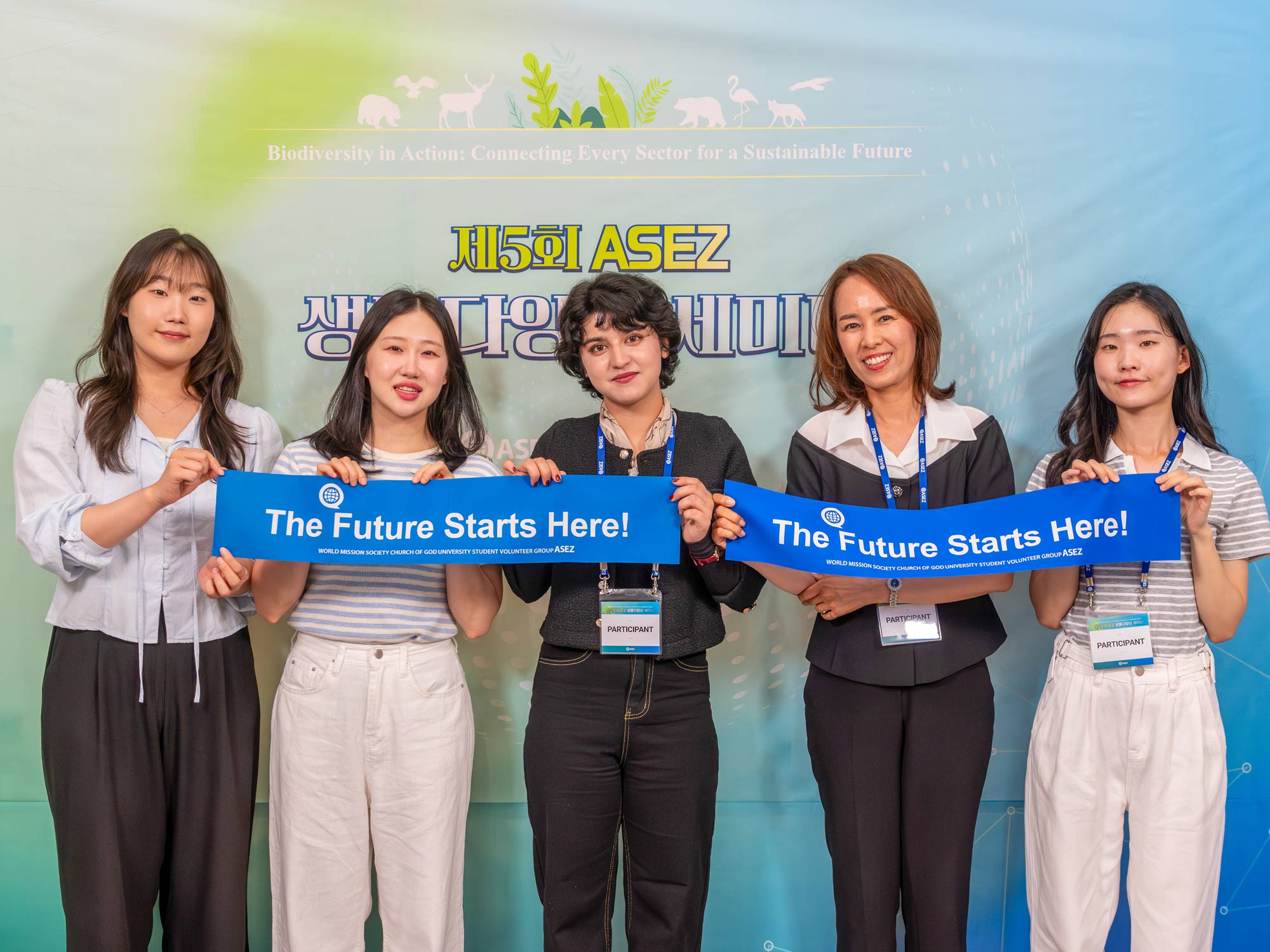
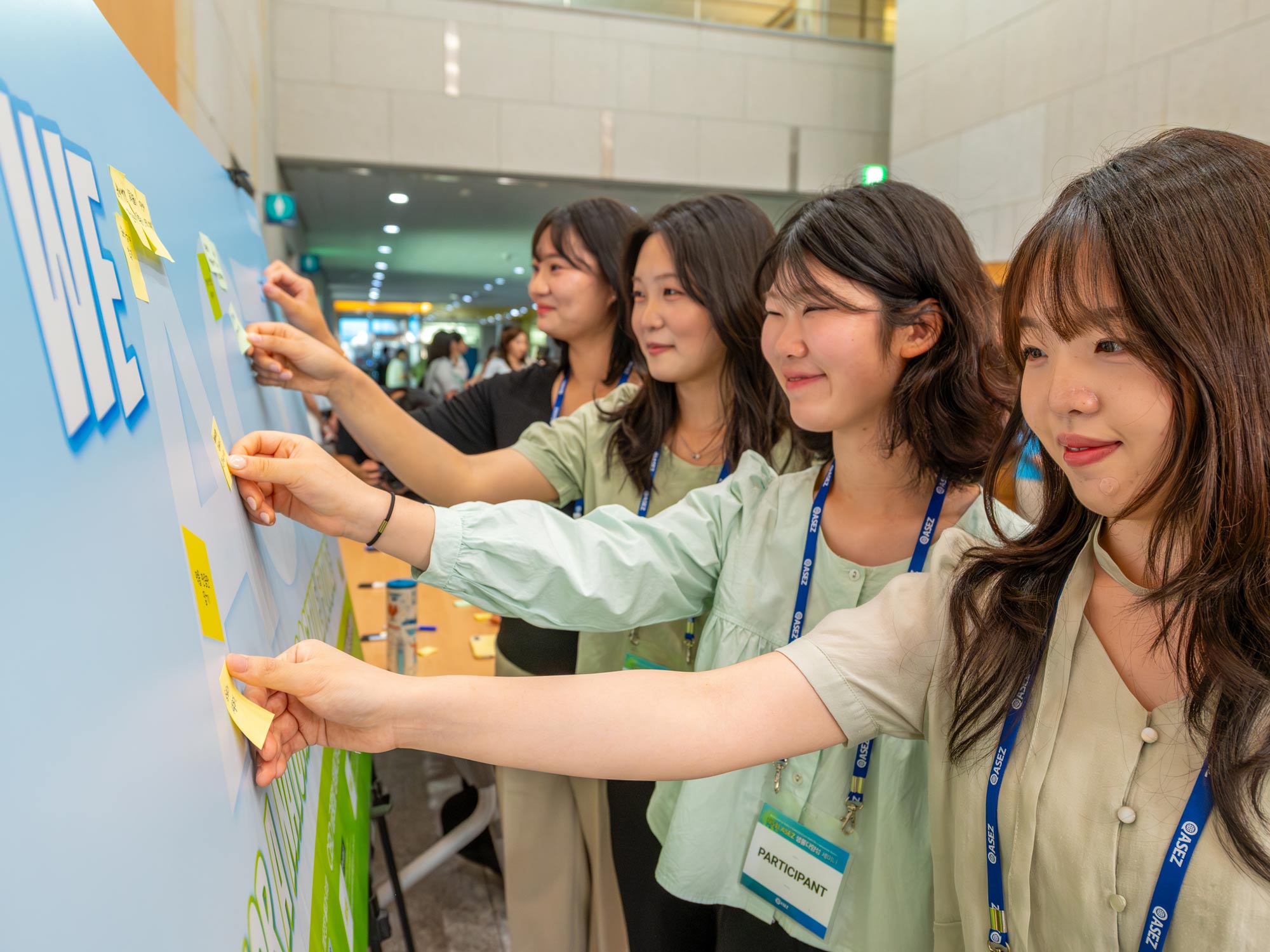
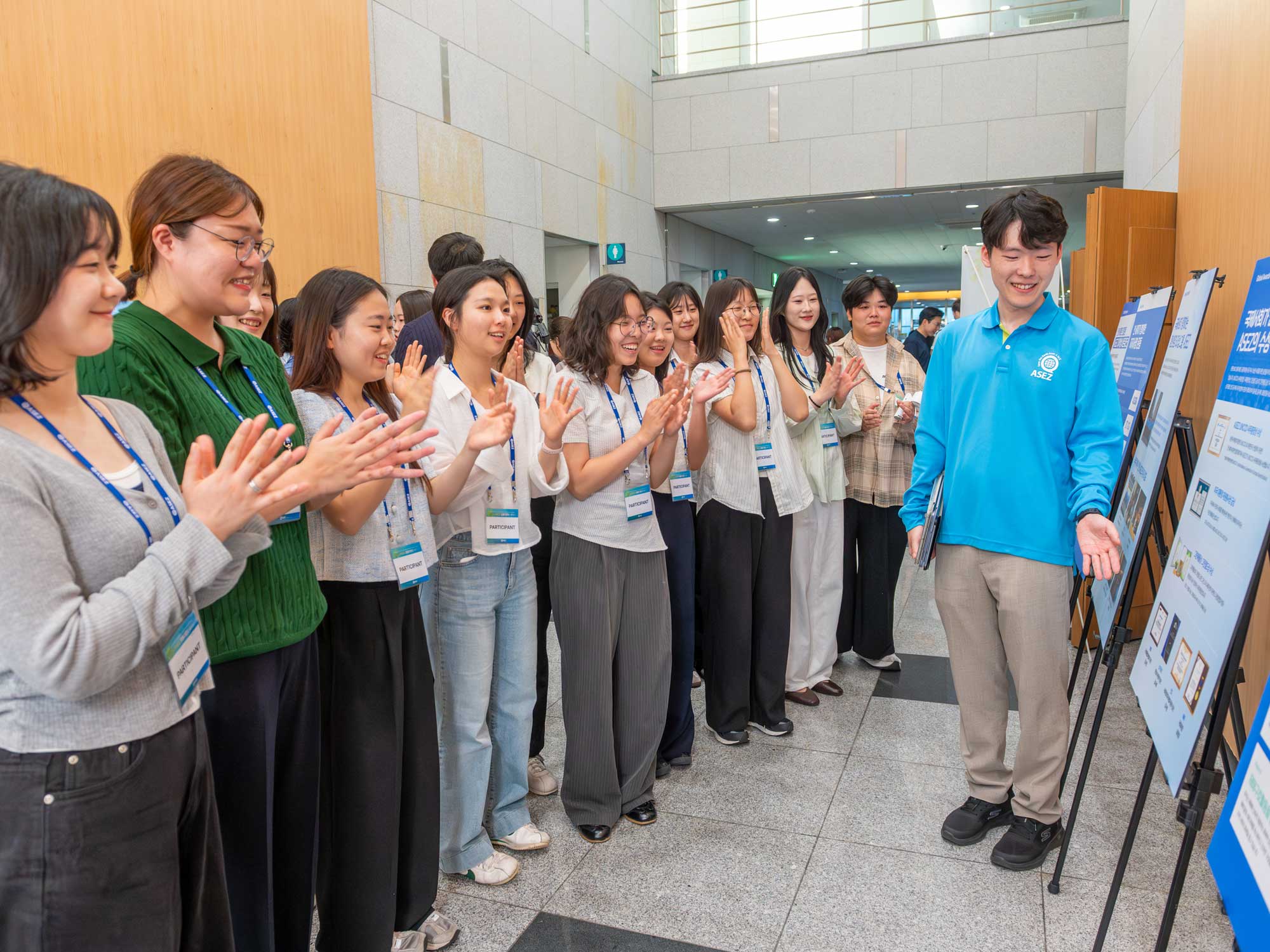
On June 29, ASEZ held the Fifth ASEZ Biodiversity Seminar at Gaon Hall, Seoul National University. Marking its fifth year, the seminar brought together approximately 300 professors and university students from institutions including Seoul National University, Korea University, Jeonbuk National University, the University of Utah Asia Campus, and the City University of New York, as well as representatives of international organizations. Participants explored the role university students can play in biodiversity conservation and discussed practical ways to take action.
The ASEZ Biodiversity Seminar has served as a platform for connecting the international community’s environmental agenda with action at universities and in local communities. It has also examined ways for young people to become active participants in ecosystem conservation. This year’s seminar sought to deepen understanding of the biodiversity crisis and review international and national efforts to restore nature, while focusing on how university students can translate these goals into action on their campuses and in their communities.
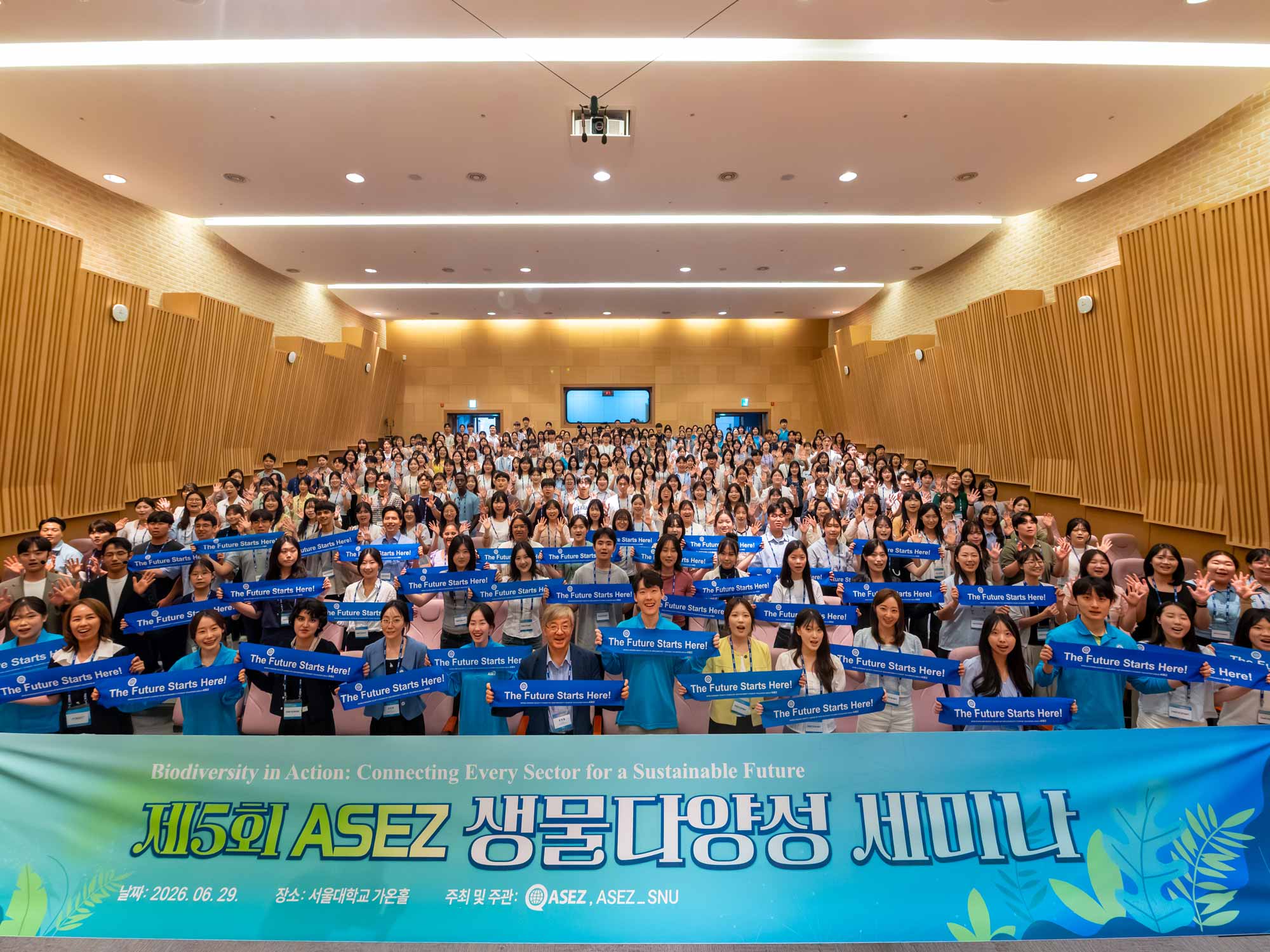
As climate-related disasters such as recurring heat waves and torrential rainfall increasingly become part of everyday life, the interconnected ecosystems that sustain human life are also being destabilized. Unlike extreme weather events, biodiversity loss is not always immediately noticeable. Nevertheless, it is a critical issue that threatens food security, public health, economic stability, and the long-term sustainability of local communities.
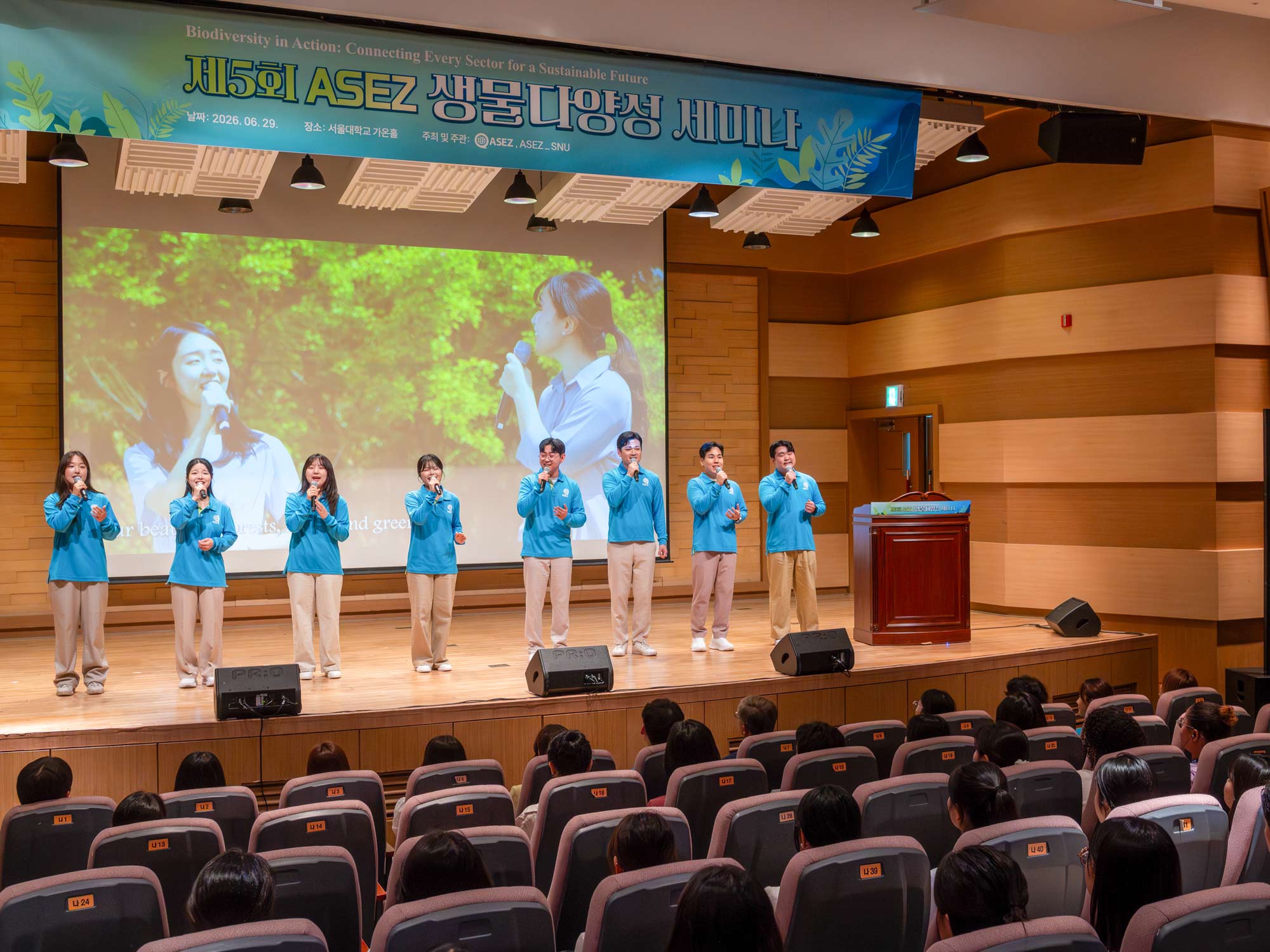
The event began with a pre-seminar performance by the ASEZ vocal ensemble. The group performed “Let’s Save the Forest,” which calls for action to protect forests and ecosystems, and “Walking Shining Bright,” which conveys a message of moving forward together with hope and passion as clear and vibrant as the blue sea. “Let’s Save the Forest,” in particular, received the Executive Secretary’s Award from the United Nations Convention to Combat Desertification in recognition of its encouragement of public participation in forest conservation. Through the song, the ensemble conveyed to participants the importance of building a future in which people and nature coexist.
An introductory video about ASEZ followed, presenting the organization’s climate action initiatives and Blue Carbon Initiative, which have been carried out in alignment with the international environmental agenda. Working in 175 countries, ASEZ has partnered with 207 organizations, including national governments, international organizations, and local authorities. It has also represented young people’s perspectives at international conferences while continuing efforts to protect blue-and green-carbon ecosystems and restore forests.
ASEZ has treated plastic pollution as an interconnected problem that extends from inland areas to the ocean. Its activities have included Blue Campus Week, which aims to reduce plastic use on university campuses, as well as river and coastal cleanup campaigns. Approximately 5,045 people in 16 countries participated, collecting 24.6 tons of waste. ASEZ also conducted a survey of 180 universities in 39 countries, transforming its field activities into data that could support policy proposals. These efforts were presented as part of a nature-positive approach that seeks the active restoration of ecosystems, grounded in “green literacy”—the ability to understand environmental issues and translate that understanding into action.
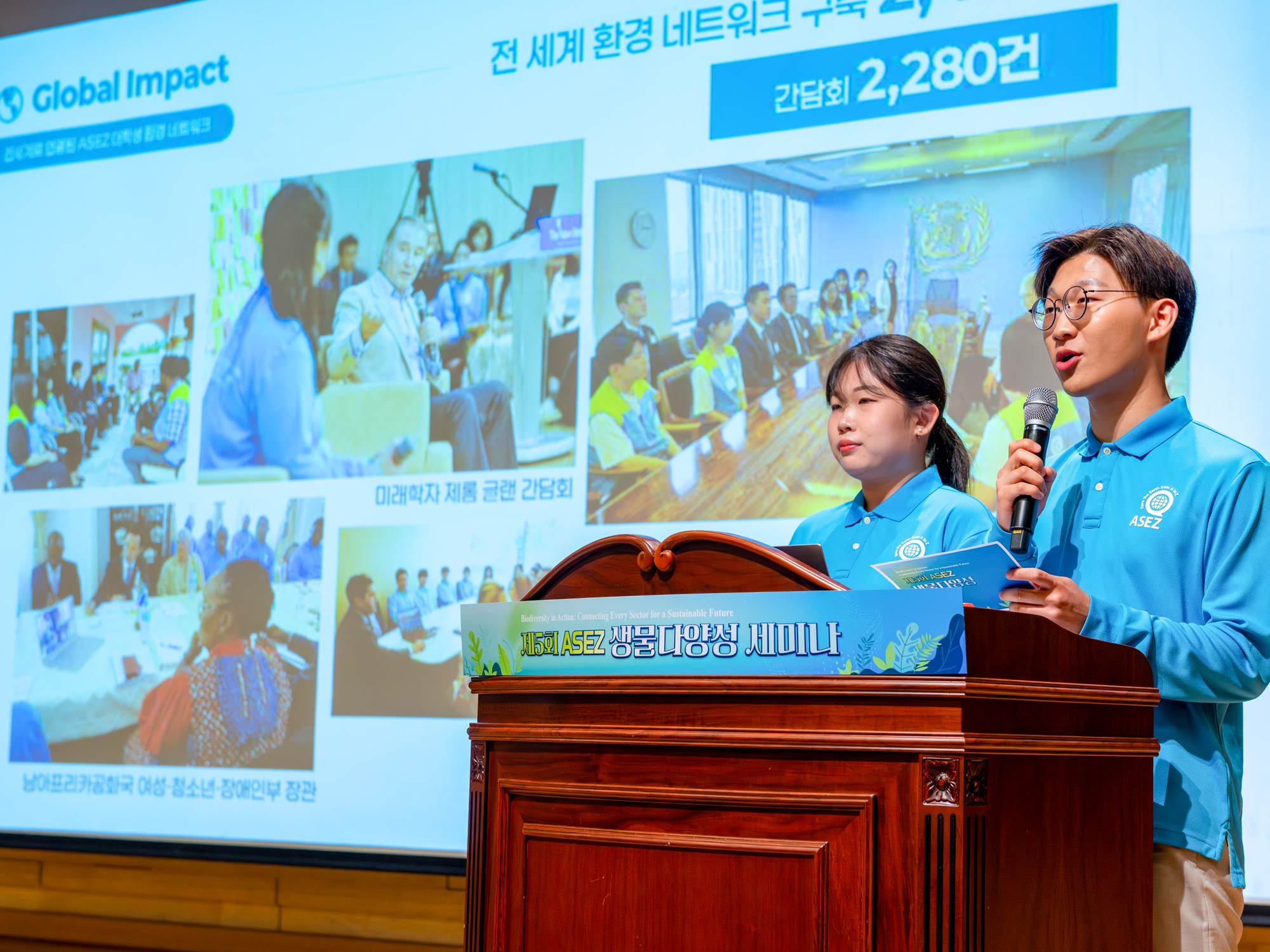
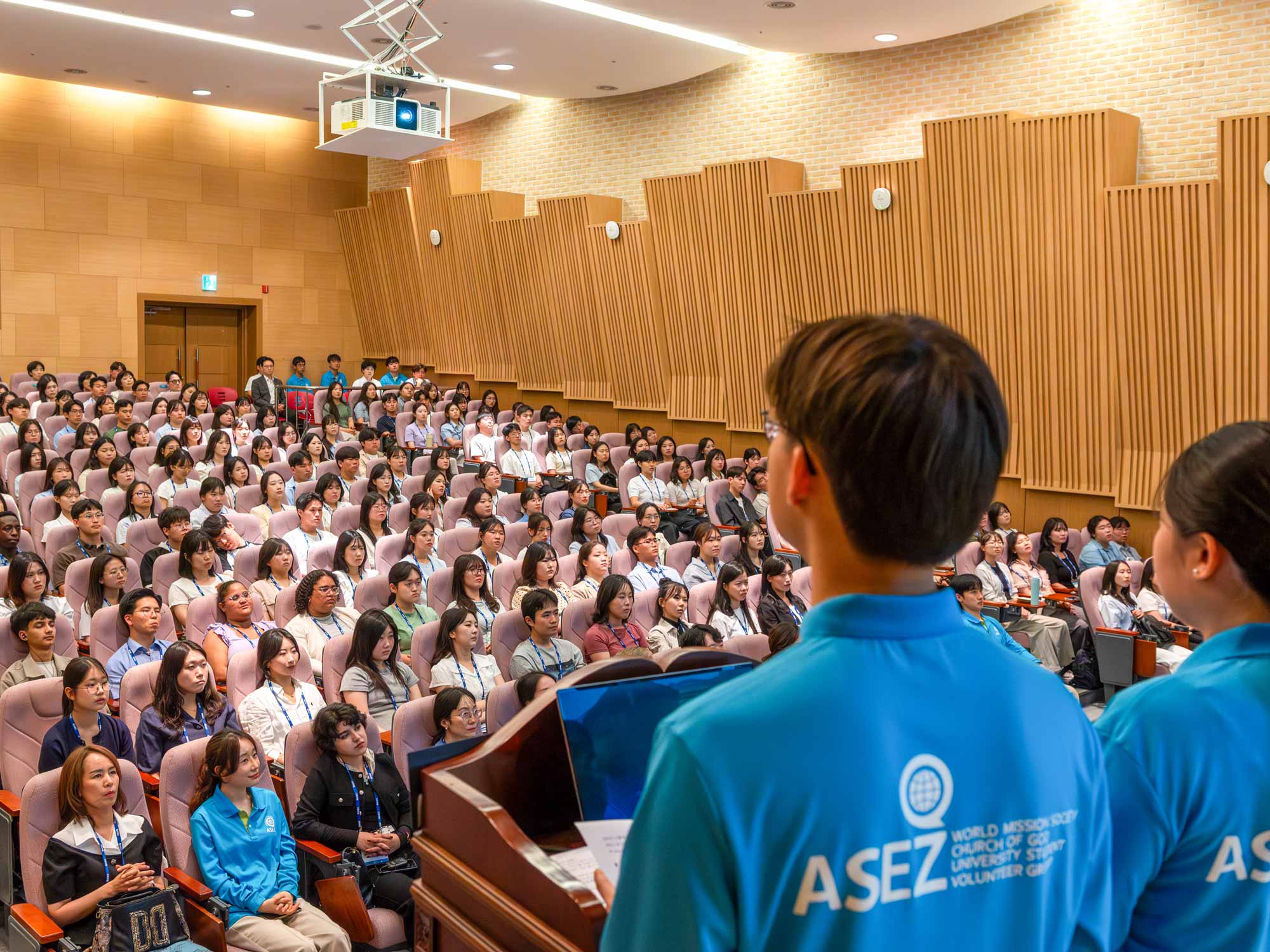
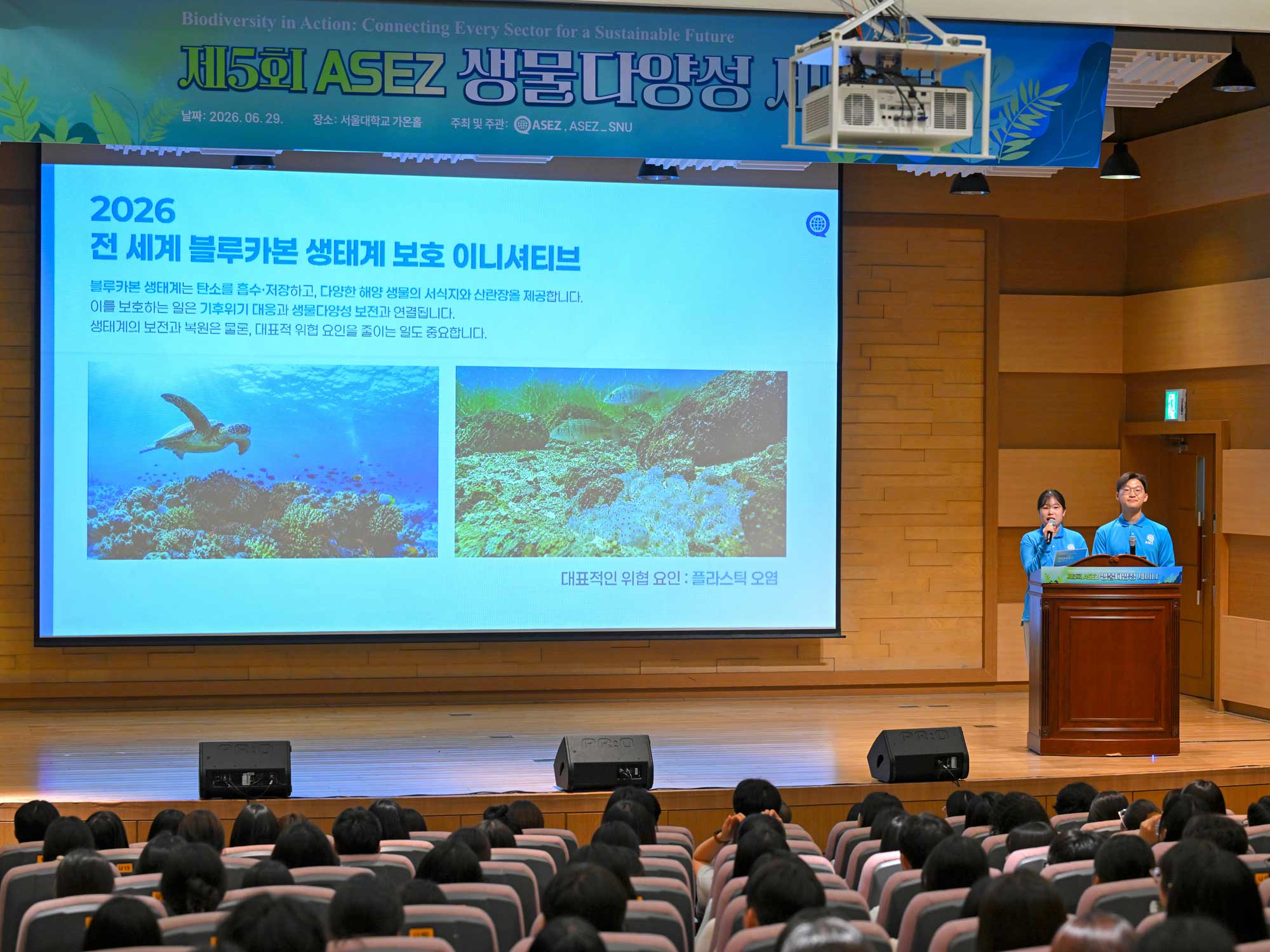
The keynote address was delivered by Yoo Yeon-chul, Secretary-General of the UN Global Compact Network Korea. Speaking on the topic “The Transition to a Nature-Friendly Economy,” Yoo emphasized that nature and the economy can no longer be viewed separately in the era of the climate crisis. He argued that society must go beyond carbon neutrality and pursue a nature-positive transition that restores biodiversity and ecosystems.
“Nature is more than an environment that must simply be protected; it is an important asset with economic value,” he said. “We need a holistic approach that addresses climate change and biodiversity together.” He added that he had been impressed by ASEZ’s messages that “when young people take action, the planet changes” and “small changes can transform the world,” encouraging young people to maintain their interest and continue taking action.
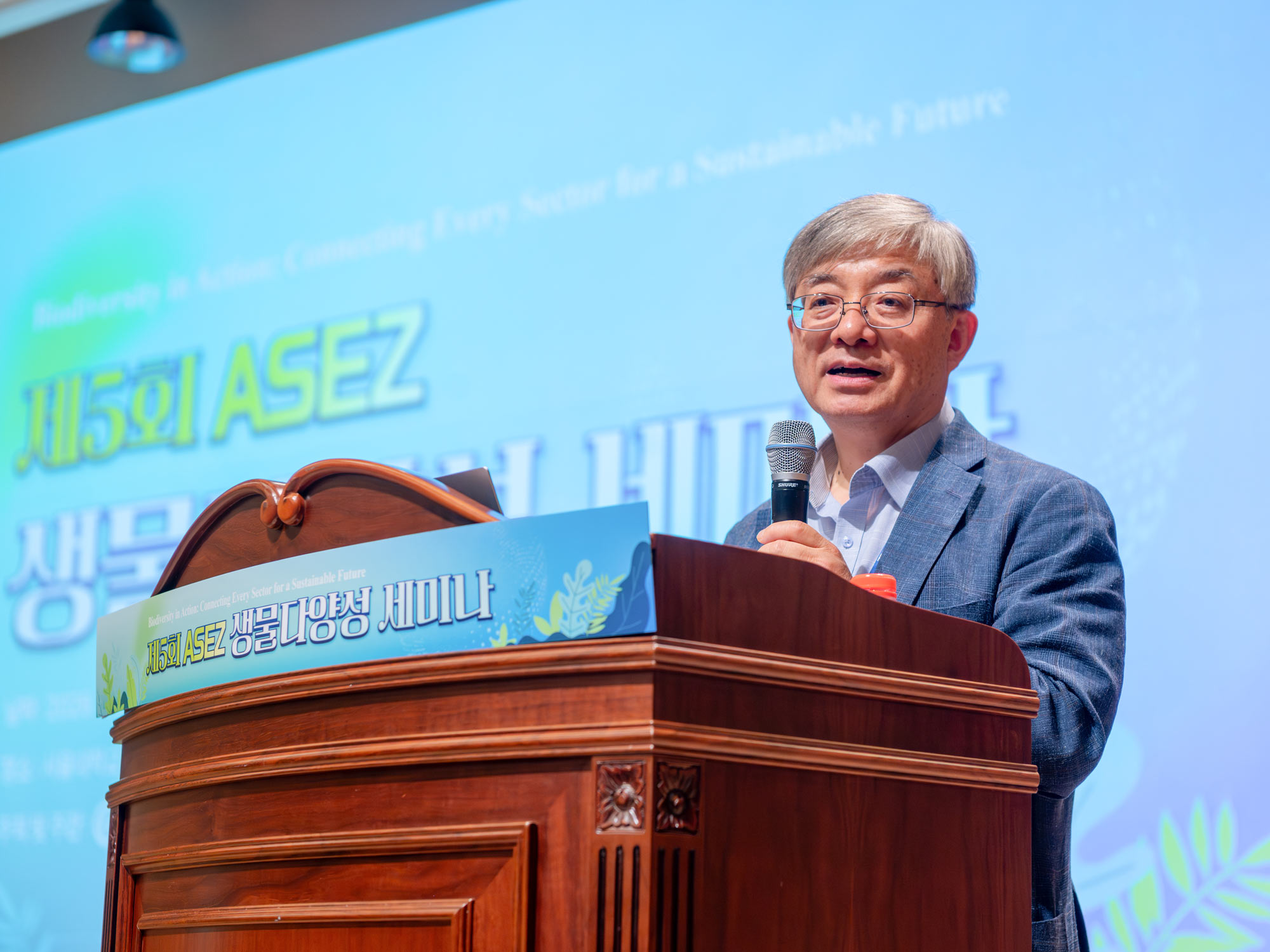
During the second part of the seminar, Chantal Line Carpentier, head of the Trade, Environment, Climate Change and Sustainable Development Branch at the United Nations Conference on Trade and Development, delivered a video lecture. Carpentier explained that a significant portion of the global economy depends on nature and biodiversity. Biodiversity, she said, is not a secondary issue separate from the economy, but a foundation that supports sustainable development.
She also urged young people to learn about the international commitments their countries have made to conserve biodiversity and to monitor whether those commitments are being properly implemented. She emphasized that young people’s role should extend beyond volunteer work to include contributing their perspectives to policymaking and decision-making processes and evaluating, at the local level, whether international commitments are being fulfilled.
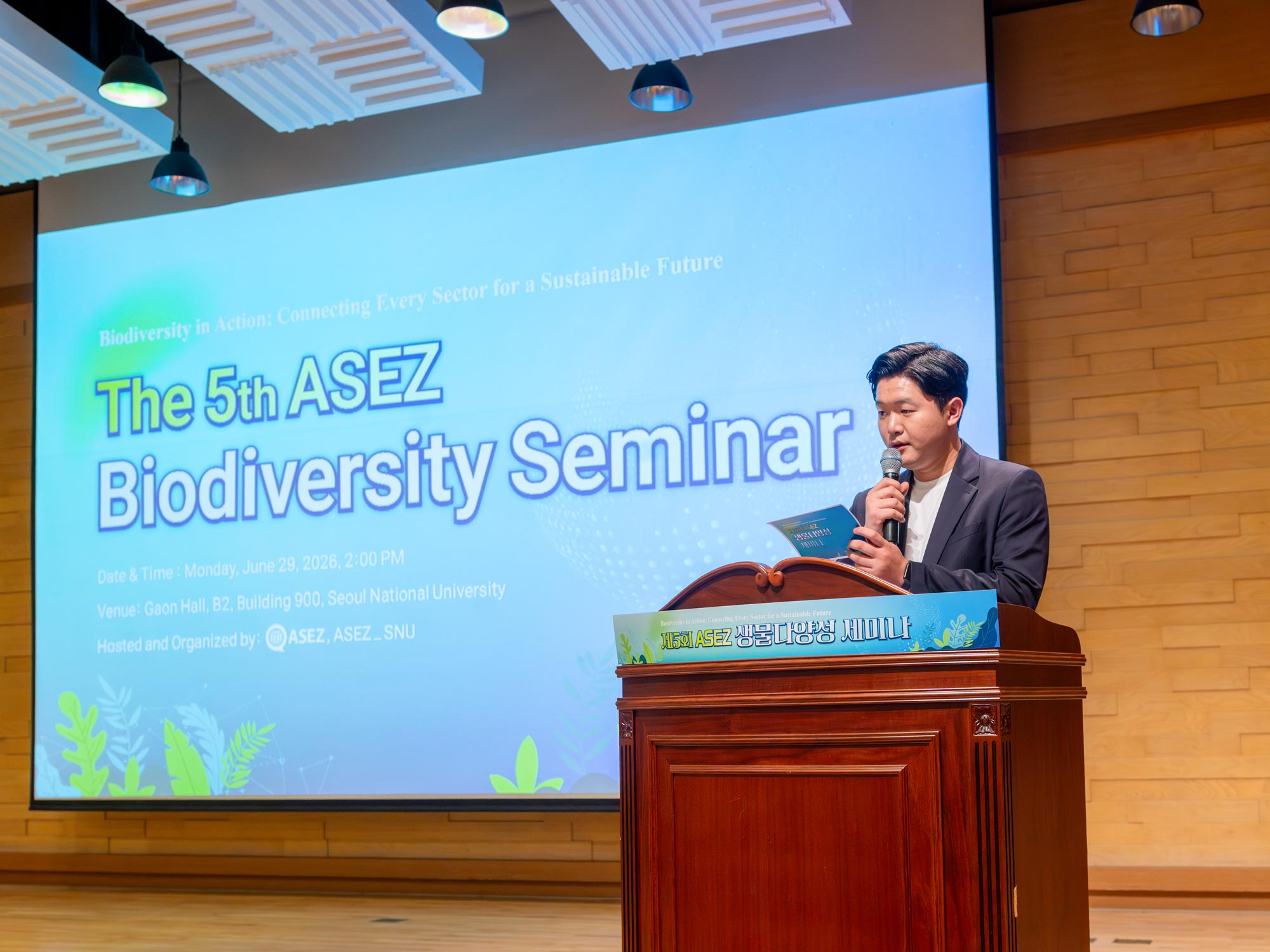

Next, Anaiah Bre Thomas, an ASEZ member at Harvard University in the United States, explained how plastic waste generated on campuses and in cities travels through storm drains and rivers before reaching coastal waters and the ocean. She also introduced activities carried out in different parts of the United States to protect blue-carbon ecosystems. During the global session titled “A Nature-Friendly Transition Led by Young People,” ASEZ university students from the Republic of Korea, the Philippines, Ecuador, Nepal, and the United States shared examples of projects they had conducted on their campuses and in their local communities.
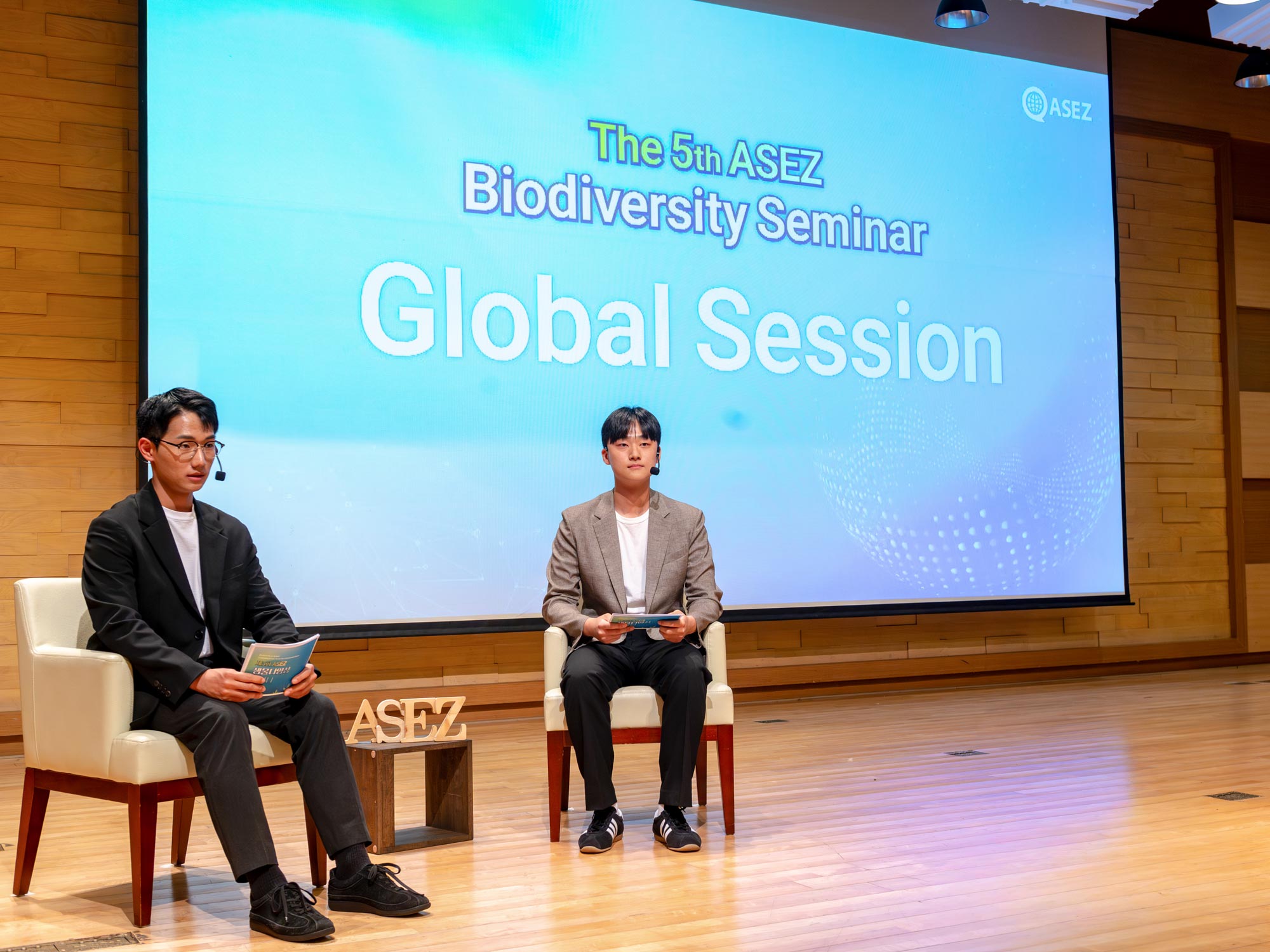

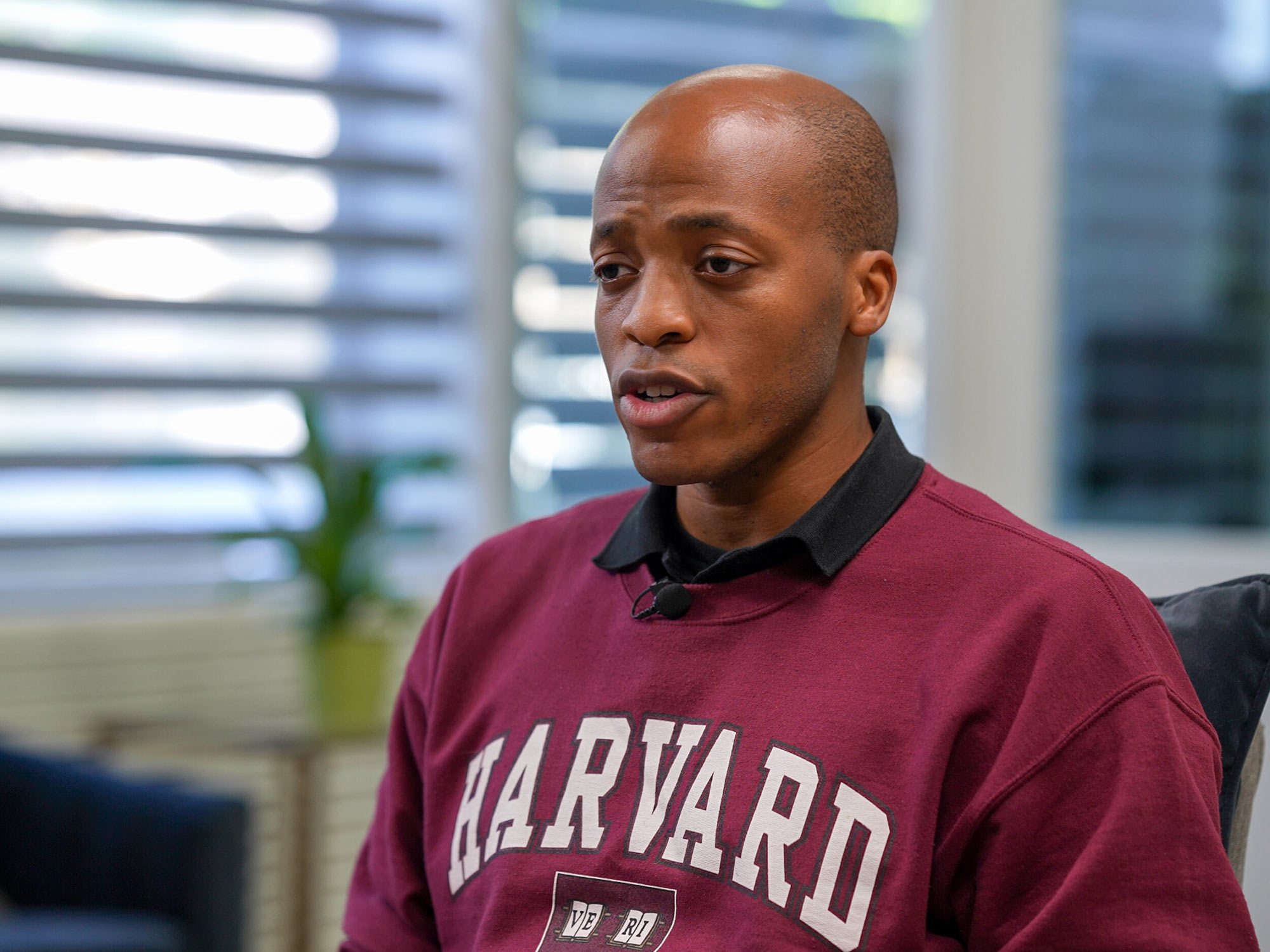
Although the countries and campuses differed, all the presentations conveyed a shared message: even campuses located far from the sea are connected to the ocean through storm drains and rivers, and small actions that begin in everyday life can contribute to the protection of biodiversity and blue-carbon ecosystems.



Professor Shin Ji-yeon of the University of Utah Asia Campus, who attended the seminar, said, “I was impressed by how the students’ small actions were brought together as data and then developed into evidence for policy proposals. Young people taking action now—not tomorrow—will also inspire positive change among universities and policymakers.”
Now in its fifth year, the seminar demonstrated how university students are responding to the international community’s biodiversity conservation and nature-positive agendas by taking action on their campuses and in their communities. It also showed how they are documenting their results and compiling data that can serve as evidence for nature restoration. ASEZ will continue working with university students around the world to address the climate crisis and restore biodiversity.