Card News
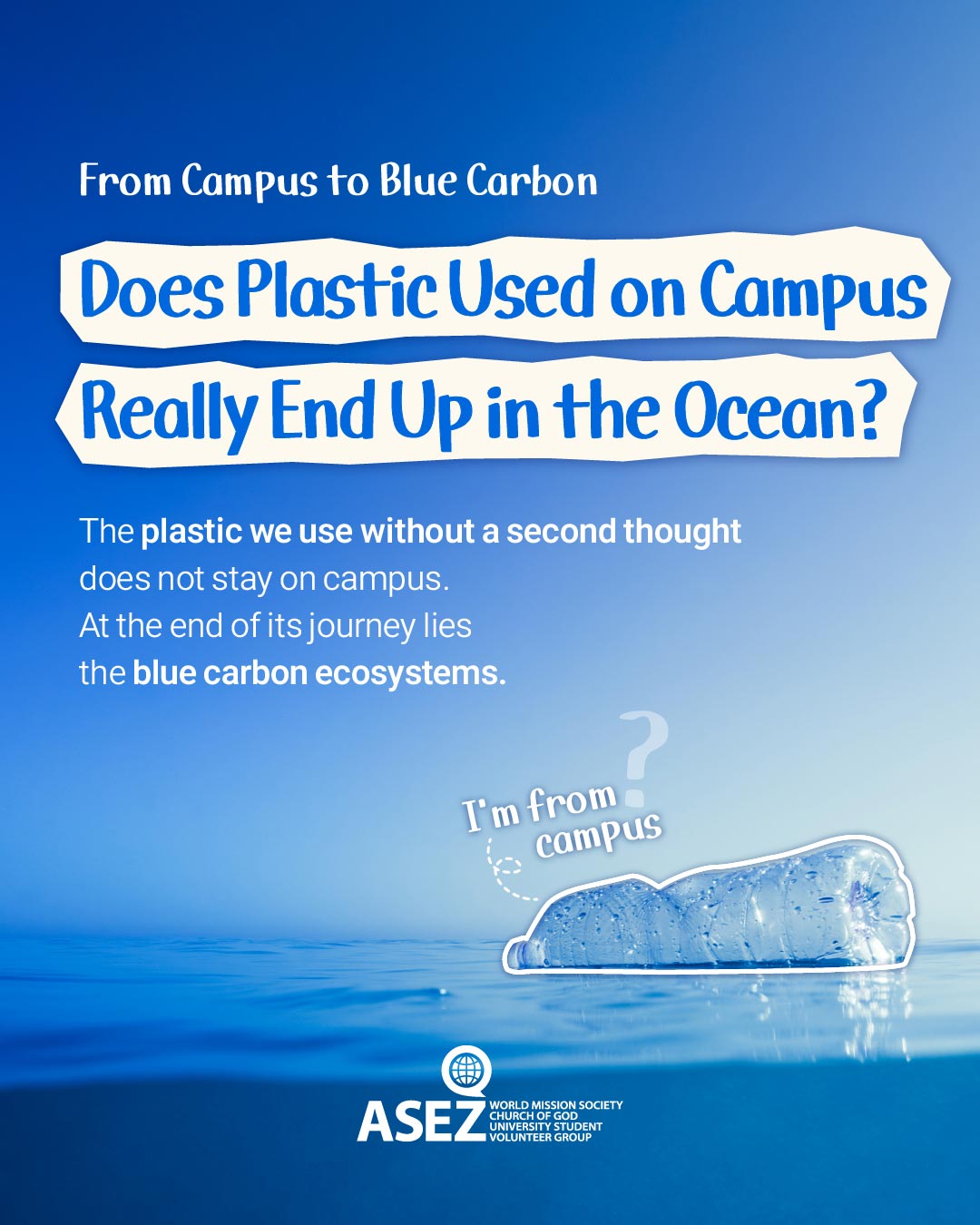
From Campus to Ocean: International Student Plastic Use and Waste Management Systems Survey
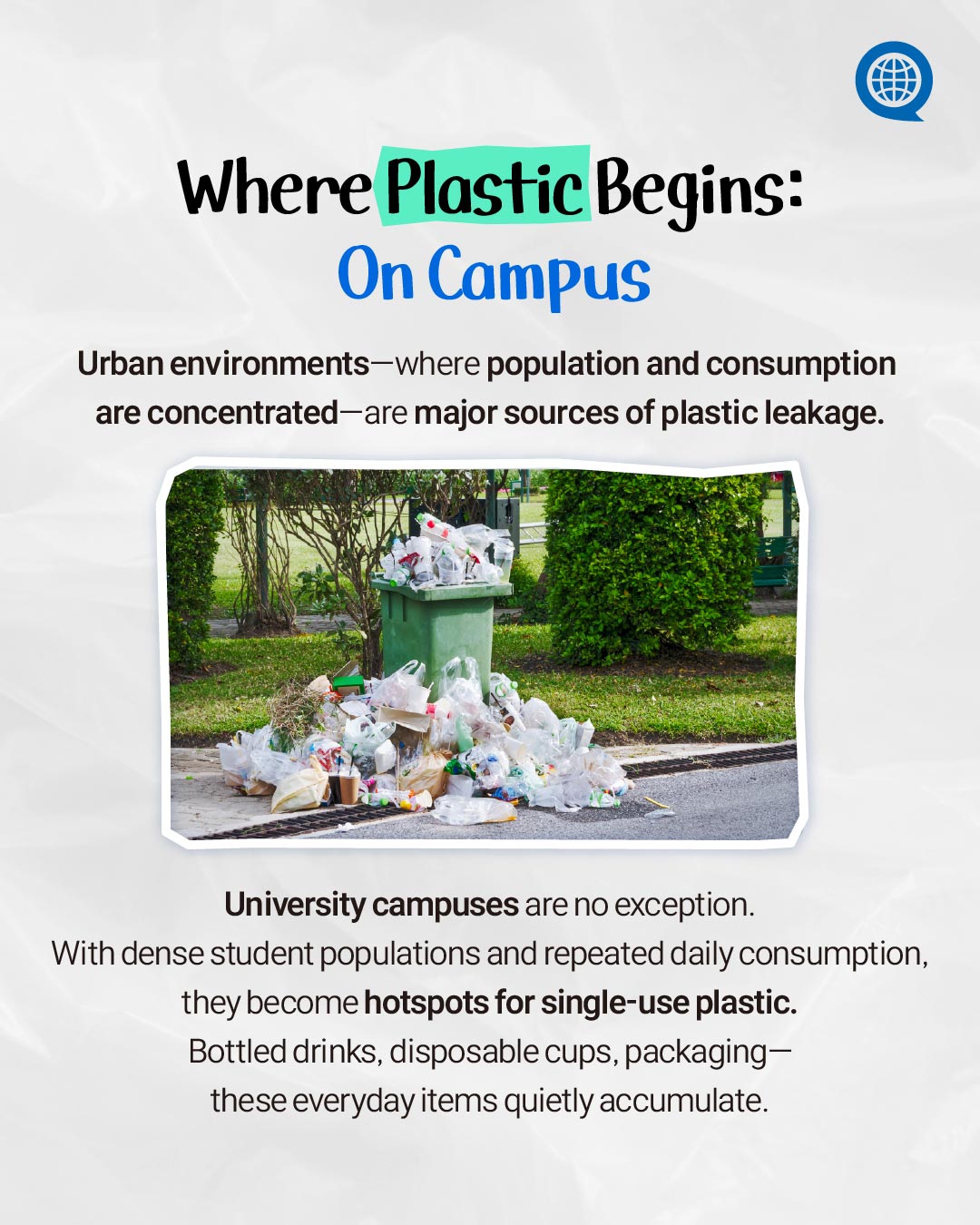
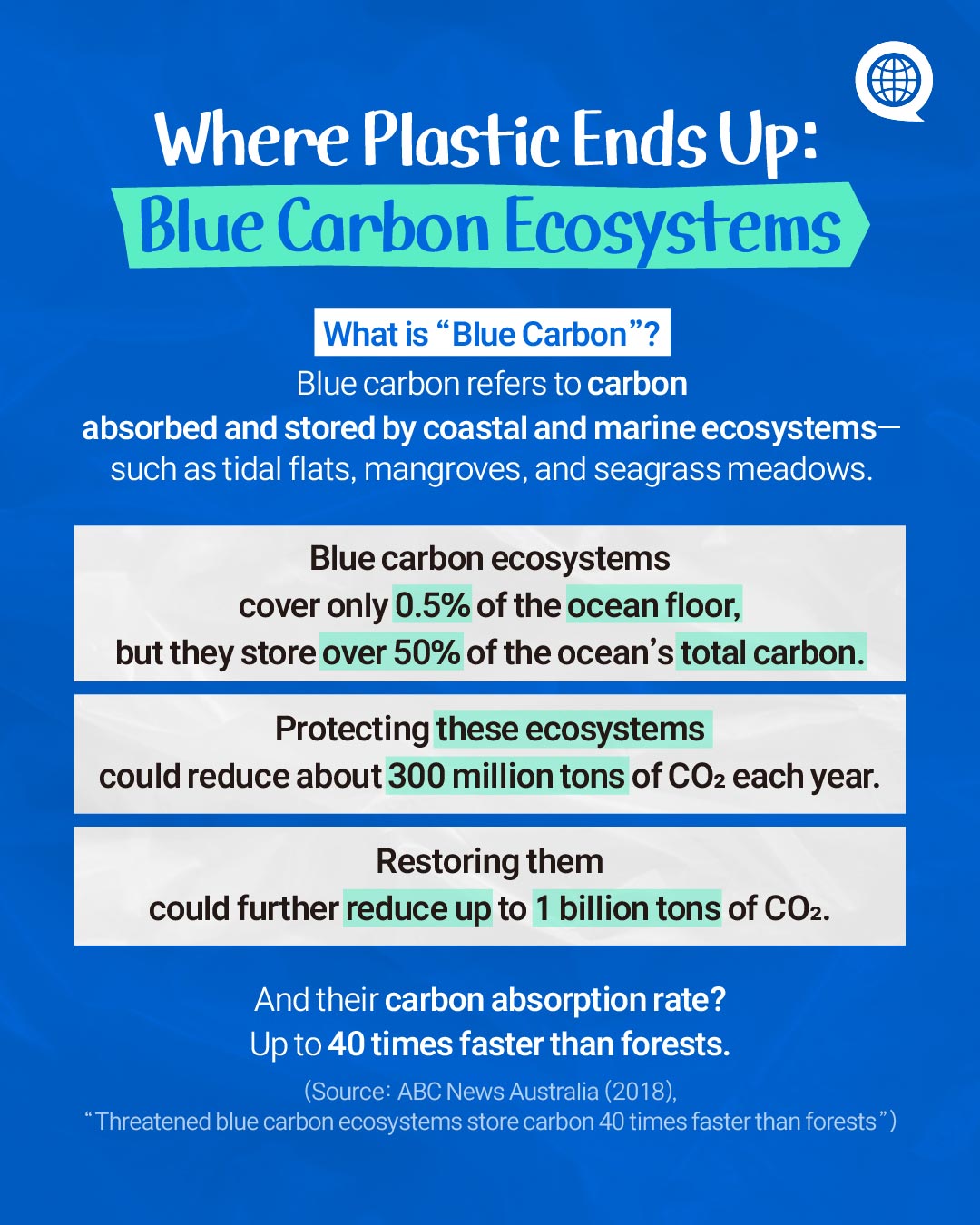
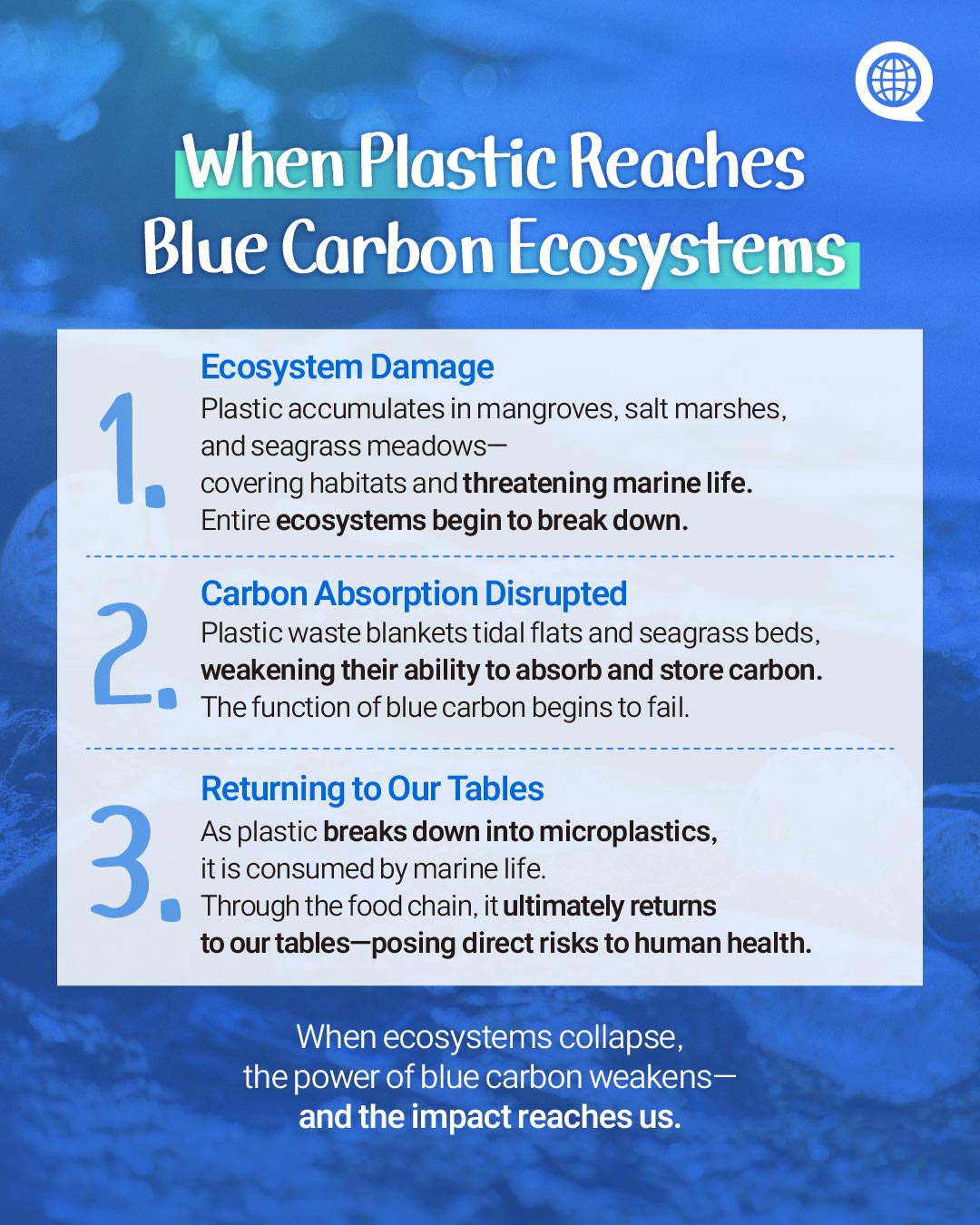
Plastic use in students’ daily lives can travel through rivers and coastlines, ultimately impacting the ocean and blue carbon ecosystems. This survey aims to understand current plastic usage patterns and identify more effective strategies for reducing plastic and protecting blue carbon ecosystems.
Connecting Campus Actions to Blue Carbon Resilience!
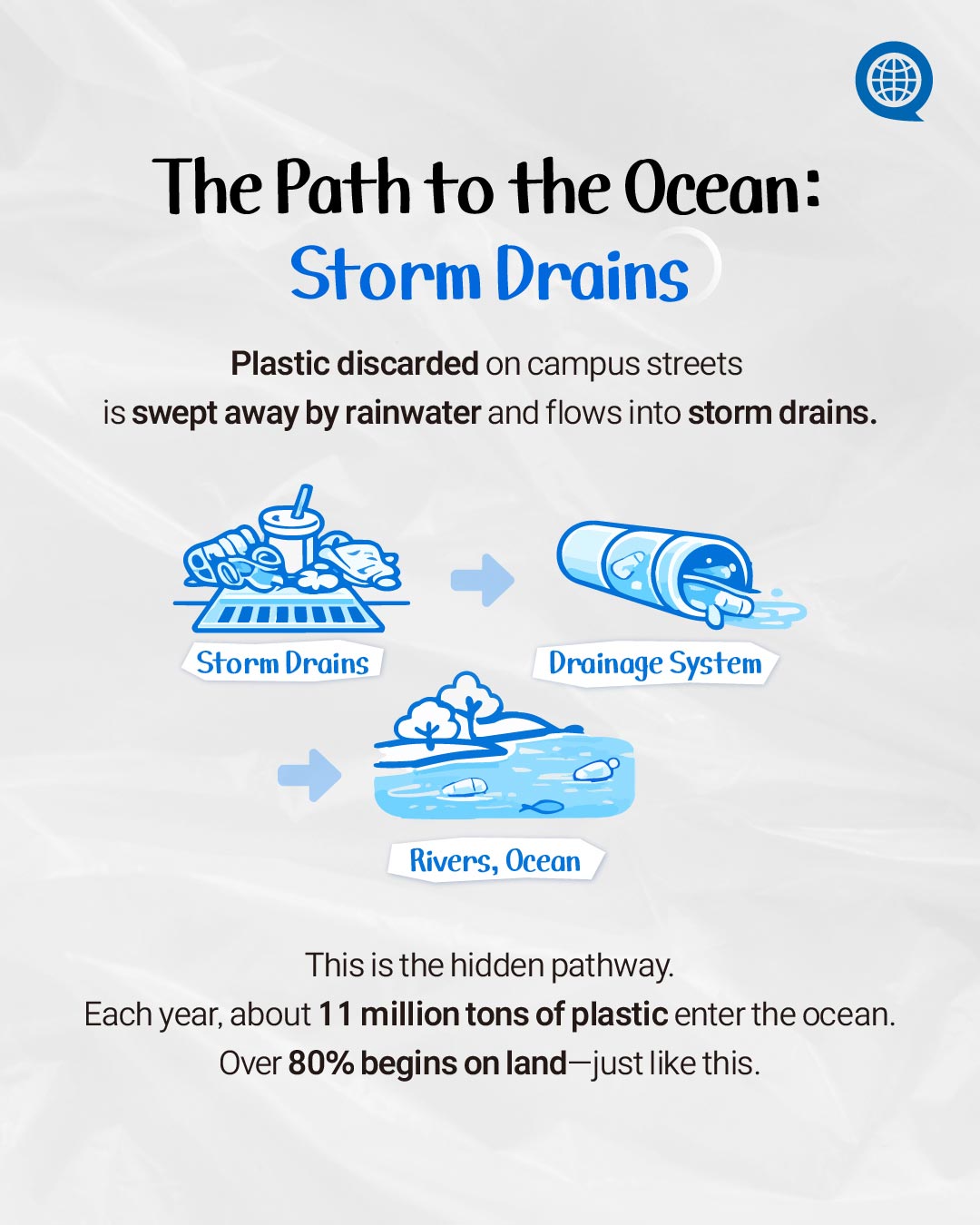
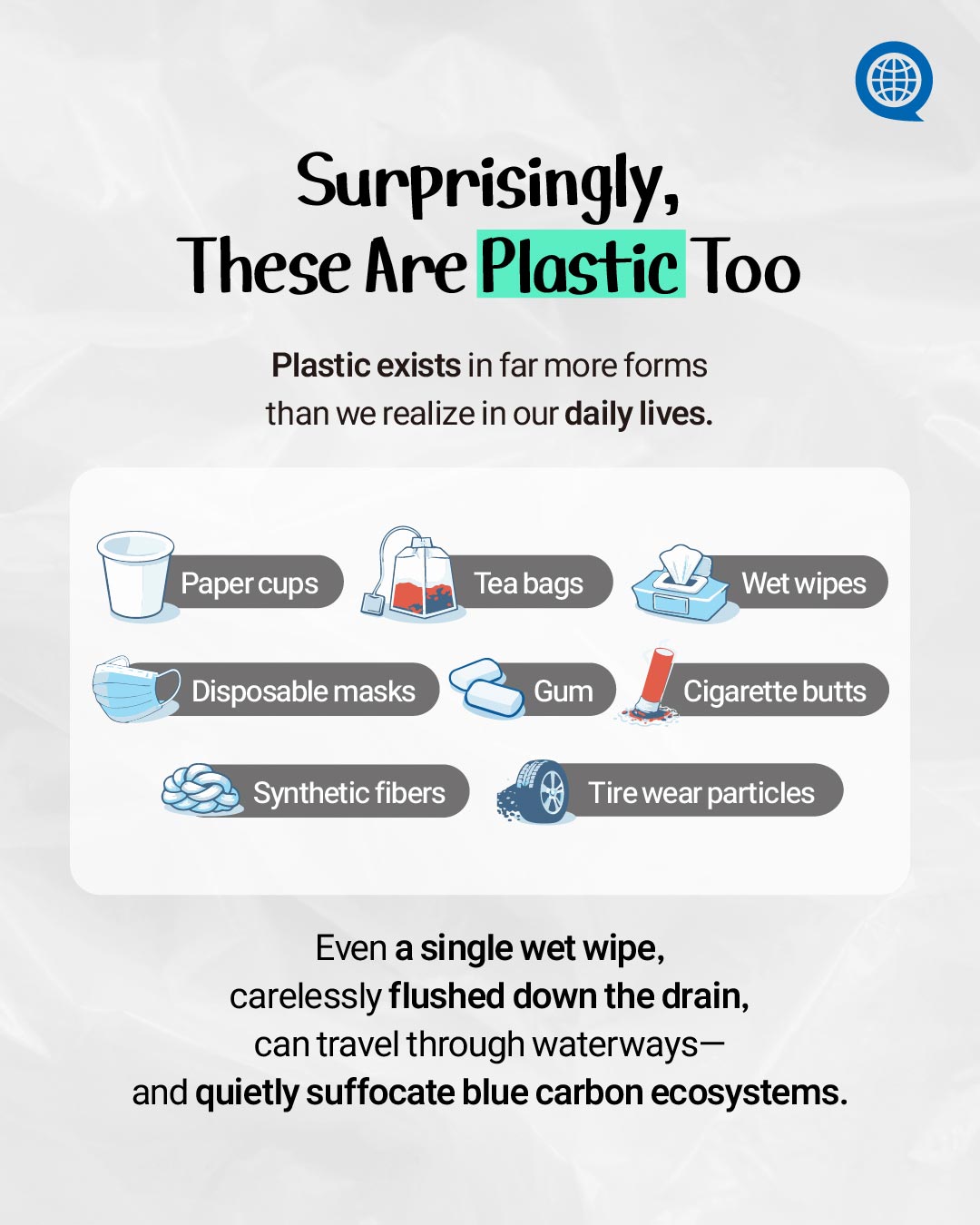
A significant amount of plastic flows directly from inland urban areas into the ocean through storm drains.
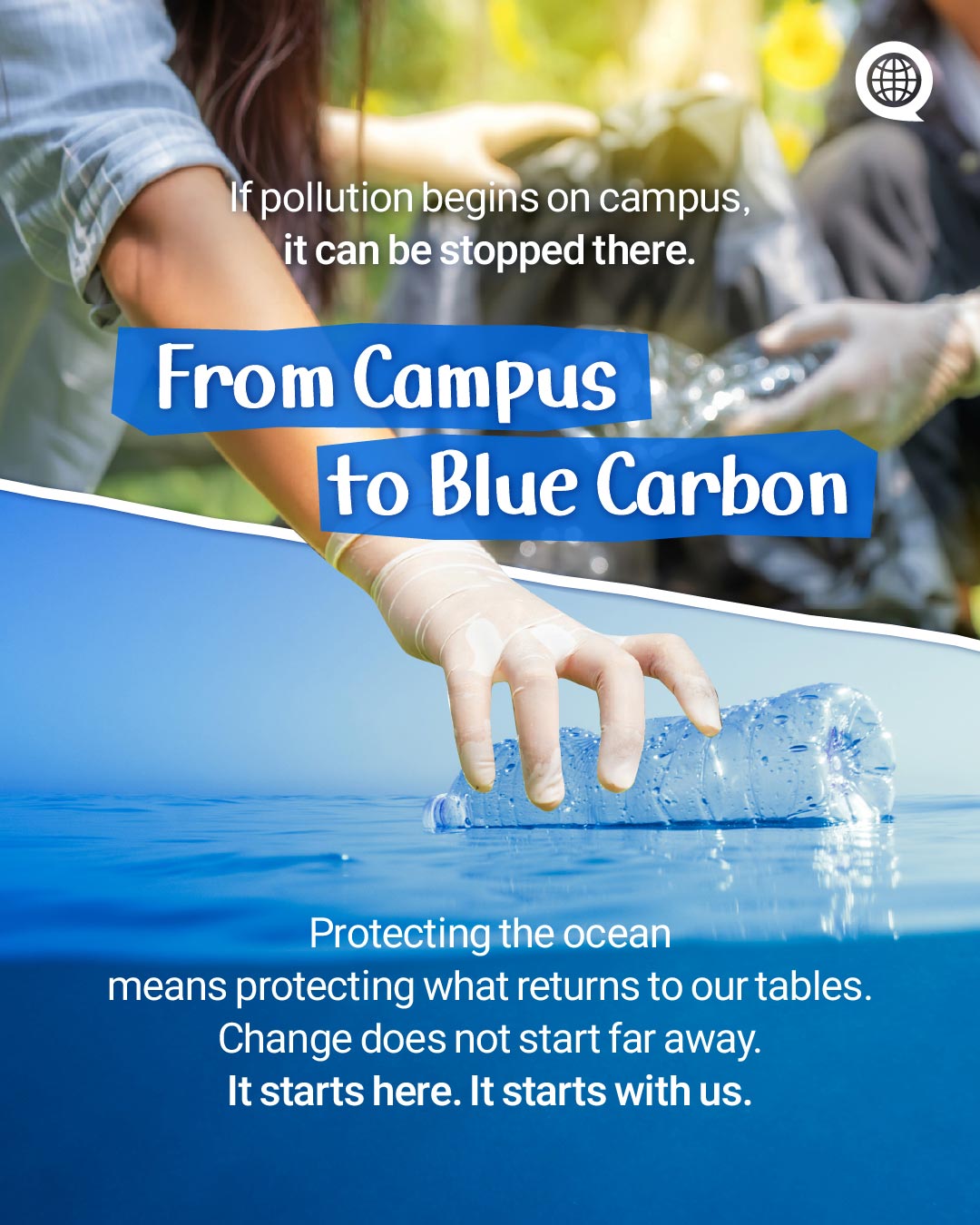
In response, ASEZ conducts cleanup activities around campus drains, as well as in waterways such as rivers and reservoirs—key pathways through which plastic waste reaches the coast—and at coastlines, the final destination of plastic pollution.
Through these efforts, ASEZ aims to block plastic leakage into the ocean at its source, while also identifying the status and types of plastic waste to contribute to solutions for plastic pollution and the protection of blue carbon ecosystems.
-
Activity 1
‘Blue Campus Week’ Cleanup & Campaign
Conduct cleanup activities around drains on and near campus and carry out awareness campaigns using panels.
-
Activity 2
Blue Carbon Ecosystem Cleanup & Campaign
Conduct cleanup activities in rivers, reservoirs, and coastal areas, along with panel-based awareness campaigns.
After Each Cleanup Activity
-
Common
Classify the Types of Collected Plastic!
Plastic classification is key data for identifying the causes and structure of pollution—not just the volume collected. It helps analyze the sources of plastic pollution and serves as a basis for policy recommendations.
-
Rivers/Reservoirs, Coastal Areas
Record Water Systems and Ecosystem Types!
Recording water systems and ecosystem types demonstrates that plastic pollution is a connected issue—from inland areas through rivers to the ocean. It also provides key evidence that the activity was conducted based on an Ecosystem-Based Approach (EBA).
Small actions, big global impact!
Based on worldwide activities and collected data,
the Global ABC(ASEZ Blue Carbon) Map will be created!
Share and join campaigns!
and join together with your friends!


